How Much Growth Margin Should You Put in a Data-Centre UPS?
By Highidea Power Engineering Team · 23 September 2026 · 5 min read
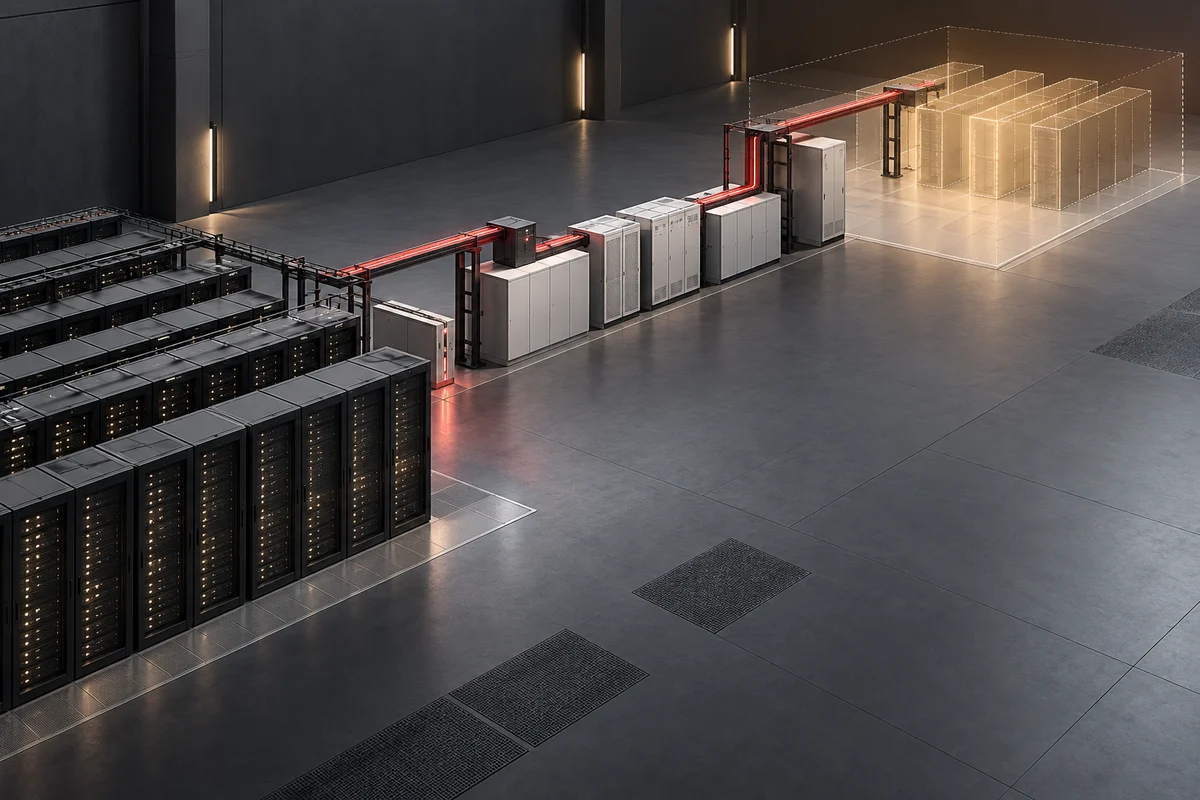
Choose data-centre UPS growth margin from a dated load forecast and an expansion architecture, not a universal spare-capacity percentage. Compare present and forecast kW and kVA, transient demand, redundancy state, part-load performance, rack and battery expansion limits, and the trigger for adding capacity or another module.
The decision in practical terms
IT resilience joins electrical continuity with an operating procedure. The UPS must support the defined load long enough for alternate power, continued operation or an orderly shutdown, while monitoring must deliver an alarm to someone who owns the response. The practical question here is: “How can I allow for growth without locking the UPS into inefficient low-load operation?” A buyer can use this guide to define the input, evidence and acceptance result before comparing models.
For “How can I allow for growth without locking the UPS into inefficient low-load operation?” Build the answer in three layers: verified site data, the operating result that matters, and configuration-specific evidence from the supplier. The first three items to close are: Build low, expected and high load forecasts from named equipment changes and dates, keeping continuous demand, peaks and decommissioned loads separate. Calculate the loading of each UPS or module in normal, maintenance and one-unit-unavailable states rather than checking only total installed capacity. Define an expansion trigger and verify that future modules, batteries, switchgear, cables, floor loading, cooling and monitoring can be added without an unplanned outage. Once these are controlled, differences between proposals become visible and testable.
Five checks that change the recommendation
Build low, expected and high load forecasts from named equipment changes and dates, keeping continuous demand, peaks and decommissioned loads separate. Assign an owner to confirm this point before sample or commissioning tests. The final record should show both the required value and the evidence that the delivered system meets it.
Calculate the loading of each UPS or module in normal, maintenance and one-unit-unavailable states rather than checking only total installed capacity. State who supplies the input, who approves it and when it becomes frozen. This prevents an unresolved assumption from moving into production or installation.
Define an expansion trigger and verify that future modules, batteries, switchgear, cables, floor loading, cooling and monitoring can be added without an unplanned outage. Link the requirement to the exact drawing, measurement, report or supplier declaration used to close it. Keep revisions visible when the configuration changes.
Reserve rack U-space, cable paths, airflow, service clearance and battery-module expansion space. Describe the acceptable result before testing or document review begins. Evidence is easier to judge when pass, deviation and rework outcomes are already defined.
Classify loads as continuous, orderly-shutdown, or non-critical before calculating UPS capacity. Check the boundary of the answer: model, option, load, environment, market and date. A correct statement can become misleading when any of those changes.
Make supplier proposals comparable
Ask every bidder to complete the same matrix rather than accepting differently structured brochures. Each answer should state its scope and identify unresolved points. For “How Much Growth Margin Should You Put in a Data-Centre UPS?,” reject any response that silently changes a material project condition or evidence scope.
Only compare headline ratings and prices after the technical matrix shows that the offers address the same duty and conditions.
Review item | Requirement to state | Decision record |
|---|---|---|
Technical check 1 | Build low, expected and high load forecasts from named equipment changes and dates, keeping continuous demand, peaks and decommissioned loads separate. | Record the evidence, responsible approver and effect on the guide decision. |
Technical check 2 | Calculate the loading of each UPS or module in normal, maintenance and one-unit-unavailable states rather than checking only total installed capacity. | Record the evidence, responsible approver and effect on the guide decision. |
Technical check 3 | Define an expansion trigger and verify that future modules, batteries, switchgear, cables, floor loading, cooling and monitoring can be added without an unplanned outage. | Record the evidence, responsible approver and effect on the guide decision. |
Technical check 4 | Reserve rack U-space, cable paths, airflow, service clearance and battery-module expansion space. | Record the evidence, responsible approver and effect on the guide decision. |
Verify the approved requirement
Turn the agreed requirement into a verification record. Identify the exact supplied item and configuration, the evidence or test method, the applicable condition and the expected result for the question “How can I allow for growth without locking the UPS into inefficient low-load operation?” For performance tests, retain instruments, readings, alarms and timestamps; for document reviews, retain the issuer, scope and revision.
If the delivered hardware, battery, firmware, wiring or documentation changes, repeat the checks affected by that change. A successful verification applies only to the delivered configuration and stated conditions; it is not a blanket guarantee for a different load, site, document scope or operating mode.
Common failure modes in this decision
Pause the decision when a proposal depends on one of these unverified shortcuts.
- Putting every IT load in one runtime tier
- Oversizing without checking part-load efficiency
- Installing monitoring without testing the alert path
- Answering “How can I allow for growth without locking the UPS into inefficient low-load operation?” without naming the exact configuration and evidence
Where Highidea fits
Highidea offers rack-oriented ET architectures and optional monitoring on compatible configurations. Interface availability and automated shutdown support must be confirmed for the exact host and card.
A Highidea selection starts with the confirmed project inputs. Ask for the precise model, configuration, options and documents to be listed in the offer.
Copy this into your RFQ
Copy the relevant lines into the RFQ and assign an owner to close each unanswered item before approval.
- Confirm in the quotation: Build low, expected and high load forecasts from named equipment changes and dates, keeping continuous demand, peaks and decommissioned loads separate.
- Confirm in the quotation: Calculate the loading of each UPS or module in normal, maintenance and one-unit-unavailable states rather than checking only total installed capacity.
- Confirm in the quotation: Define an expansion trigger and verify that future modules, batteries, switchgear, cables, floor loading, cooling and monitoring can be added without an unplanned outage.
- Confirm in the quotation: Reserve rack U-space, cable paths, airflow, service clearance and battery-module expansion space.
- Confirm in the quotation: Classify loads as continuous, orderly-shutdown, or non-critical before calculating UPS capacity.
Authoritative references and scope
Use these authoritative sources to interpret the topic and frame supplier questions. Verify any product claim against model-scoped documents.
U.S. Department of Energy: Best Practices Guide for Energy-Efficient Data Center Design
FAQ
Frequently asked questions
How can I allow for growth without locking the UPS into inefficient low-load operation?
Choose data-centre UPS growth margin from a dated load forecast and an expansion architecture, not a universal spare-capacity percentage. Compare present and forecast kW and kVA, transient demand, redundancy state, part-load performance, rack and battery expansion limits, and the trigger for adding capacity or another module.
What should be fixed before requesting a quotation?
Send the exact load and source data, required operating outcome, site conditions, interfaces, target market and evidence requirements. For this decision, include: Build low, expected and high load forecasts from named equipment changes and dates, keeping continuous demand, peaks and decommissioned loads separate. Calculate the loading of each UPS or module in normal, maintenance and one-unit-unavailable states rather than checking only total installed capacity. Define an expansion trigger and verify that future modules, batteries, switchgear, cables, floor loading, cooling and monitoring can be added without an unplanned outage.
When is model-specific confirmation required?
Use family information to shortlist an architecture, but confirm the exact model, configuration, operating mode, test conditions and document scope in the quotation or approved technical schedule.
Related
Products, solutions & further reading.
Put this into practice
Need help specifying the right unit?
Share the load, voltage, runtime, environment and destination for a configuration review.