Insights
UPS selection, standards & application guides.
Practical engineering guidance for specifying lithium UPS and power inverters, covering selection logic, voltage standards, topology and real application requirements.
Featured engineering guides.
Five practical starting points across selection, runtime and applications.

UPS kVA vs kW: How Power Factor Changes the Capacity You Can Use
Select a UPS only after converting the protected load into both kW and kVA. Use the checks below to turn that question into a comparable supplier requirement.
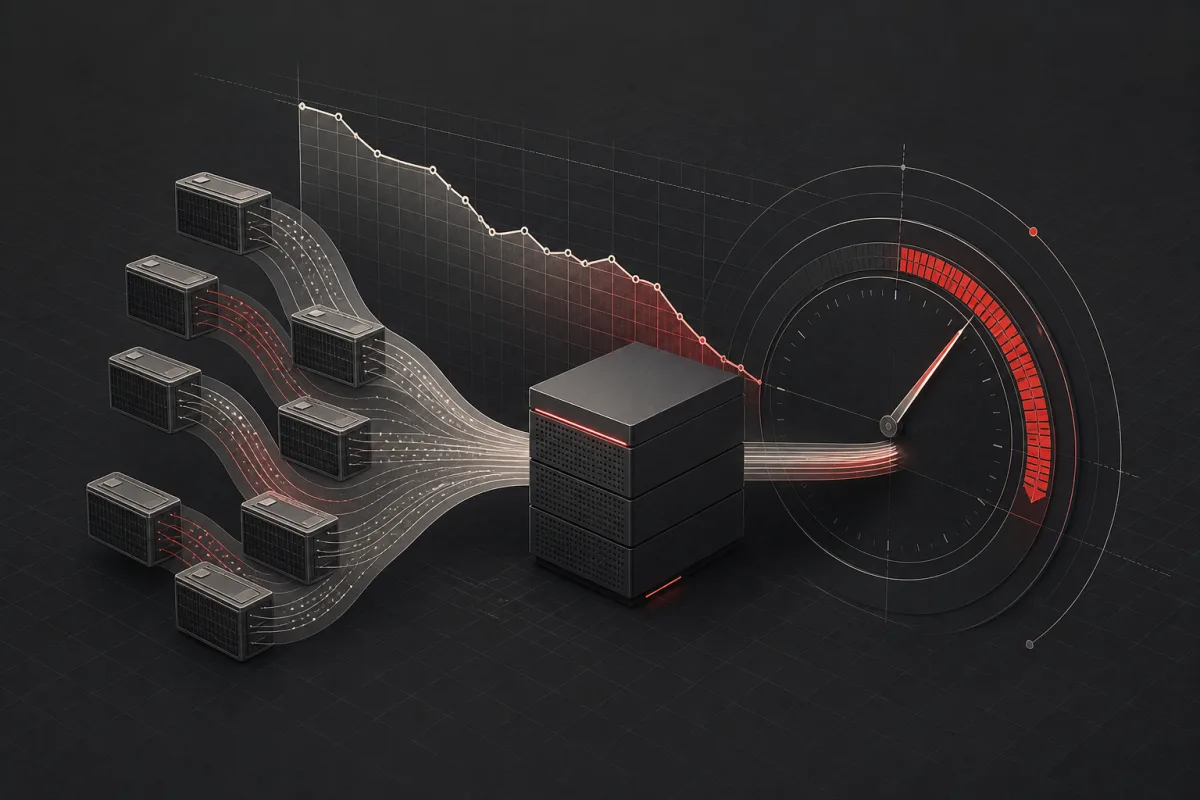
How to Specify UPS Runtime Using Real Load Watts
Specify UPS runtime at a measured load in watts and a defined operating condition. Use the checks below to turn that question into a comparable supplier requirement.
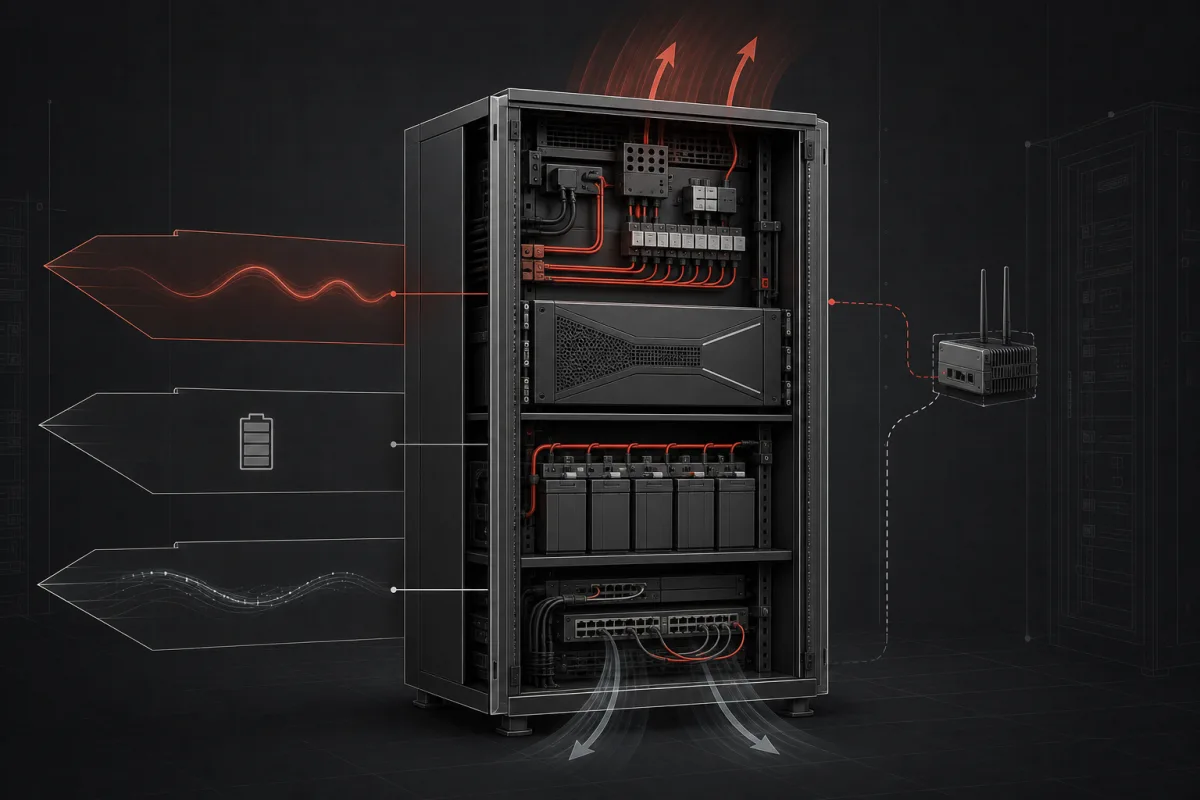
Edge Rack UPS Selection: Load, Runtime, U-Space and Remote Access
An edge-rack UPS should be specified from the actual IT load, required autonomy, available U-space, upstream source and remote-response plan. Use the checks below to turn that question into a comparable supplier requirement.

Why Telecom Sites Use −48 V DC—and When They Still Need AC Output
−48 VDC is a common telecom power interface, while many site appliances and tools still require AC. Use the checks below to turn that question into a comparable supplier requirement.
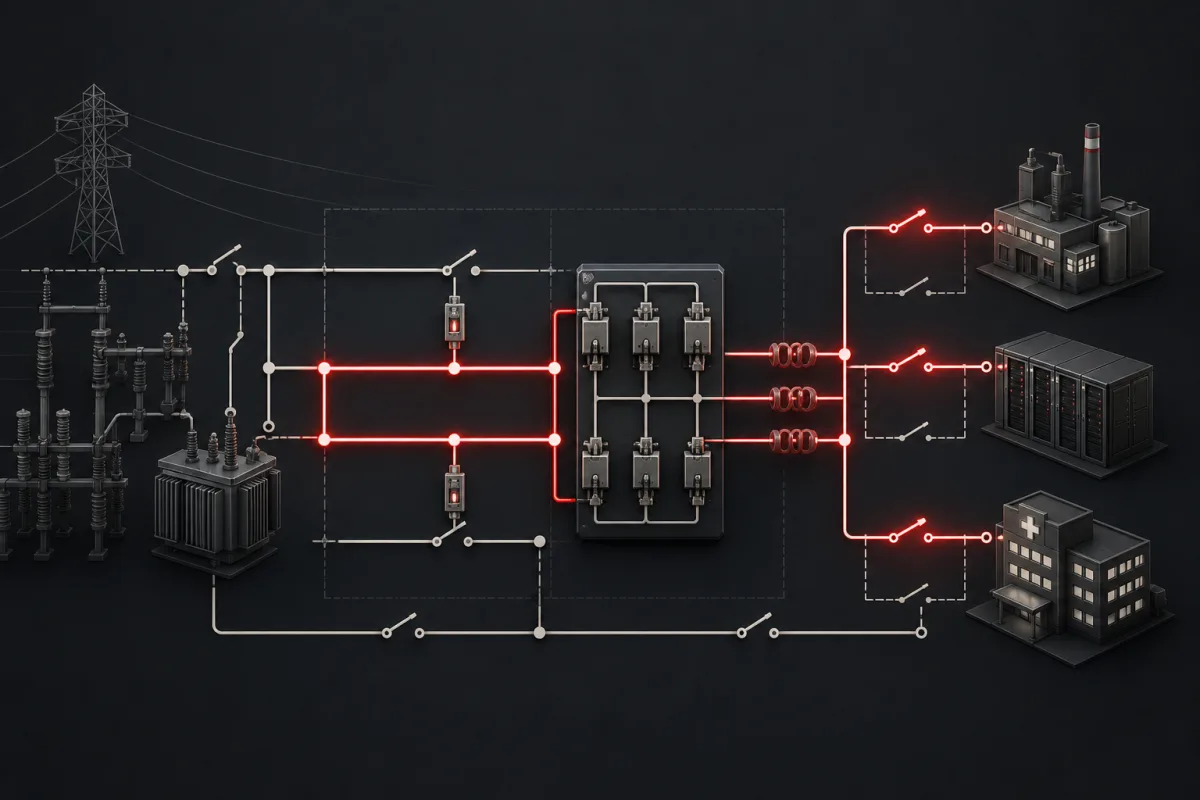
Substation DC-Bus Inverters: Converting 110/220 VDC for Critical AC Loads
A substation DC-bus inverter converts protected station DC into AC for selected control, communications or auxiliary loads. Use the checks below to turn that question into a comparable supplier requirement.
More engineering guides.
Showing 1–12 of 224 guides

Local SNMP vs Vendor Cloud for Multi-Site Fleets: Data Ownership and Offline Behavior
Compare local and hosted UPS fleet monitoring by collection paths, offline visibility, data custody, export and handover responsibilities.

UPS Daisy Chaining Is Not an Extended-Runtime Design
Understand UPS daisy-chain demand and waveform interactions, then compare supported host and battery routes for the required backup task.

Spare UPS vs Live Redundancy: Plan the Actual Recovery Time
Plan spare UPS compatibility, preservation, dispatch, replacement and service release without treating stored equipment as live power redundancy.

UPS MTBF, Service Life and Availability: Read the Assumptions
Read UPS MTBF assumptions, distinguish service life and availability, and compare recovery arrangements with a bounded worked model.

UL Recognized Components vs a Certified UPS Assembly
Distinguish UL Recognized component conditions from complete UPS product certification, then request evidence for the actual offered assembly.

UPS Management HTTPS Certificates: Plan Trust, Expiry and Renewal
Plan UPS management HTTPS identity, trust, validity, renewal and verification ownership while keeping web access separate from SNMPv3.

Multiple UPSs on RS-485: Confirm the Bus, Not Just the Connector
Plan a multi-UPS RS-485 integration by electrical bus, protocol and application layers, with device identity and missing-data behaviour explicit.

UPS Modbus Values: Verify Addresses, Data Types and Word Order
Verify UPS Modbus addresses, representation, scaling and word order with a reproducible raw-to-display record for the actual card and receiver.

Rack DC/DC Thermal Ratings: Match Output Power to Cooling Conditions
Match rack DC/DC output to temperature and cooling conditions with a practical installation-envelope schedule and configuration review.

Power-Supply Hold-Up Time vs UPS Transfer Time: Match the Conditions
Match power-supply hold-up and UPS transition conditions, keeping typical values, operating states and the equipment output requirement explicit.

Comparing DC/DC Ripple and Noise: Match the Measurement Conditions
Compare DC/DC ripple and noise using matched bandwidth, amplitude, load, measurement boundary and external filtering conditions.

DC/DC Short-Circuit Protection: Specify the Fault and Recovery Behavior
Specify converter fault-current behaviour, timing and recovery instead of relying on a short-circuit-protected label for an industrial control load.
Engineering guidance
Make a better power-system decision.
Every article answers a real buyer question — which battery chemistry, which topology, which voltage, which model for which environment — with the parameters and trade-offs an engineer needs to decide. Each links through to the relevant products and solutions.
Have a specific question?
Tell us your load and we'll advise.
Use these guides to frame the requirement, then send the load, voltage, runtime and destination for a configuration review.