Insights
UPS selection, standards & application guides.
Practical engineering guidance for specifying lithium UPS and power inverters, covering selection logic, voltage standards, topology and real application requirements.
Marine & Specialty Voltage guides.
Showing 1–9 of 9 guides

127 V UPS Selection for Underground Monitoring and Communications
Select a 127 V UPS for underground monitoring or communications only after the project defines the real source and load ranges, hazardous-area classification, environmental limits, isolation and grounding, protection, runtime, interfaces and required approvals. The following engineering and procurement checks make the answer measurable before an order is placed.
Specialty-Voltage UPS RFQ Checklist for Marine and Mining Projects
A specialty-voltage UPS RFQ must name the actual source and load ranges instead of relying on labels such as 110 V, 120 V or 127 V. Use the checks below to turn that question into a comparable supplier requirement.
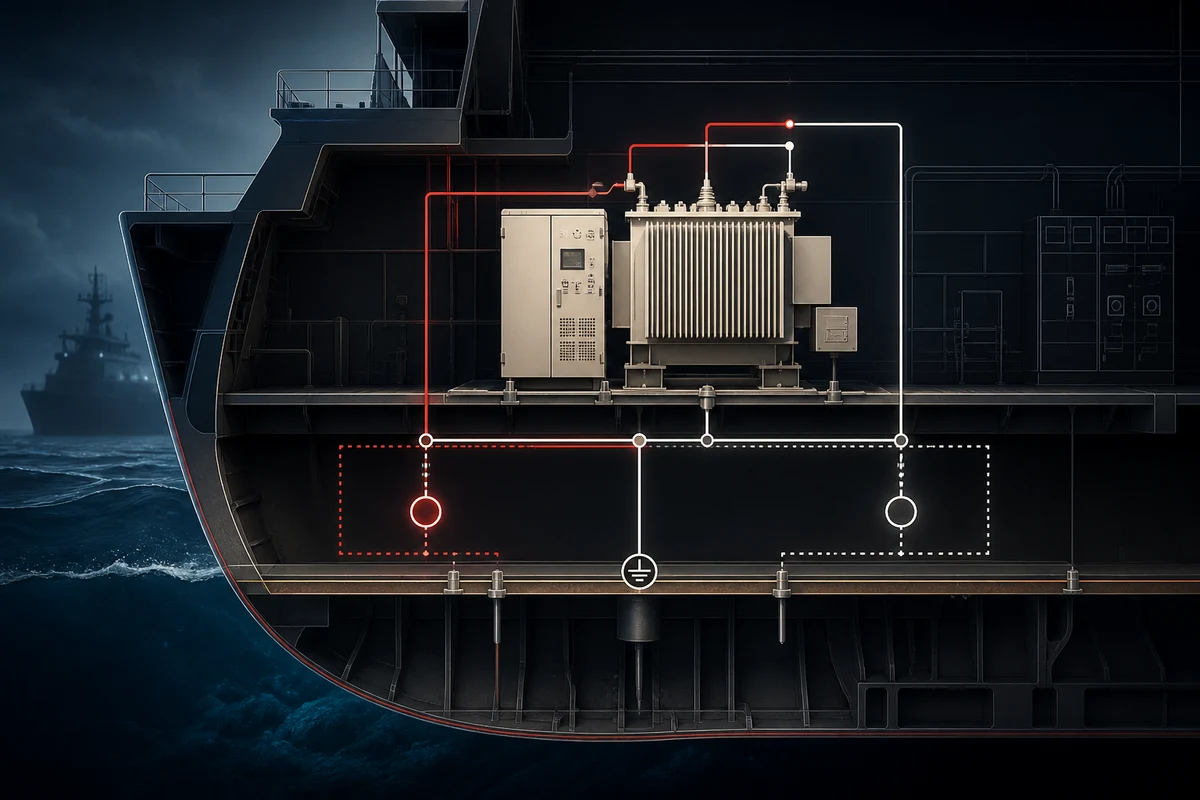
Isolation and Grounding Questions for Marine UPS Projects
For a marine UPS project, the ship integrator and supplier must agree the source arrangement, nominal voltage and frequency, neutral and protective-earth treatment, required galvanic isolation, insulation monitoring, fault behavior, protection coordination, cable shielding and applicable vessel or class requirements before installation. Use the checks below to turn that question into a comparable supplier requirement.

UPS for 115V Equipment: Checking 110V, 120V and 127V Options
Turn a 115 V equipment nameplate into a clear UPS requirement, with a voltage-band example and separate checks for battery and bypass operation.
100/110 V UPS Selection: Compare D, DT, LT and MT on Equal Terms
Compare D, DT, LT and MT by voltage, topology, battery chemistry and battery waveform; treat 100 V as an explicit D/DT configuration.
ECDIS UPS Runtime: Define the Navigation Dependencies Before Choosing a Battery
Specify ECDIS backup from the protected navigation dependencies, equipment supply limits, project autonomy and acceptance conditions, without case-result extrapolation.
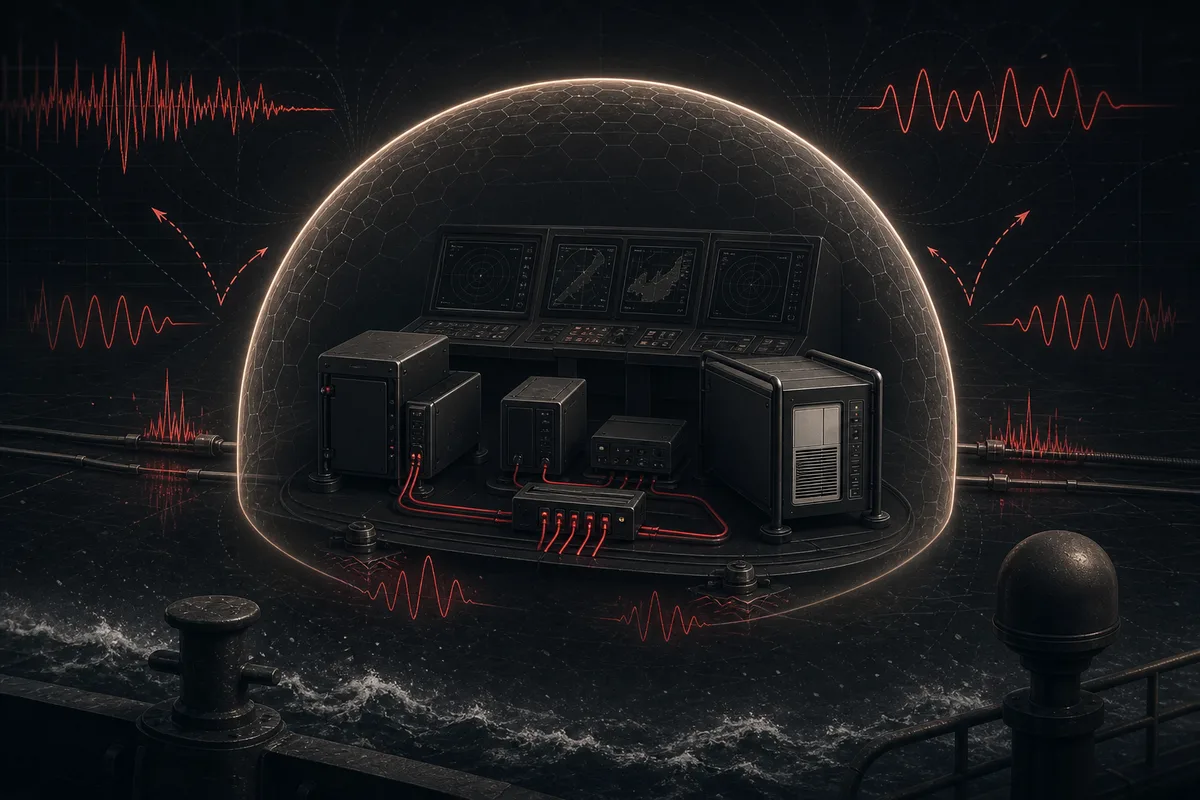
Marine UPS Procurement: Why IEC 60945 Context Matters
IEC 60945 gives buyers relevant context for environmental and EMC expectations around maritime navigation and radio equipment, but citing the standard does not prove a UPS complies. A buyer can use this guide to define the input, evidence and acceptance result before comparing models.
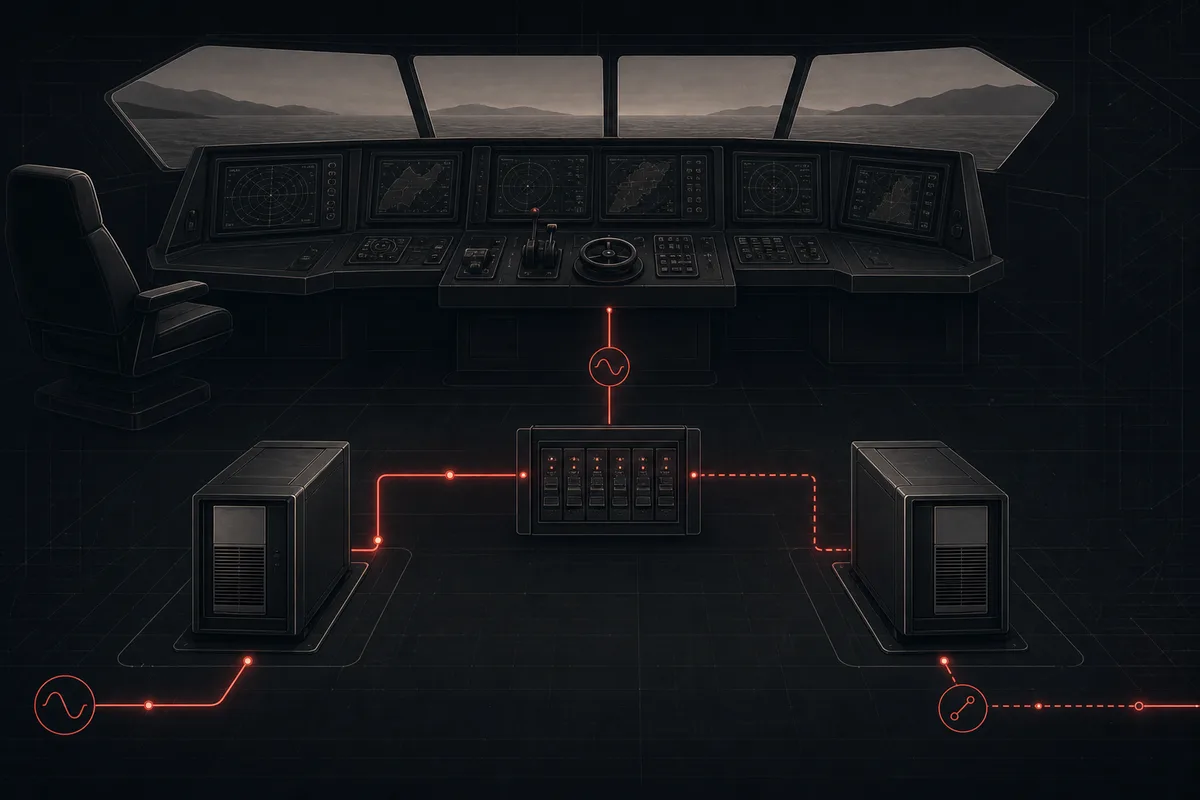
Online vs Line-Interactive 110 V UPS for Marine Electronics
Use line-interactive 110 V backup when the load accepts its transfer time and battery-mode waveform; use an online 110 V design when continuous conditioning and online-to-battery continuity are required. The following engineering and procurement checks make the answer measurable before an order is placed.
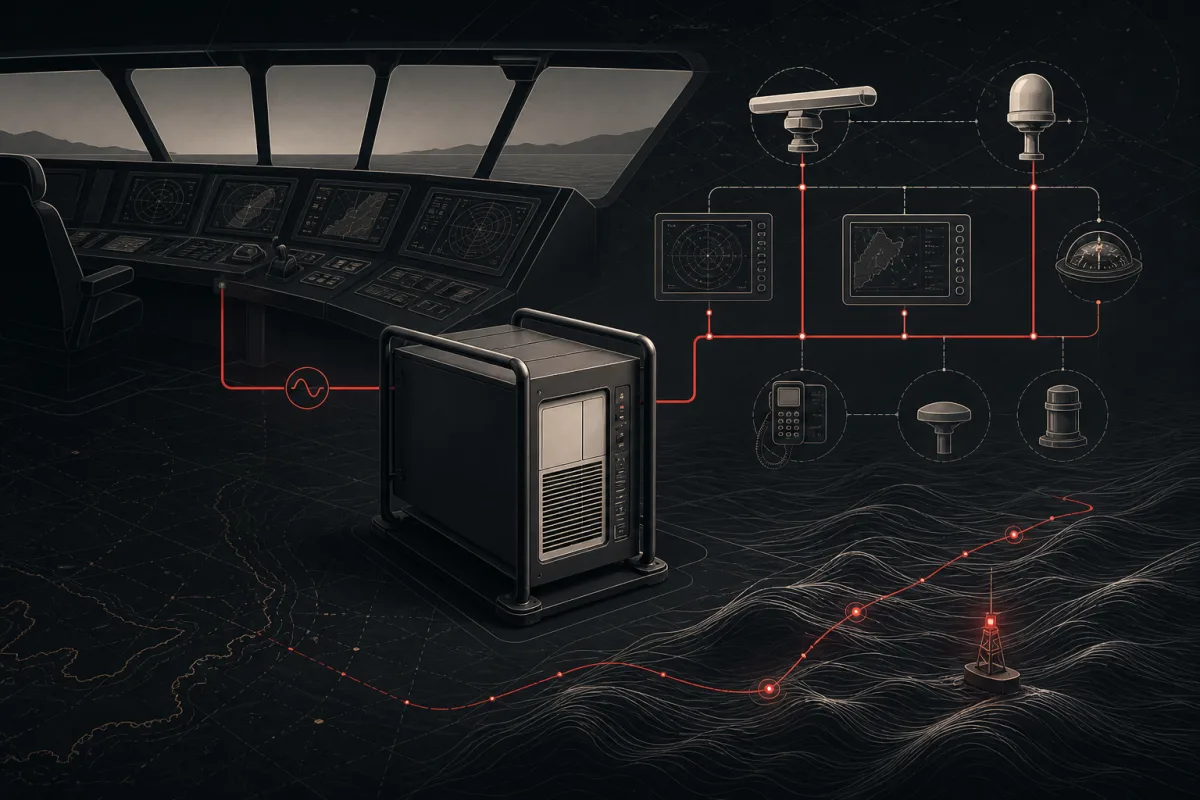
110 V Marine UPS Selection Starts with the Navigation Load List
A 110 V marine UPS recommendation should begin with the bridge or navigation load list: equipment voltage and frequency, watts/VA, startup behavior, transfer tolerance, waveform needs and required autonomy. Use the checks below to turn that question into a comparable supplier requirement.
Engineering guidance
Make a better power-system decision.
Every article answers a real buyer question — which battery chemistry, which topology, which voltage, which model for which environment — with the parameters and trade-offs an engineer needs to decide. Each links through to the relevant products and solutions.
Have a specific question?
Tell us your load and we'll advise.
Use these guides to frame the requirement, then send the load, voltage, runtime and destination for a configuration review.