Insights
UPS selection, standards & application guides.
Practical engineering guidance for specifying lithium UPS and power inverters, covering selection logic, voltage standards, topology and real application requirements.
Industrial Applications guides.
Showing 1–9 of 9 guides

Preparing a Monitoring-Cabinet UPS for Condensation Risk
Plan monitoring-cabinet UPS readiness through storage, arrival and operation, keeping non-condensing conditions and safe preparation explicit.

Solar-Station Auxiliary UPS vs Grid-Storage Functions
Separate solar-station auxiliary backup from generation export, grid storage and grid-forming duties before requesting a UPS or inverter.
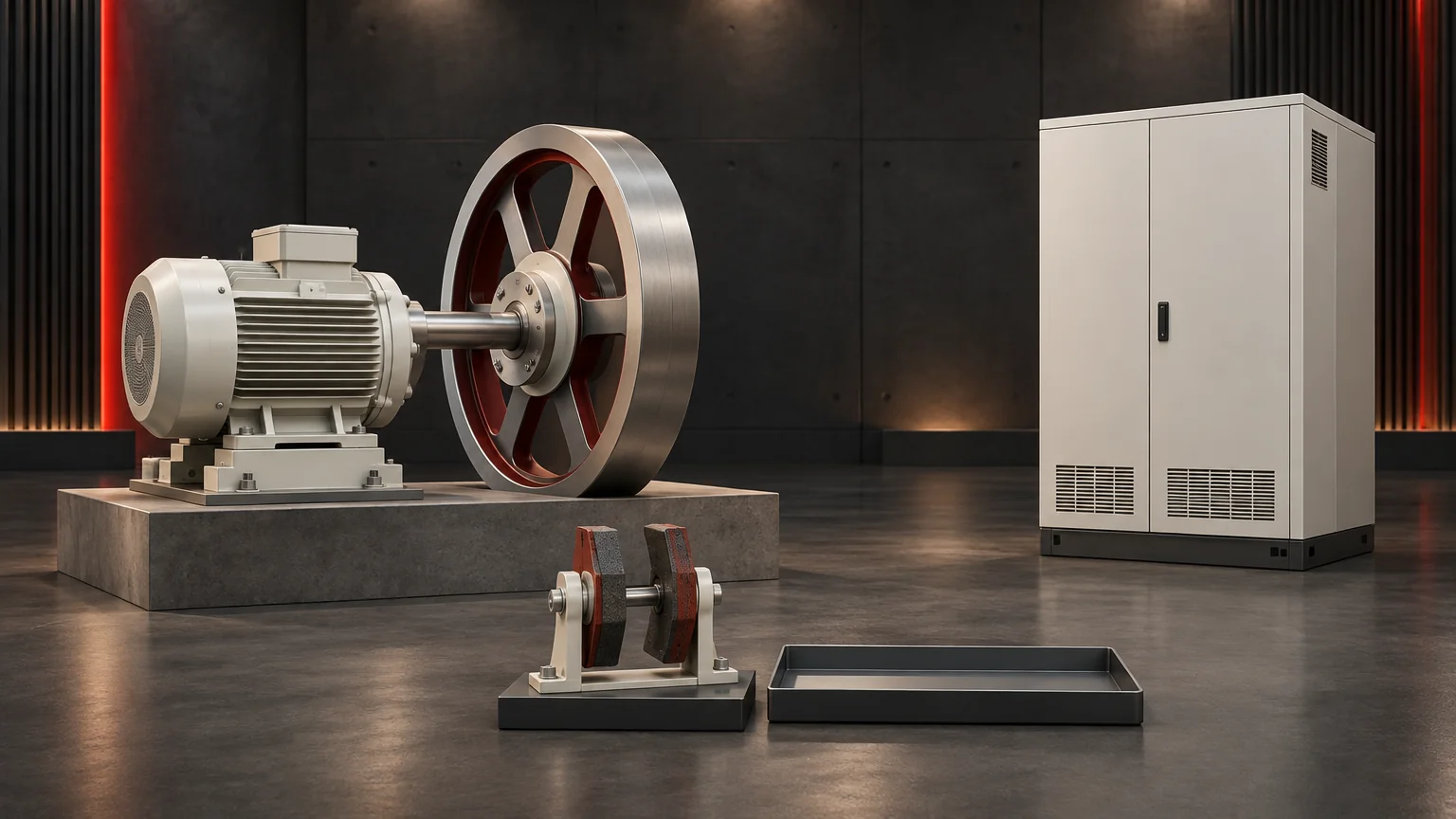
Regenerative Loads Need More Than a Larger UPS Rating
Review regenerative load power, event energy and the available return path before pairing a UPS with a drive or braking machine.

Adding a UPS to Machinery: Emergency Stop and Isolation Boundaries
Adding stored energy changes the machine's power boundary.

Backup Power for an Industrial PC and Its Field I/O
Keeping an industrial PC powered does not by itself keep its field signals valid.

Budget Intermittent Sampling Pumps in a Monitoring UPS
Calculate intermittent sampling loads from active and idle intervals, while checking startup, simultaneous demand and the complete measurement task.

UPS Backup for Environmental Monitoring: Preserve the Sampling Chain
Plan backup around a valid sampling cycle and its stored record.

UPS Backup for Surveillance: Protect the Recording Chain
A camera that remains powered does not prove that footage is being recorded.
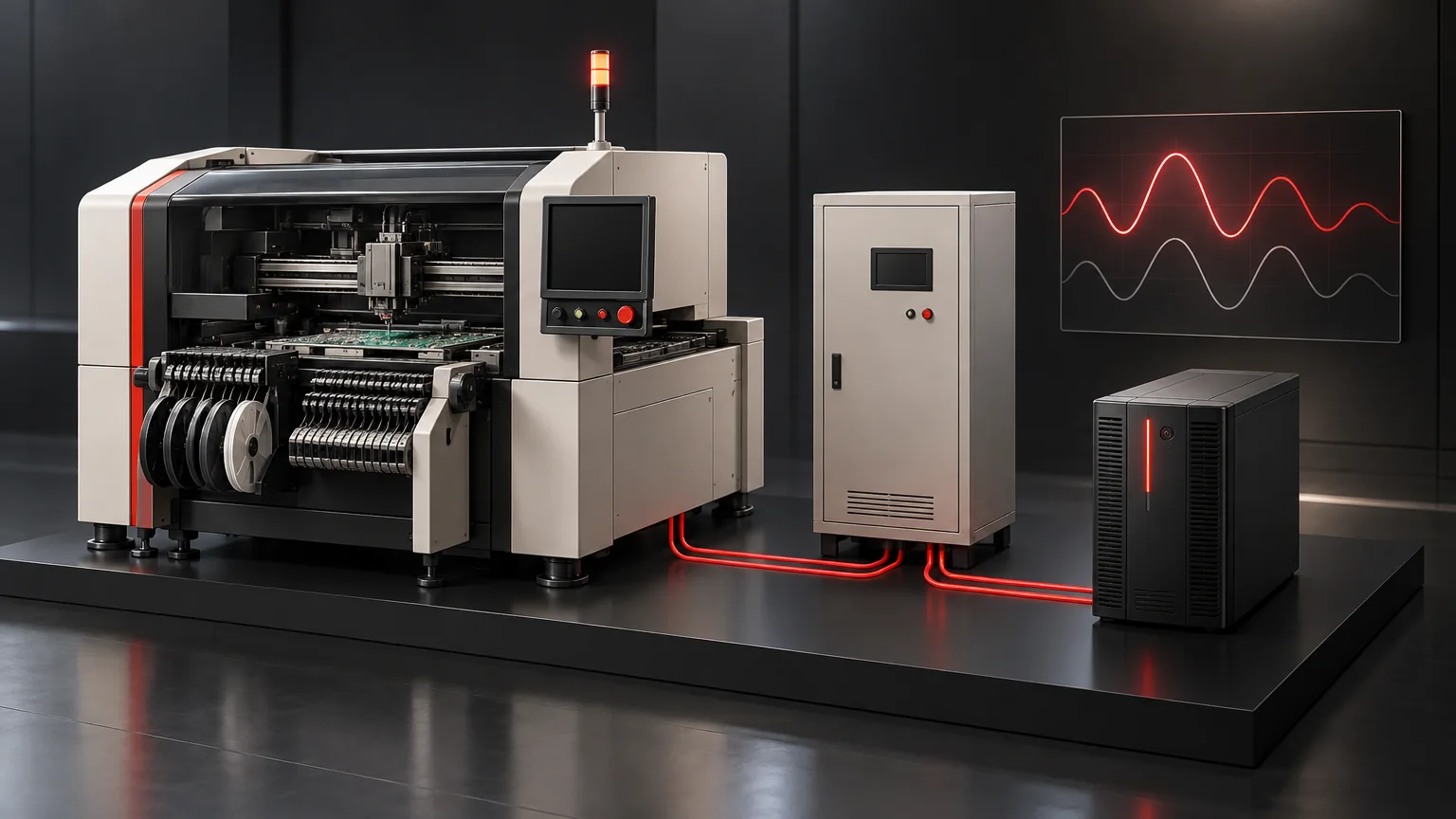
UPS Selection for SMT Lines: Separate Controls, Motion and Heat
Define SMT backup by approved process functions, dependencies and transient loads rather than assuming one UPS rating protects the whole line.
Engineering guidance
Make a better power-system decision.
Every article answers a real buyer question — which battery chemistry, which topology, which voltage, which model for which environment — with the parameters and trade-offs an engineer needs to decide. Each links through to the relevant products and solutions.
Have a specific question?
Tell us your load and we'll advise.
Use these guides to frame the requirement, then send the load, voltage, runtime and destination for a configuration review.