Insights
UPS selection, standards & application guides.
Practical engineering guidance for specifying lithium UPS and power inverters, covering selection logic, voltage standards, topology and real application requirements.
Compliance & Shipping guides.
Showing 1–11 of 11 guides

UL Recognized Components vs a Certified UPS Assembly
Distinguish UL Recognized component conditions from complete UPS product certification, then request evidence for the actual offered assembly.

UPS Compliance RFQ Checklist: Model, Market, Battery and Shipment
Request compliance evidence against the exact legal entity, model, market, battery configuration and transport mode before comparing UPS quotations.

Remote UPS Supplier Audit: Evidence You Can Review Before a Factory Visit
A remote UPS supplier audit should triangulate legal identity, real processes and product-specific records. Use the checks below to turn that question into a comparable supplier requirement.

Sea vs Air Shipment for Lithium UPS Systems: Documentation Questions Differ
Sea and air shipment of a lithium UPS start with the same exact battery identity, classification and current UN 38.3 evidence, but their rules are not interchangeable. It focuses the discussion on project conditions, configuration scope and evidence rather than catalogue shorthand.

Build an Export-Document Matrix for a Lithium UPS Purchase Order
Build the export-document matrix at configuration and shipment level: list each UPS host, battery or cell, accessory, legal entity, destination market and transport mode, then map the required declaration, certificate, test report, test summary, safety data, label and shipping record to the exact item and revision. The following engineering and procurement checks make the answer measurable before an order is placed.

ISO 9001 in UPS Supplier Evaluation: Verify the Certificate, Not the Logo
ISO 9001 is evidence of a certified quality-management system within a stated scope; it is not proof that a UPS model meets a performance or market-access requirement. Use the checks below to turn that question into a comparable supplier requirement.

RoHS Evidence for a UPS Order: What an Importer Should Request
A useful RoHS evidence package identifies the legal entity, product or homogeneous-material scope, restricted substances, test or assessment method, report issuer and date. It focuses the discussion on project conditions, configuration scope and evidence rather than catalogue shorthand.
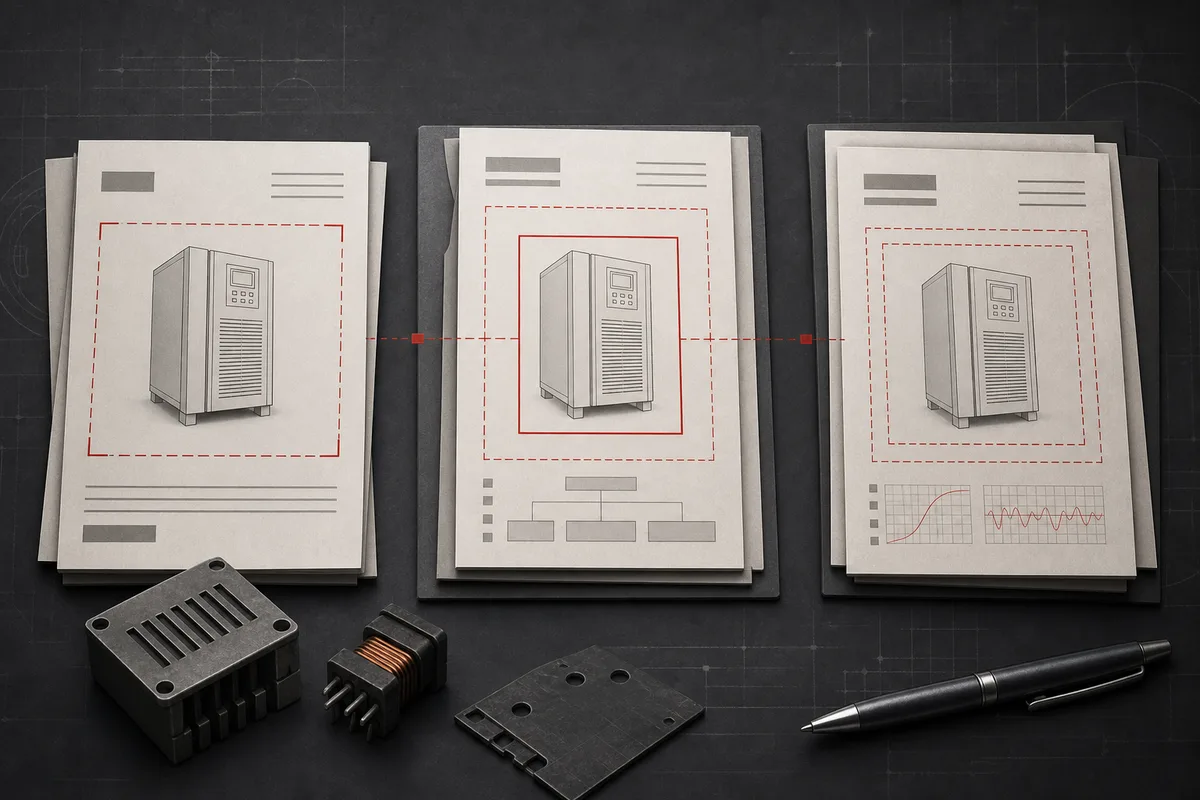
CE, IEC 62040 and a Test Report: What Each Document Tells a UPS Buyer
CE marking, an IEC standard and a test report answer different questions. The result is a decision record that engineering, procurement and the supplier can all verify.
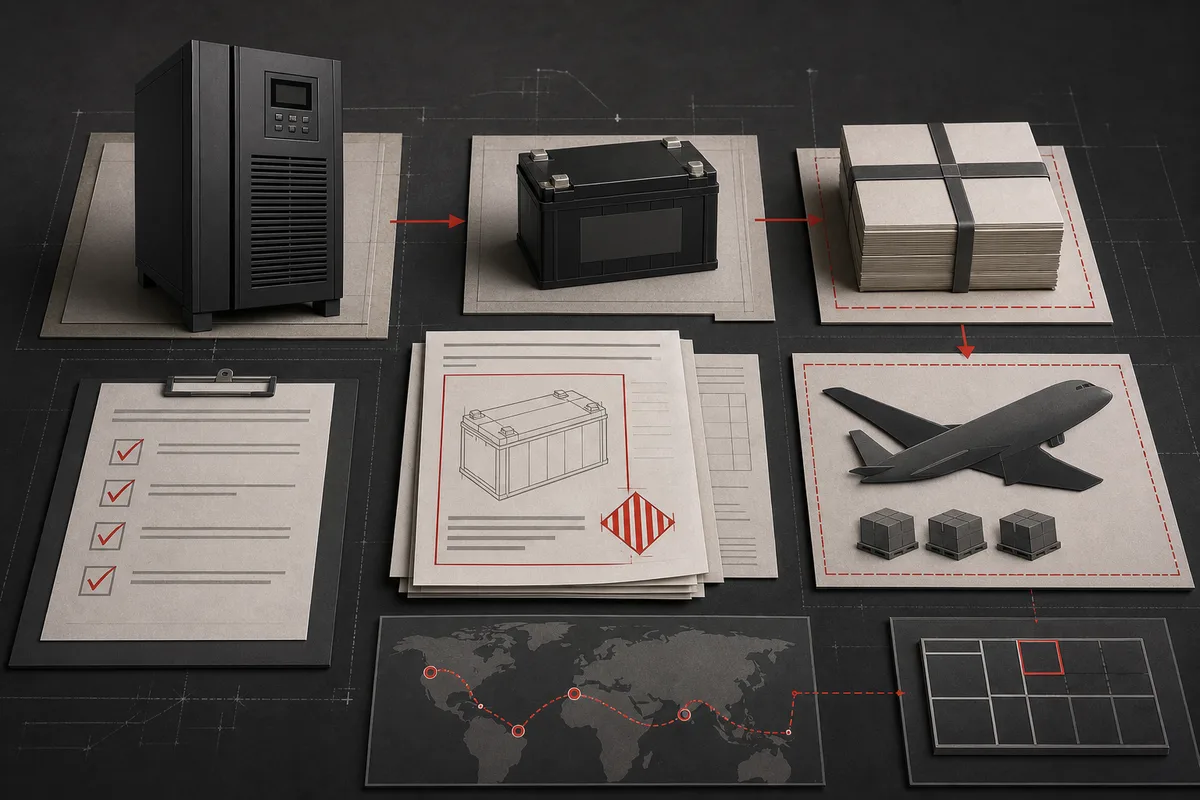
Lithium UPS Air Shipping: Questions to Resolve Before Booking Cargo
Before booking a lithium UPS by air, identify the battery configuration and rating, confirm applicable UN 38.3 evidence, determine how it is packed with or contained in equipment, and check the current carrier and operator requirements with a qualified dangerous-goods professional. A buyer can use this guide to define the input, evidence and acceptance result before comparing models.
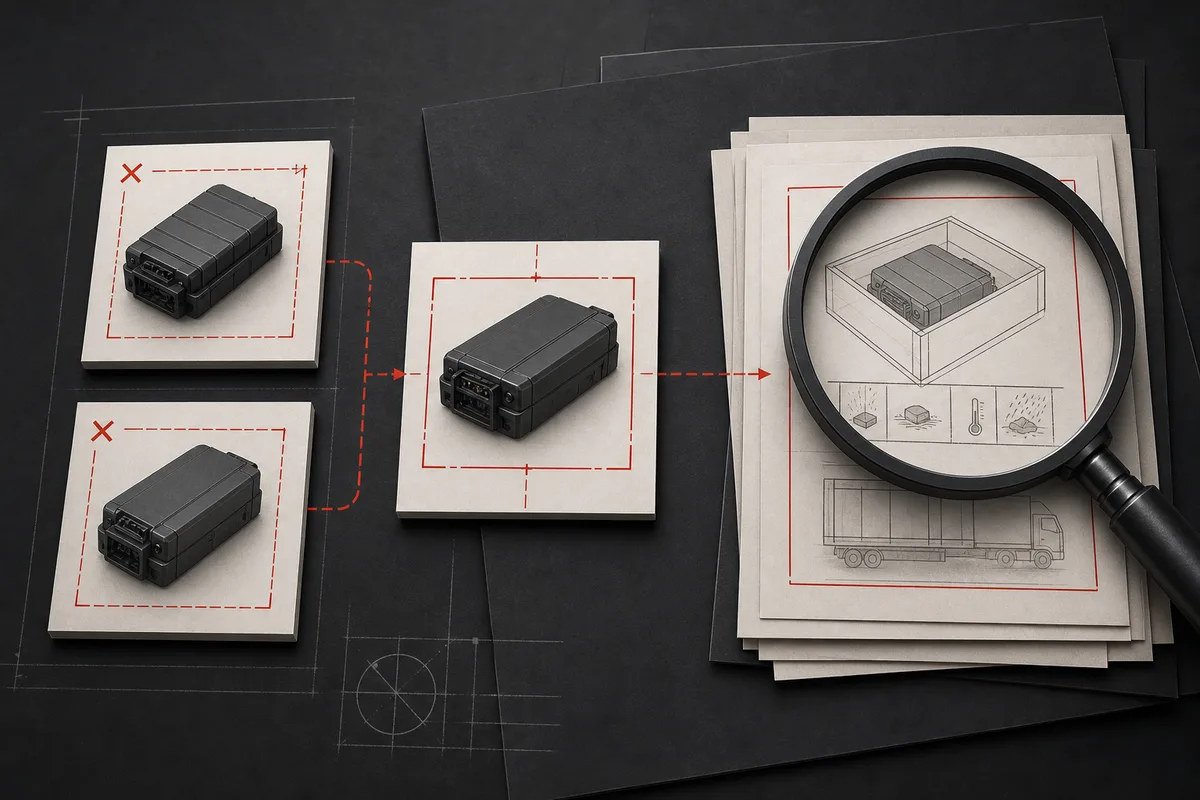
UN 38.3 for Lithium UPS Orders: Match the Report to the Battery Type
UN 38.3 evidence follows a cell or battery type, not a marketing family name. The following engineering and procurement checks make the answer measurable before an order is placed.

How to Read a UPS CE Certificate by Model Scope
Read a UPS CE certificate by matching the legal entity, exact model or model range, referenced standard, issue information and any limitations to the purchase order. Use the checks below to turn that question into a comparable supplier requirement.
Engineering guidance
Make a better power-system decision.
Every article answers a real buyer question — which battery chemistry, which topology, which voltage, which model for which environment — with the parameters and trade-offs an engineer needs to decide. Each links through to the relevant products and solutions.
Have a specific question?
Tell us your load and we'll advise.
Use these guides to frame the requirement, then send the load, voltage, runtime and destination for a configuration review.