UL Recognized Components vs a Certified UPS Assembly
By Highidea Power · 24 October 2026 · 4 min read
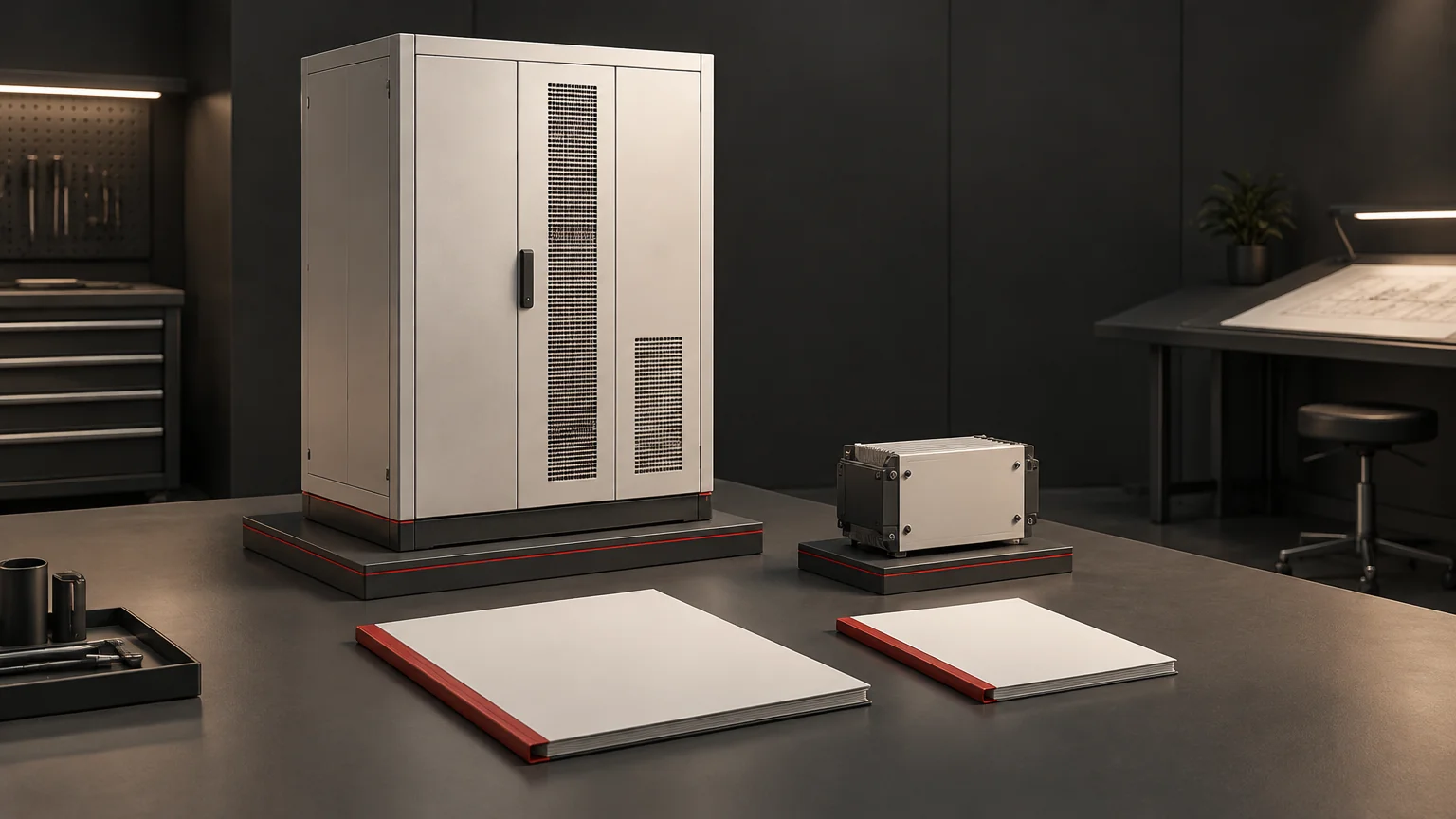
Treat a component's UL Recognition as evidence for that component under its stated conditions, and request the applicable evidence for the complete UPS separately. A recognized internal part does not make the assembled UPS UL Listed. Match the required certification scope to the product actually being purchased and its intended market.
Identify what the requirement covers
A buyer may receive a certificate for a power module, wiring material or another part inside an offered assembly. That can be relevant technical information, but the purchase requirement may concern the complete UPS with its enclosure, batteries, interfaces and options. Name the object before deciding whether the document answers the request.
Highidea provides UPS and OEM/ODM routes for configuration-specific enquiries. Tell us the intended market, application and exact certification requirement early, so the offer can identify the relevant product and supporting documents. Keep any unconfirmed requirement open rather than treating a familiar mark in a component file as a complete-system approval.
Understand the value of component recognition
UL Solutions explains that its Recognized Component service covers components or subassemblies intended for incorporation into a complete product. The component can have conditions of acceptability, such as installation, enclosure, wiring or temperature restrictions. Recognition helps the end-product assessment; it has a defined role rather than no value.
The same official guidance distinguishes the Recognized Component Mark from the Listed Mark and states that component recognition is not certification for a complete standalone product. The useful purchasing distinction is therefore scope and conditions, not whether one logo looks more impressive than another.
Do not carry that explanation into an unsupported claim that a Highidea product has a particular UL status. The required product-level answer must identify the actual offered model and applicable evidence.
Follow the evidence through three boundaries
Begin with the named component. Then identify the conditions under which its evaluation applies. Finally, identify the offered assembly and the evidence required for that complete product. A gap between these boundaries is an item to resolve, not a reason to silently expand the certificate's meaning.
Evidence boundary | Information to retain |
|---|---|
Component identity | Manufacturer, exact part, applicable recognition record and revision. |
Use conditions | Relevant conditions of acceptability and who checks their implementation. |
Final assembly | UPS model, options, battery arrangement and intended installation scope. |
Product evidence | Required end-product evaluation or certification and its exact model coverage. |
Purchase decision | Accepted scope, remaining requirement and responsible approval owner. |
The table is a procurement tool. It does not replace the responsible certification or compliance assessment, nor does it require every product for every market to follow the same certification route.
Compare two hypothetical configurations
Suppose a component is recognized subject to particular enclosure and thermal conditions. Two proposed assemblies use that same component, but their installation conditions differ. The shared part identity alone does not show that both final assemblies satisfy the component's conditions or the customer's complete-product requirement.
Ask how the relevant conditions are addressed in each offered assembly and which product-level evidence closes the actual requirement. Keep the response linked to the controlled configuration. If the offered evidence names only a component, record that scope accurately while requesting the remaining assembly-level answer.
A certificate for a related model can be useful background, but it should not be substituted for matching the offered product. Our model-scope guide develops that general document-matching discipline for a different conformity context.
Keep other document types separate
UL component recognition, a complete-product certification, a quality-management-system certificate, an EU declaration and a battery transport record answer different questions. None should be renamed to make it appear to fulfil another requirement.
Our CE, IEC and test-report guide helps procurement keep legal responsibilities, technical standards and assessment records distinct. An ISO management-system certificate also does not create product-performance approval. State the exact requirement rather than asking for a generic certificate pack and deciding later what it means.
Keep the accepted document list and configuration with the order. Component substitutions, enclosure changes or a different battery arrangement may require review by the responsible parties. The earlier scope should remain visible rather than being overwritten with the new model name.
Prepare the Highidea document enquiry
Through our contact page, provide the exact product configuration, destination market, required certification or evaluation scope and any customer specification. We can discuss the relevant product route and the documents to be identified for the quotation. Obtain a clear applicable answer before releasing a requirement that depends on certification.
Reference
FAQ
Frequently asked questions
Is component recognition meaningless to a UPS buyer?
No. It can be useful within its defined role and conditions. Keep it separate from the complete-product requirement.
Does a recognized part guarantee every assembly using it?
No. Its use conditions and the final assembly's applicable requirements still need the appropriate assessment.
Can a UL document be substituted for CE responsibilities?
They belong to different systems and scopes. Determine the actual market and product requirements and retain the appropriate evidence for each.
Related
Products, solutions & further reading.
Put this into practice
Need help specifying the right unit?
Share the load, voltage, runtime, environment and destination for a configuration review.