Insights
UPS selection, standards & application guides.
Practical engineering guidance for specifying lithium UPS and power inverters, covering selection logic, voltage standards, topology and real application requirements.
Telecom Power guides.
Showing 1–11 of 11 guides
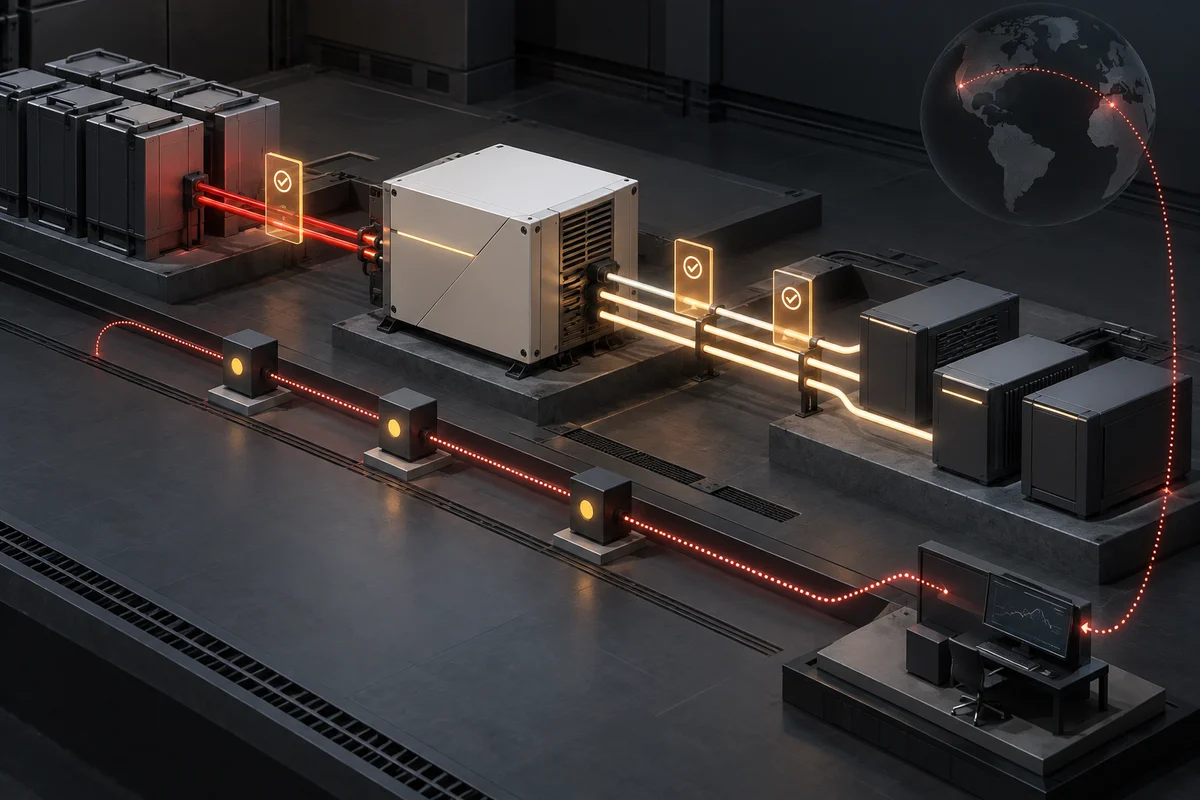
Telecom Power Acceptance Testing: From DC Bus to Critical AC Load
A telecom power acceptance test should witness the complete path from the live DC bus and alternate source through the inverter to representative critical AC loads. Use the checks below to turn that question into a comparable supplier requirement.

Migrating a Telecom Backup System to LiFePO4: A Compatibility Review
Do not connect a LiFePO4 battery system to an existing telecom DC plant solely because the nominal voltage matches. The result is a decision record that engineering, procurement and the supplier can all verify.
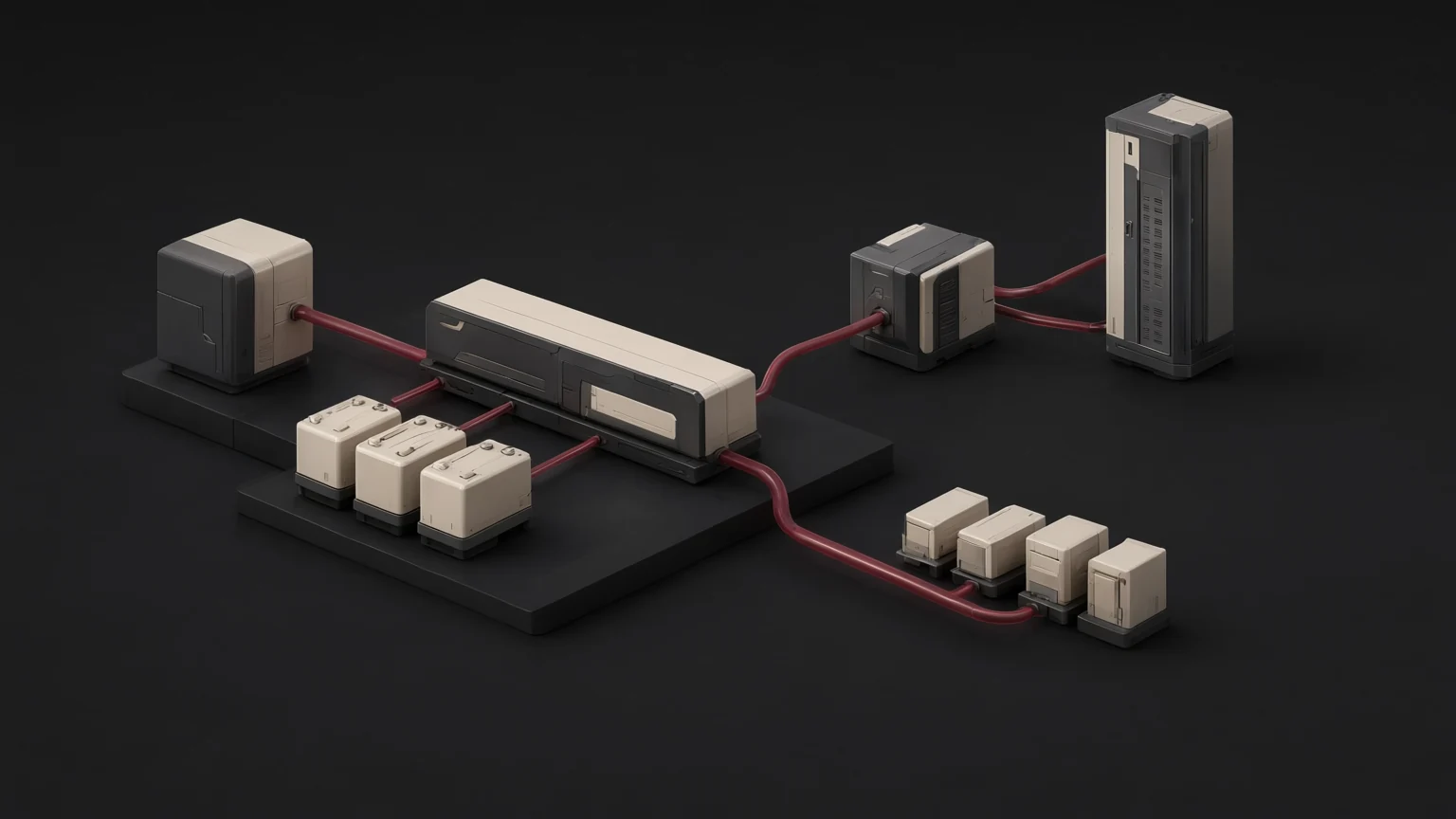
Telecom Backup Power: How Rectifiers, Batteries and Inverters Share the Load
Map generator, rectifier, battery and inverter responsibilities, distinguish DC and AC branches, and account for added inverter demand on the DC plant.

Telecom Inverter RFQ Checklist: −48 V DC Input to 220 V AC Output
A telecom inverter RFQ should describe the complete DC-to-AC path: actual DC-bus operating range, polarity and grounding; AC load in watts and VA; startup demand; output voltage, frequency and waveform; source priority and transfer paths; isolation; protection; monitoring; environment; and handover tests. The result is a decision record that engineering, procurement and the supplier can all verify.
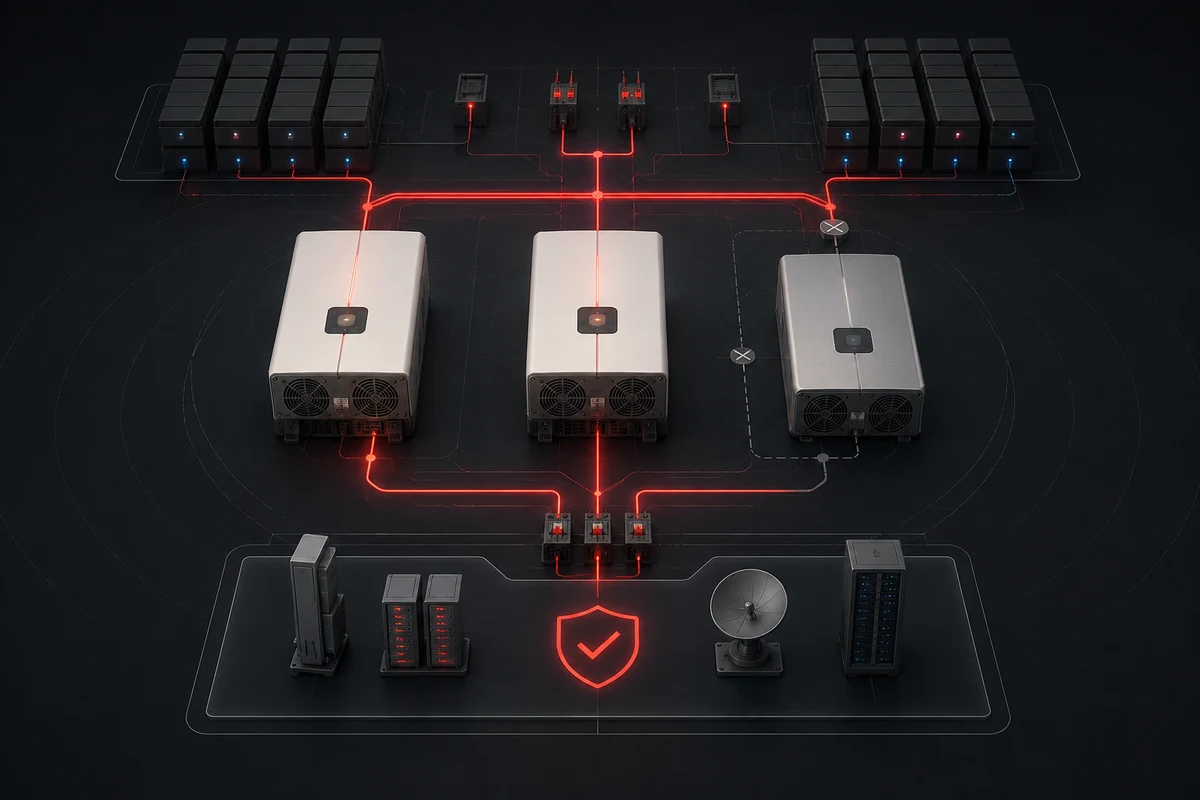
Parallel and Redundant Telecom Inverters: Design Questions Before You Specify
Specify redundant telecom inverters from the failure behavior the site needs, not from an “N+1” label. The result is a decision record that engineering, procurement and the supplier can all verify.
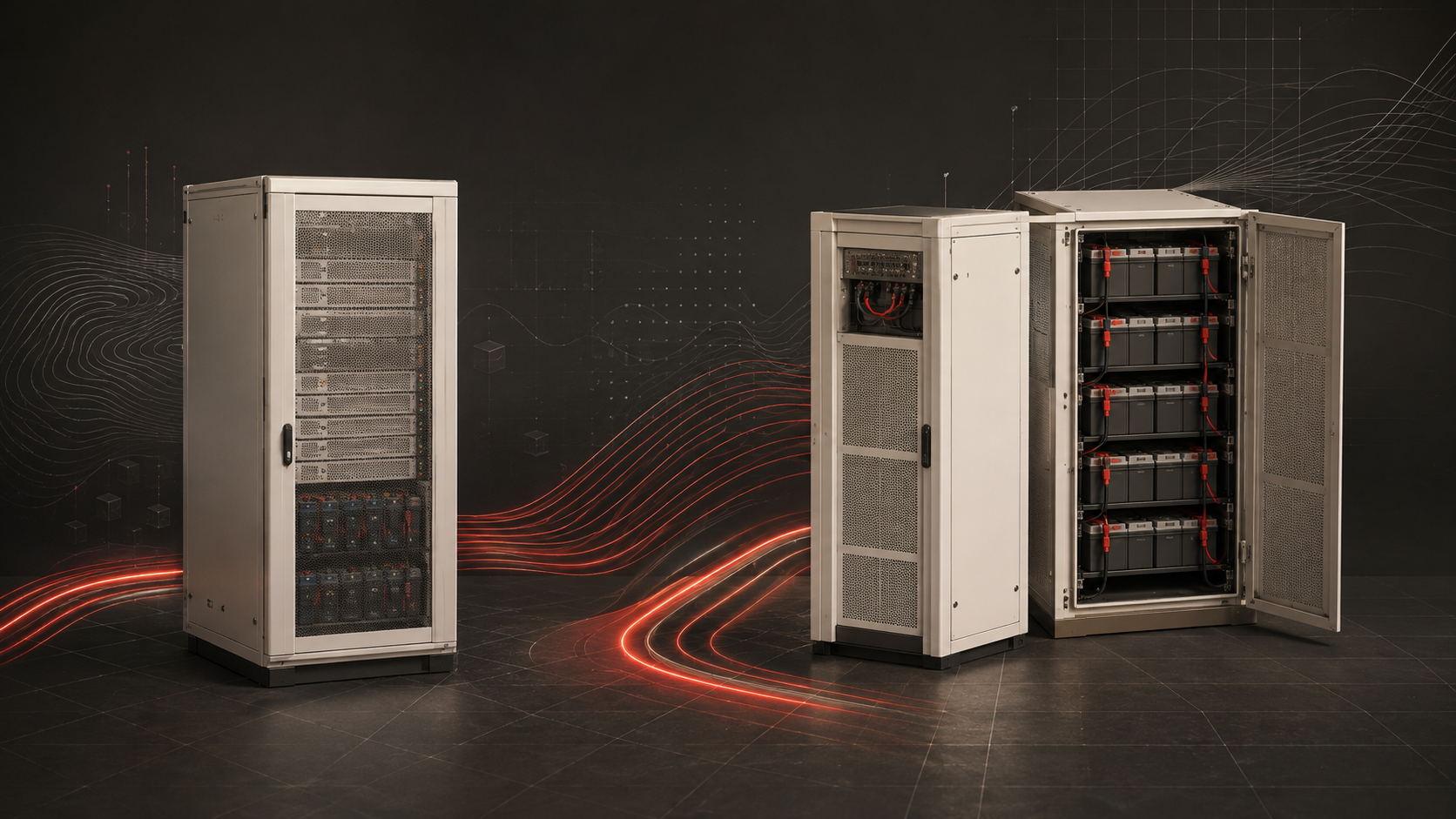
Rack-Mount Inverter or Rack UPS? Start with the Power Source
Choose between a DC-fed rack inverter and a rack UPS by mapping the source, battery ownership, output voltage and failure response.
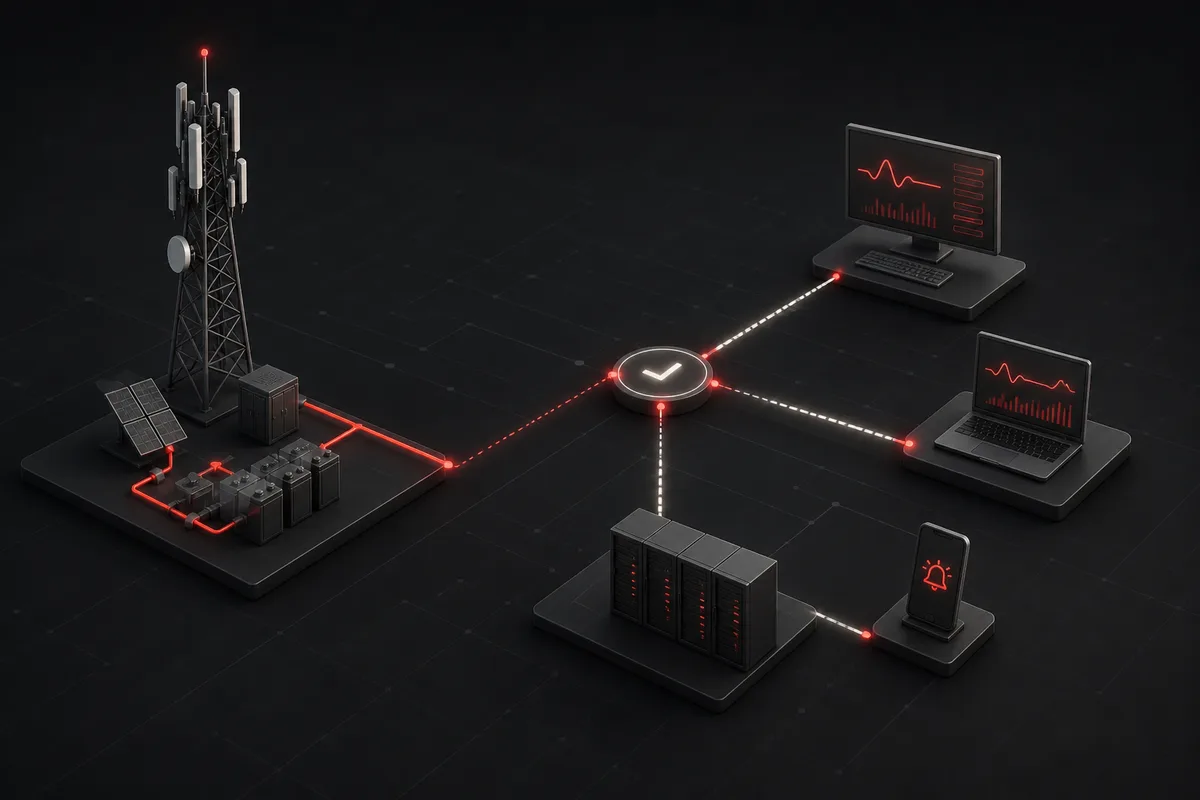
Remote Power Monitoring for Unattended Telecom Sites
Remote monitoring for an unattended telecom site needs meaningful alarms, a reliable communications path and an escalation process. It focuses the discussion on project conditions, configuration scope and evidence rather than catalogue shorthand.
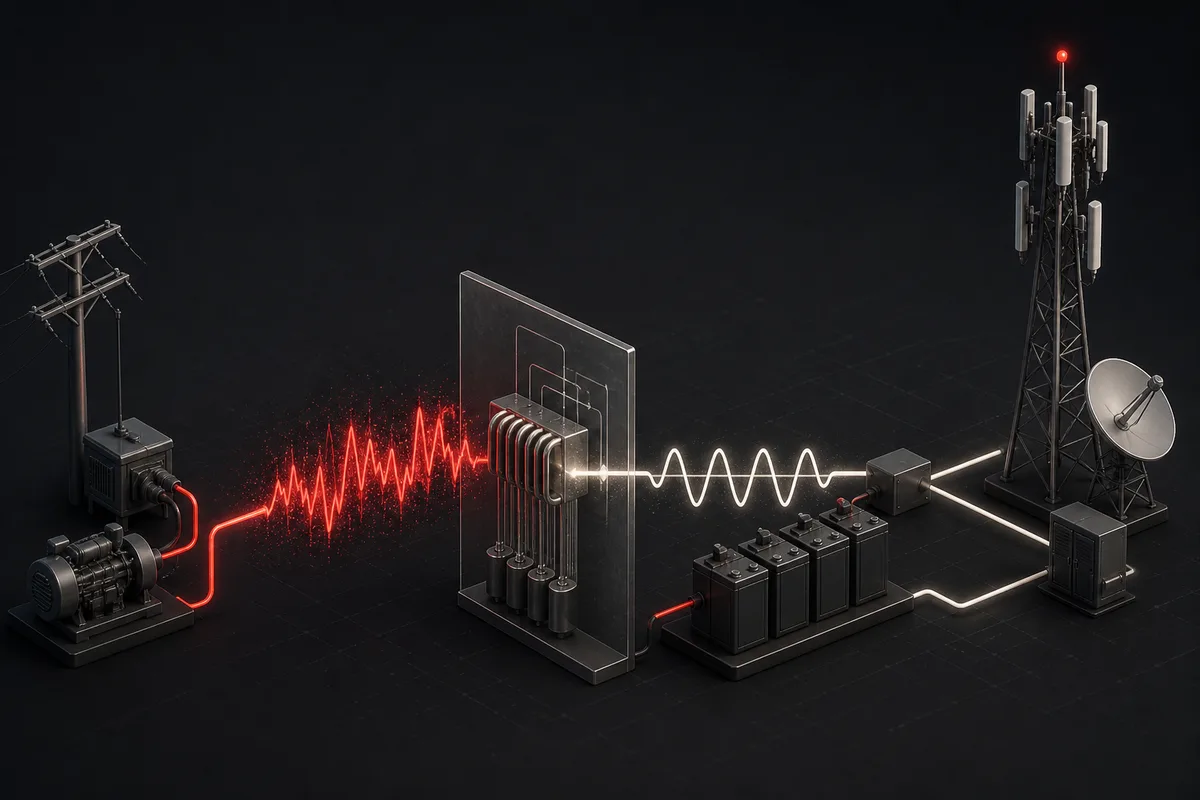
DC-Port Noise and Harmonics in Telecom Power Equipment: What Buyers Should Ask
Telecom power equipment can affect connected systems through harmonics and unintended noise on AC and DC ports. The result is a decision record that engineering, procurement and the supplier can all verify.
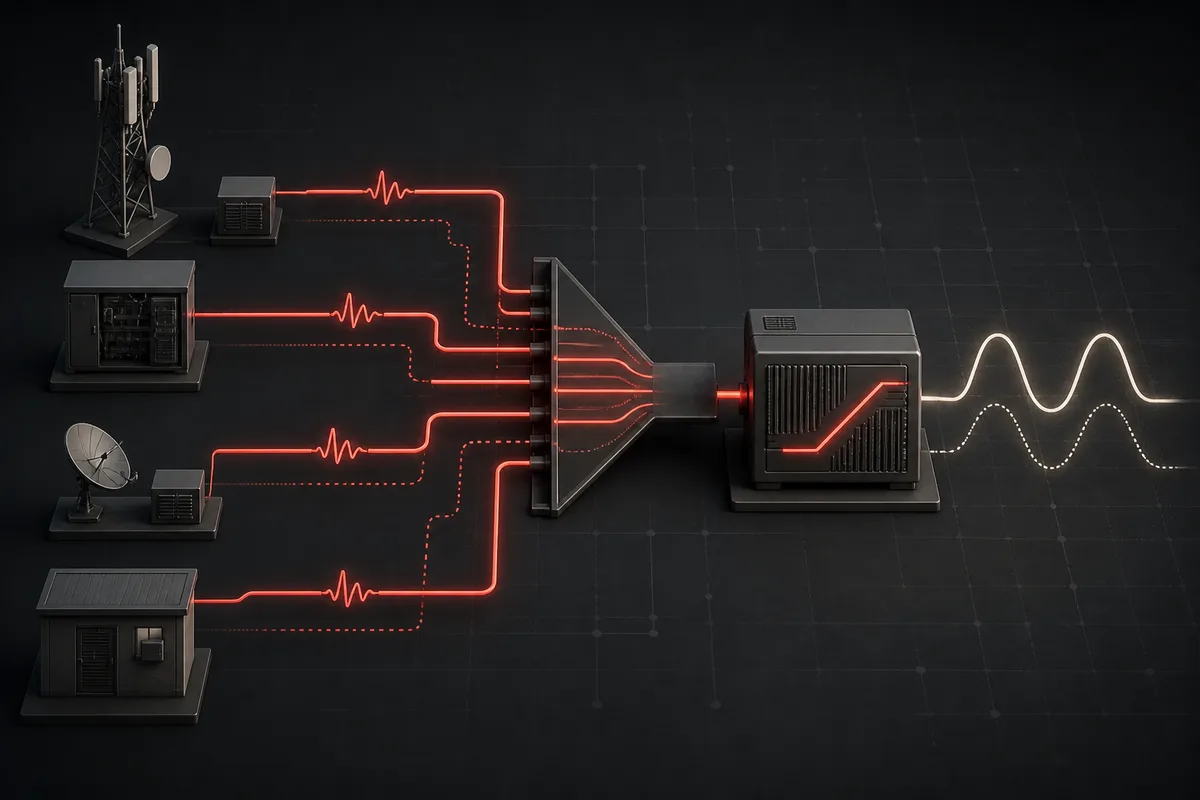
How to Size a Telecom DC-to-AC Inverter from the Real AC Load
Size a telecom inverter from the complete AC load in watts and VA, its startup demand, required output quality and the DC bus operating range. A buyer can use this guide to define the input, evidence and acceptance result before comparing models.
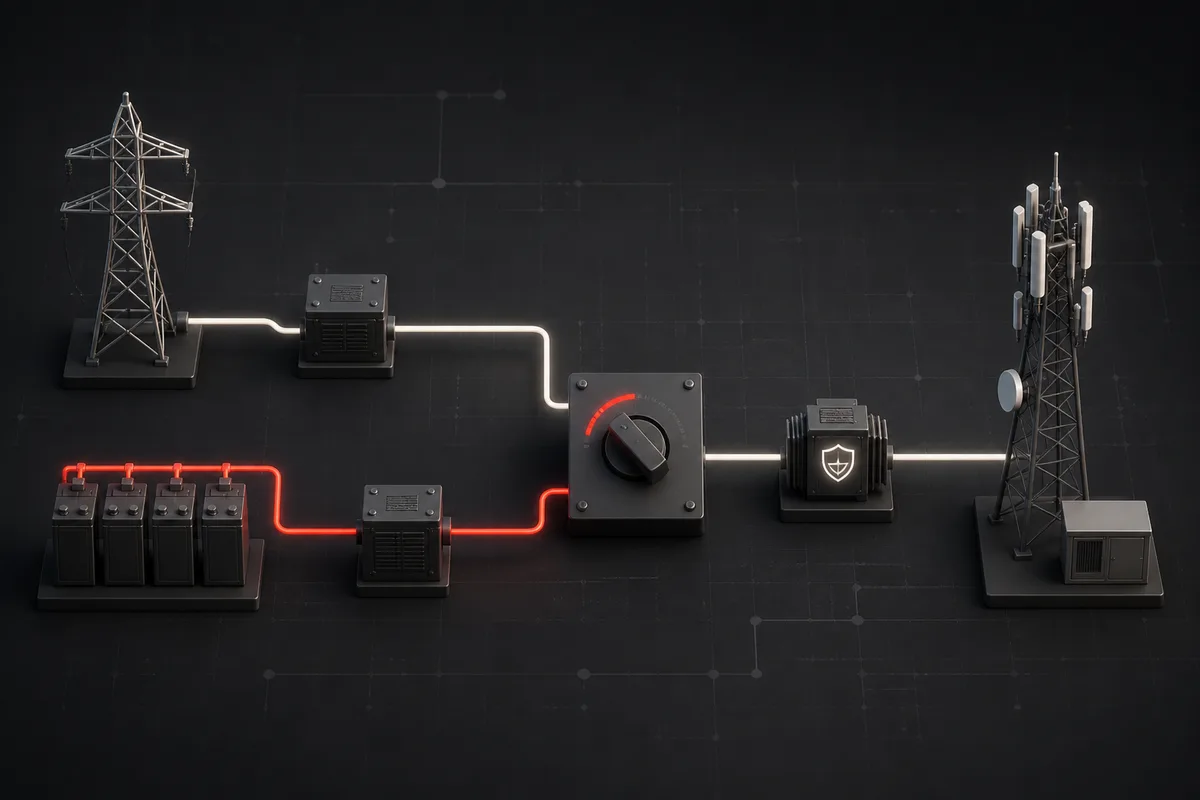
AC/DC Dual-Input Inverters for Telecom Sites: Continuity and Source Priority
A dual-input telecom inverter can use normal AC and a DC source, but continuity depends on the documented source priority and each transfer path. The following engineering and procurement checks make the answer measurable before an order is placed.
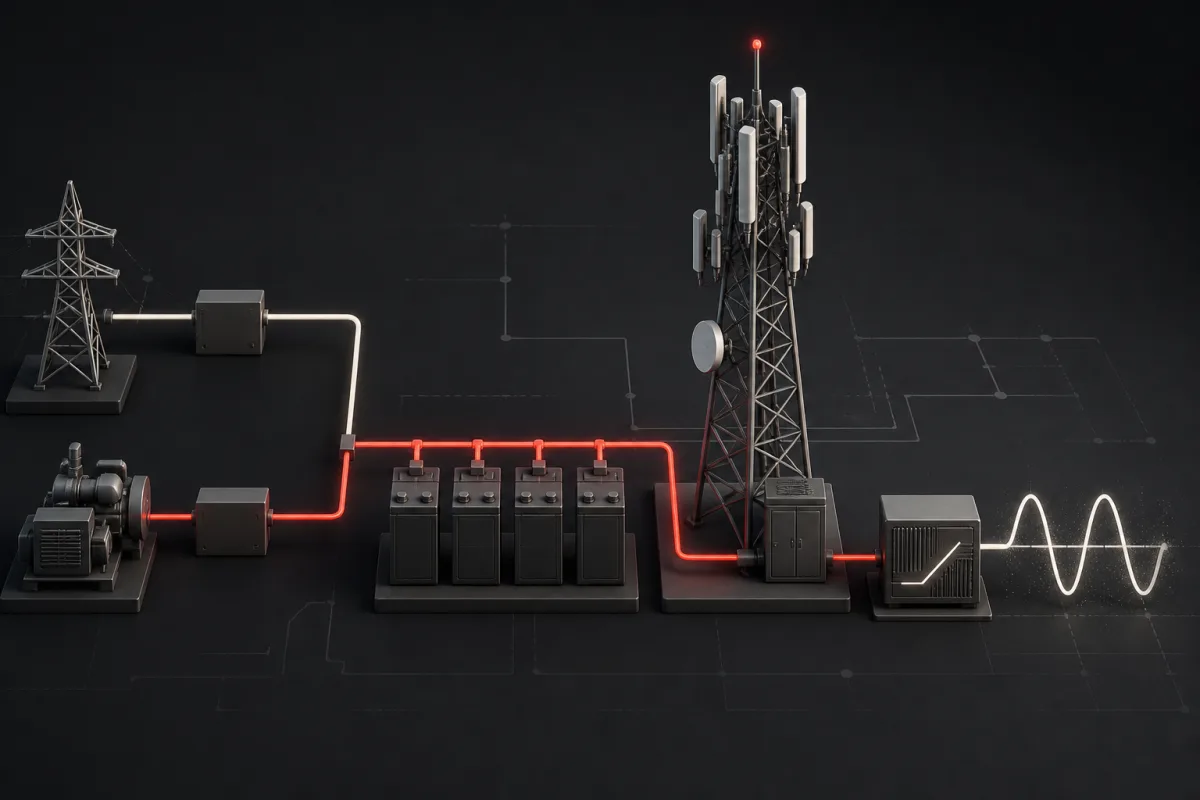
Why Telecom Sites Use −48 V DC—and When They Still Need AC Output
−48 VDC is a common telecom power interface, while many site appliances and tools still require AC. Use the checks below to turn that question into a comparable supplier requirement.
Engineering guidance
Make a better power-system decision.
Every article answers a real buyer question — which battery chemistry, which topology, which voltage, which model for which environment — with the parameters and trade-offs an engineer needs to decide. Each links through to the relevant products and solutions.
Have a specific question?
Tell us your load and we'll advise.
Use these guides to frame the requirement, then send the load, voltage, runtime and destination for a configuration review.