Spare UPS vs Live Redundancy: Plan the Actual Recovery Time
By Highidea Power · 24 October 2026 · 4 min read
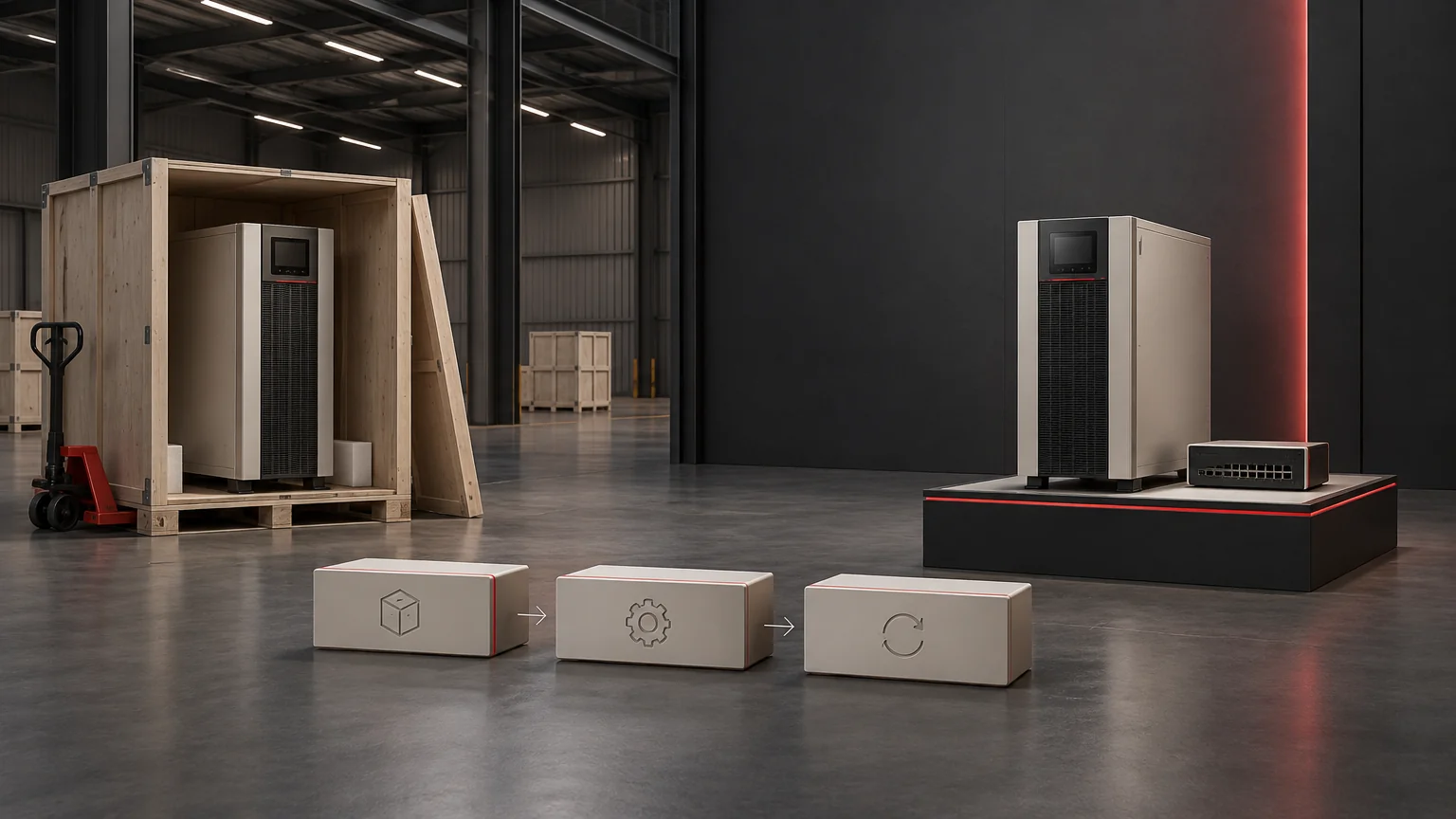
Treat a stored spare UPS as a recovery resource, not an automatically operating redundant power path. Its usefulness depends on compatibility, preservation, access, transport, authorized replacement and return-to-service checks. Agree what happens to the load while those steps take place, then compare the recovery arrangement with the site's required service.
Separate continuity from restoration
Live redundancy aims to maintain a defined service through an agreed failure within its supported architecture. A cold spare normally needs people and actions before it can take over. The same inventory can therefore support a restoration plan without providing uninterrupted power during the original event.
Highidea supplies UPS configurations for distributed and critical-load applications. When discussing a fleet purchase, provide the site groups, required backup duty and service-restoration objective. This helps define the equipment and spare scope alongside the deployment, instead of using a warehouse quantity as an availability statement.
Establish which sites one spare can serve
A shared model name may conceal different voltage, battery, mounting, connection or monitoring arrangements. Build a compatibility list from the actual approved site configurations. Keep permitted alternatives and unresolved differences visible.
The list should connect each spare identity with the sites and duties it is approved to support. A unit that can carry the running watts may still require a different battery arrangement or supported installation. Do not assume a matching connector or chassis makes it an exact project replacement.
Our fleet identity guide explains how to preserve both the stable service identity and replaceable hardware identities. A loan or replacement should retain those relationships with effective dates rather than inheriting the old unit's history silently.
Build a recovery chain
Start the clock at the event defined by the site's plan. Follow notification, diagnosis, release of the spare, delivery, authorized work, configuration and service verification. Some activities can overlap; others depend on a predecessor. Record the actual arrangement instead of adding a universal assumed duration.
Recovery stage | Evidence and owner to agree |
|---|---|
Access and decision | Who can diagnose, authorize dispatch and obtain the correct spare. |
Logistics | Storage location, handling, transport and site access conditions. |
Installation | Supported replacement method, qualified personnel and required load arrangement. |
Configuration | Applicable settings, monitoring identity and approved integration restoration. |
Service release | Required checks, accepted exceptions and the person declaring the task restored. |
NIST's contingency-planning guidance treats spare equipment and vendor support as resources for a recovery strategy. It supports connecting resources to a recovery objective; it is not a UPS replacement procedure or a universal spare-stock rule.
Compare two hypothetical stock plans
In one hypothetical fleet, an available spare is stored centrally, but dispatch needs an absent approver and the site's required mounting parts are not included. The unit exists while the recovery chain remains incomplete. Recording only its serial number would hide those delays.
Another hypothetical plan identifies approved site compatibility, the complete accessory set, access ownership and a representative restoration method. That is a more actionable recovery arrangement. It still does not establish live redundancy or guarantee a particular restoration time until the relevant resources, conditions and terms support that commitment.
The N+1 guide addresses the separate surviving-capacity and architecture question. Keep its failure scenario distinct from bringing an unpowered spare out of storage.
Preserve readiness between deployments
A spare can contain batteries with ongoing preservation requirements. Use the selected host and battery instructions to plan storage conditions, authorized tasks, custody and return to service. Moving a unit to another warehouse does not automatically restart an instruction's time interval.
Our storage and site-delay guide develops that custody discipline for lithium UPS systems. Other chemistries need their own applicable requirements. Do not use a shared fleet policy to overwrite model-specific preservation instructions.
Retain missing tasks, damage and exceptions honestly for qualified disposition. Swelling, unusual heat, leakage, smoke or odor requires the site's safety response before transport or charging. Do not attempt a recovery charge to make a stored unit appear ready.
Agree the commercial and technical scope
Specify ownership, warranty treatment, replenishment after use, freight and destination support separately from the technical compatibility list. Overseas service arrangements should be confirmed in the actual agreement. A domestic support footprint does not by itself define international onsite coverage.
Send Highidea the site configuration groups, load duties, spare locations and restoration objective through our contact page. We can discuss the appropriate product and support scope so the order identifies which equipment, accessories and information the recovery plan needs.
Reference
NIST: SP 800-34 Revision 1, Contingency Planning Guide for Federal Information Systems.
FAQ
Frequently asked questions
Is a spare on site always faster than a central spare?
Location is one factor. Compatibility, condition, access, personnel and the supported work method can determine whether it is usable when needed.
Does a successful bench check approve replacement at every site?
Retain its conditions. Each site's configuration and authorized installation/release requirements still need to be matched.
How many spare units should a fleet buy?
Base the decision on site groups, failure and service assumptions, recovery objectives and replenishment arrangements. This guide sets no universal stock percentage.
Related
Products, solutions & further reading.
Put this into practice
Need help specifying the right unit?
Share the load, voltage, runtime, environment and destination for a configuration review.