Store a Lithium UPS Through Seasonal Shutdowns and Site Delays
By Highidea Power Engineering Team · 20 October 2026 · 5 min read
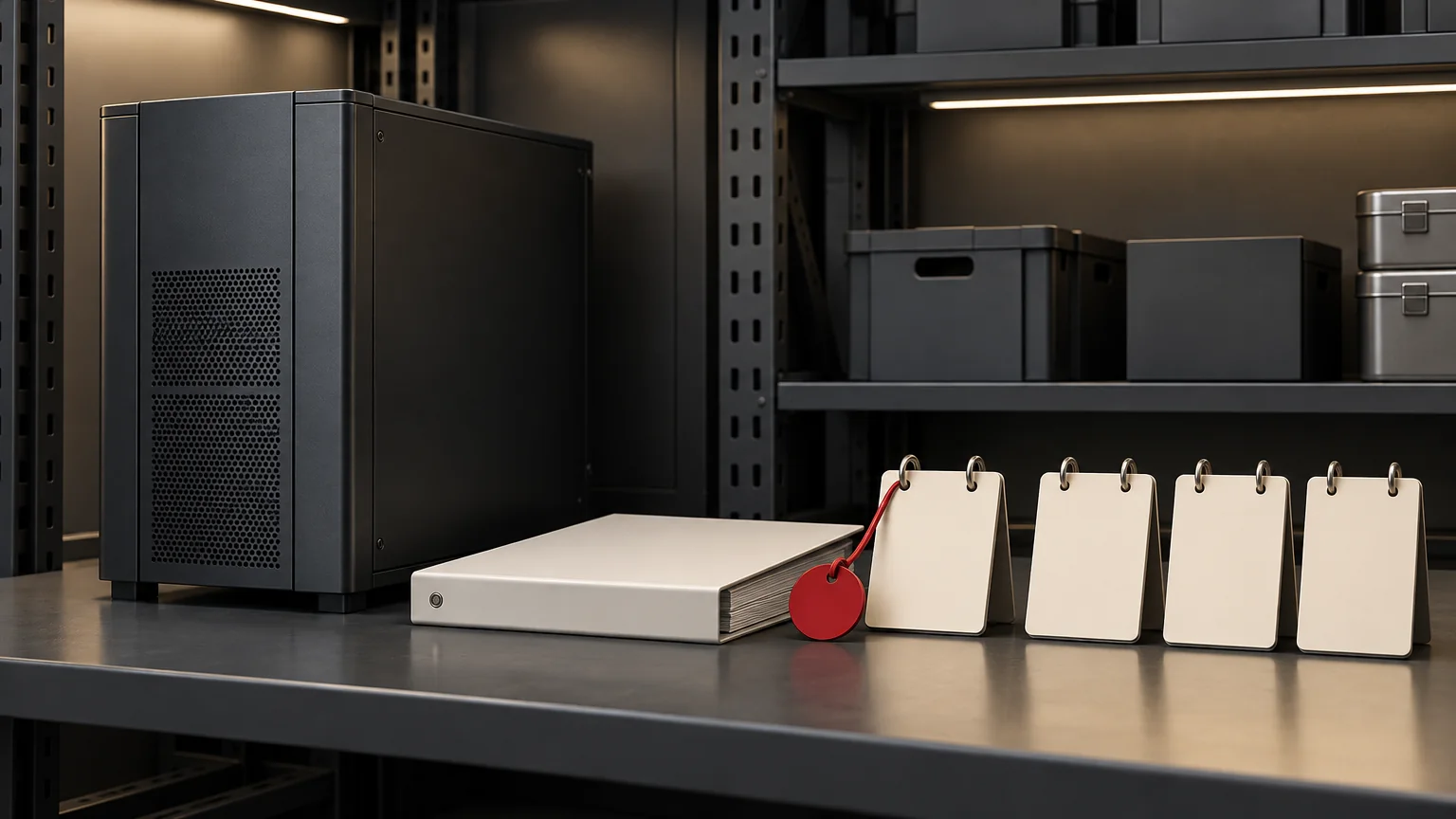
Plan an idle lithium UPS around the selected host and battery instructions, a named custodian and a documented return-to-service decision. Whether a facility closes for a season or a building project is delayed, the preservation record should travel with the equipment. Each transfer needs the current condition, completed tasks, next due item and any unresolved exception.
Highidea Power supplies LiFePO4 UPS products in rack and tower formats, including built-in-battery configurations. Ask for the applicable storage and return-to-service information when discussing the order, so the receiving and operating teams can plan the idle period with the correct equipment identity.
Describe the idle state accurately
Record the host, battery, options and relevant revisions, the location, expected idle period and the person responsible. An installed UPS awaiting the next operating season can need a different plan from equipment still in its shipping packaging or components delivered to separate warehouses.
The front-panel off state does not establish isolation or absence of stored energy. Keep shutdown, disconnection, charging and return-to-service work within the manufacturer's instructions and authorized roles. Do not use this planning worksheet as a switching procedure.
If the idle period changes, review the plan against the applicable instructions. A building delay should trigger an updated custody and task review before existing obligations are missed, rather than a new date pasted onto an old record.
Turn the actual instructions into a task calendar
Start with the source and revision of the required instructions. Enter the applicable condition, task, trigger or interval, authorized role and evidence of completion. Derive dates from that source. A chemistry label alone does not supply a universal state-of-charge target, storage temperature or recharge interval.
Preservation field | Record for the selected configuration |
|---|---|
Equipment | Exact host/battery/options and relevant revisions |
Instructions | Applicable source, revision and clauses |
Storage condition | Required condition and approved location |
Tasks | Trigger/interval, authorized role and completion record |
Monitoring the plan | Custodian, substitute and next review date |
Exceptions | Original facts, responsible evaluator and disposition |
Return to service | Required checks and release owner |
If an instruction is missing, obtain it from the supplier and escalate the incomplete plan to the responsible project team. Avoid filling the gap with a familiar interval from another UPS or battery type. A temporary charging arrangement also requires applicable equipment and site approval.
Keep custody continuous when the building is not ready
A delayed project can involve supplier storage, a buyer's warehouse and the installation contractor. Agree who accepts custody at each step, which conditions they must maintain, what tasks they can perform and who authorizes exceptions. Include a substitute contact so a holiday or departed employee does not interrupt the plan.
Commercial ownership, delivery, payment and risk transfer should remain in the purchase agreement. An equipment-custody record describes the actual preservation duties; it does not silently alter those commercial terms.
Handover point | Outgoing party provides / Incoming party accepts |
|---|---|
Supplier to receiving warehouse | Outgoing party provides Item identities, applicable instructions and recorded condition Incoming party accepts Receipt, approved location and named custodian |
Warehouse to installation contractor | Outgoing party provides Completed tasks, next due item and open exceptions Incoming party accepts Preservation responsibility during the installation wait |
Contractor to operating team | Outgoing party provides Installed identity, relevant records and approved outstanding actions Incoming party accepts Operating ownership after the required release |
Use the actual parties in your project. Some handovers may not occur, while separate battery and host deliveries may require their own records. The lead-time planning guide provides broader milestone planning; retain this custody detail with each stored item.
Example: transfer the next task as well as the box
In this hypothetical coordination example, supplier instruction revision S defines the preservation tasks. A warehouse receives the equipment on date A. A contractor accepts custody on date B after the original site date has moved.
The warehouse hands over the identity, instruction S, completed-task evidence, current location/condition, next due task and any exception. The contractor records acceptance and names the new responsible person. Moving the equipment does not automatically restart an interval defined in S.
Keep one fillable line for each transition:
Effective date/time: __. Item/configuration: __. From/to custody: __. Instruction/revision: __. Last task/evidence: __. Next due task: __. Open exception: __. Accepted by: __.
If a required task becomes overdue during the transfer, retain that fact. The qualified supplier or service party should determine the disposition and any additional checks; do not reset the date to make the calendar appear current.
Handle exceptions before ordinary record collection
Unsuitable environmental conditions, damaged packaging and missed tasks need an assigned evaluator and a recorded decision. Those facts do not automatically establish either safe reuse or mandatory disposal.
Swelling, unusual heat, leakage, smoke or strong odor require the site's safety or emergency arrangements and qualified guidance. Keep people away as required; do not open the unit, attempt a recovery charge or repeatedly test it to discover whether the exception matters.
Retain both the original exception and the subsequent action. Where packaging is damaged, follow the safe receiving and transit-damage process before further movement or use.
Release return to service separately
Before reconnection to the protected load, review equipment identity, preservation history, exceptions and the applicable return-to-service instructions. Qualified parties determine the required checks and whether additional service is needed. A normal-looking display alone does not establish that the required runtime remains available.
Where autonomy is material, agree an appropriate runtime acceptance assessment for the delivered configuration and safe representative conditions. Do not improvise a deep-discharge test to compensate for missing history.
Record the release owner, date, accepted condition and unresolved limitations. Provide that record to the operating team along with current documents and the next scheduled obligations.
Discuss the idle period with Highidea
Send the selected configuration, expected storage locations and planned idle period. Our documentation and technical-support services provide the route to discuss the applicable information alongside delivery and installation planning.
Product and planning references
FAQ
Frequently asked questions
Does switching the UPS off end preservation duties?
No. Stored energy and model-specific preservation requirements can remain. Follow the selected host/battery instructions and authorized site arrangements.
Does moving between warehouses restart the storage clock?
Use the actual instruction's trigger and interval. Custody changes should carry the existing history and next due task, not automatically create a fresh start date.
Can we postpone installation without changing the order?
Review the commercial effects with the authorized buyer and supplier, and review preservation, custody and site readiness separately. Record any accepted changes so the warehouse and installer receive current instructions.
Put this into practice
Need help specifying the right unit?
Share the load, voltage, runtime, environment and destination for a configuration review.