How to Write a UPS Runtime Acceptance Test for a New Installation
By Highidea Power Engineering Team · 24 October 2025 · 5 min read
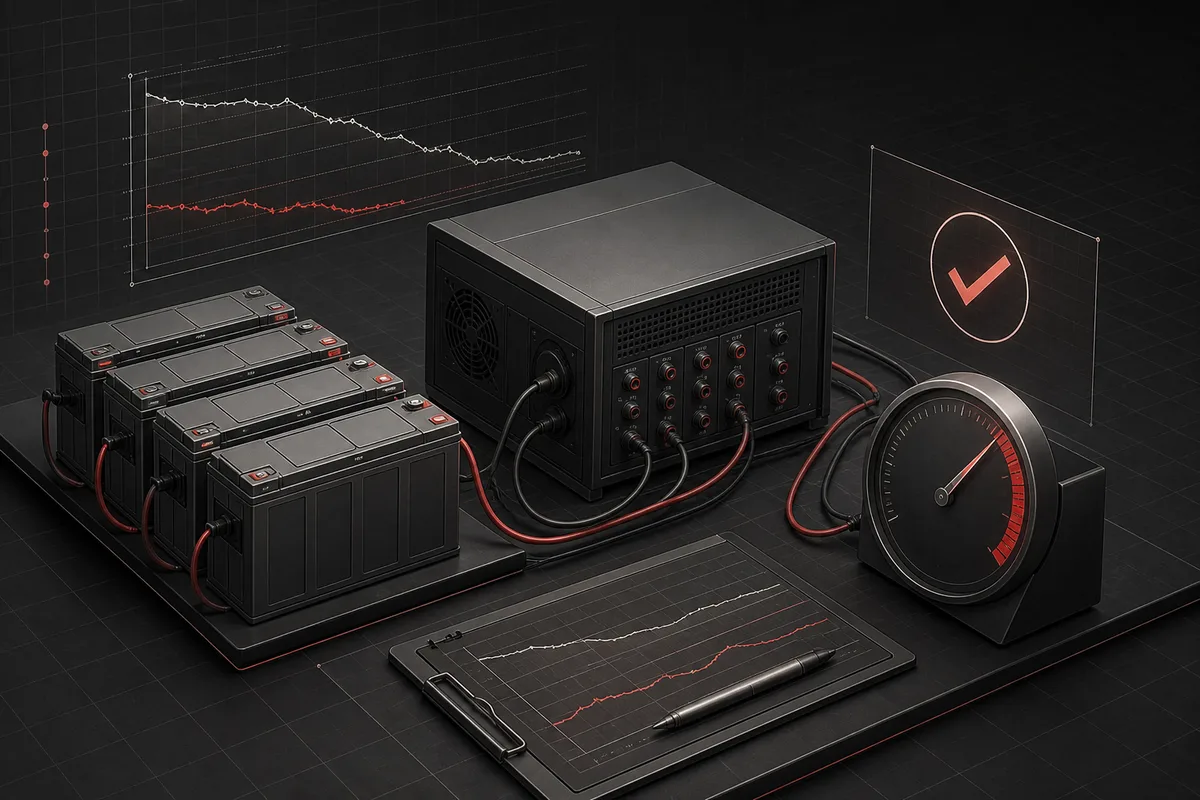
A useful runtime acceptance test states the load, starting battery condition, operating mode, stop criterion, data to record and recovery procedure. It verifies the delivered configuration without turning one test into a universal lifetime promise.
The decision in practical terms
Runtime is an energy calculation tied to a specific host, battery arrangement, load and environment. A kVA rating shows power-handling capacity; it does not by itself state how long the load will remain online. The practical question here is: “How can a buyer verify delivered autonomy without relying on a marketing estimate?” The result is a decision record that engineering, procurement and the supplier can all verify.
For “How can a buyer verify delivered autonomy without relying on a marketing estimate?” Before discussing a model, close the source and load facts, define acceptable operation, and decide what evidence will count as acceptance. The first three items to close are: Agree a safe representative load and ensure the test will not endanger production or protected equipment. Record input loss time, load watts, battery indicators, alarms, output condition and shutdown or restoration time. Define what happens after the test, including recharge, alarm clearance and readiness for another outage. Once these are controlled, differences between proposals become visible and testable.
Five checks that change the recommendation
Agree a safe representative load and ensure the test will not endanger production or protected equipment. Link the requirement to the exact drawing, measurement, report or supplier declaration used to close it. Keep revisions visible when the configuration changes.
Record input loss time, load watts, battery indicators, alarms, output condition and shutdown or restoration time. Describe the acceptable result before testing or document review begins. Evidence is easier to judge when pass, deviation and rework outcomes are already defined.
Define what happens after the test, including recharge, alarm clearance and readiness for another outage. Check the boundary of the answer: model, option, load, environment, market and date. A correct statement can become misleading when any of those changes.
Record ambient temperature, rack space, service access and the acceptable recharge interval after an outage. Preserve the decision in the purchase file so engineering, procurement, commissioning and service teams work from the same approved condition.
State the required autonomy at the defined load and the operational action that must fit inside that time. Put the value and its source in the technical schedule. A supplier should be able to point to the exact model, operating mode and condition used for the recommendation.
Make supplier proposals comparable
Require line-by-line responses to a single project brief. A compliant offer should expose assumptions and exceptions instead of burying them in general literature. For “How to Write a UPS Runtime Acceptance Test for a New Installation,” reject any response that silently changes a material project condition or evidence scope.
Keep materially different configurations as separate alternatives; combining them in one price table can conceal technical risk.
Review item | Requirement to state | Decision record |
|---|---|---|
Technical check 1 | Agree a safe representative load and ensure the test will not endanger production or protected equipment. | Record the evidence, responsible approver and effect on the guide decision. |
Technical check 2 | Record input loss time, load watts, battery indicators, alarms, output condition and shutdown or restoration time. | Record the evidence, responsible approver and effect on the guide decision. |
Technical check 3 | Define what happens after the test, including recharge, alarm clearance and readiness for another outage. | Record the evidence, responsible approver and effect on the guide decision. |
Technical check 4 | Record ambient temperature, rack space, service access and the acceptable recharge interval after an outage. | Record the evidence, responsible approver and effect on the guide decision. |
Verify the approved requirement
Turn the agreed requirement into a verification record. Identify the exact supplied item and configuration, the evidence or test method, the applicable condition and the expected result for the question “How can a buyer verify delivered autonomy without relying on a marketing estimate?” For performance tests, retain instruments, readings, alarms and timestamps; for document reviews, retain the issuer, scope and revision.
Retain the test data or document review with the serialised or otherwise identifiable delivered configuration. A successful verification applies only to the delivered configuration and stated conditions; it is not a blanket guarantee for a different load, site, document scope or operating mode.
Common failure modes in this decision
These common approaches can make an apparently complete specification impossible to approve with confidence.
- Reading kVA as backup minutes
- Comparing unmatched battery capacities
- Adding packs without checking charger and BMS limits
- Answering “How can a buyer verify delivered autonomy without relying on a marketing estimate?” without naming the exact configuration and evidence
Where Highidea fits
Highidea has documented built-in ET configurations and external-battery ET rack configurations. Exact autonomy must be calculated for the ordered host, battery pack count, load and site conditions.
Share the completed schedule with Highidea and request a configuration-specific response covering the host, energy storage, interfaces, options and evidence.
Copy this into your RFQ
The list below is ready for an RFQ once project-specific limits and commercial terms have been added.
- Confirm in the quotation: Agree a safe representative load and ensure the test will not endanger production or protected equipment.
- Confirm in the quotation: Record input loss time, load watts, battery indicators, alarms, output condition and shutdown or restoration time.
- Confirm in the quotation: Define what happens after the test, including recharge, alarm clearance and readiness for another outage.
- Confirm in the quotation: Record ambient temperature, rack space, service access and the acceptable recharge interval after an outage.
- Confirm in the quotation: State the required autonomy at the defined load and the operational action that must fit inside that time.
Authoritative references and scope
The cited material is authoritative background, not automatic proof of conformity or performance for a particular product.
IEC: IEC 62040-3:2021 — UPS performance and test requirements
U.S. Department of Energy: Purchasing Energy-Efficient Uninterruptible Power Supplies
FAQ
Frequently asked questions
How can a buyer verify delivered autonomy without relying on a marketing estimate?
A useful runtime acceptance test states the load, starting battery condition, operating mode, stop criterion, data to record and recovery procedure. It verifies the delivered configuration without turning one test into a universal lifetime promise.
How can buyers make supplier answers easier to compare?
Send the exact load and source data, required operating outcome, site conditions, interfaces, target market and evidence requirements. For this decision, include: Agree a safe representative load and ensure the test will not endanger production or protected equipment. Record input loss time, load watts, battery indicators, alarms, output condition and shutdown or restoration time. Define what happens after the test, including recharge, alarm clearance and readiness for another outage.
Can one datasheet establish the complete project scope?
Use family information to shortlist an architecture, but confirm the exact model, configuration, operating mode, test conditions and document scope in the quotation or approved technical schedule.
Related
Products, solutions & further reading.
Put this into practice
Need help specifying the right unit?
Share the load, voltage, runtime, environment and destination for a configuration review.