UPS Lead-Time Planning: Separate Standard, Custom and High-Quantity Orders
By Highidea Power Engineering Team · 11 October 2026 · 5 min read
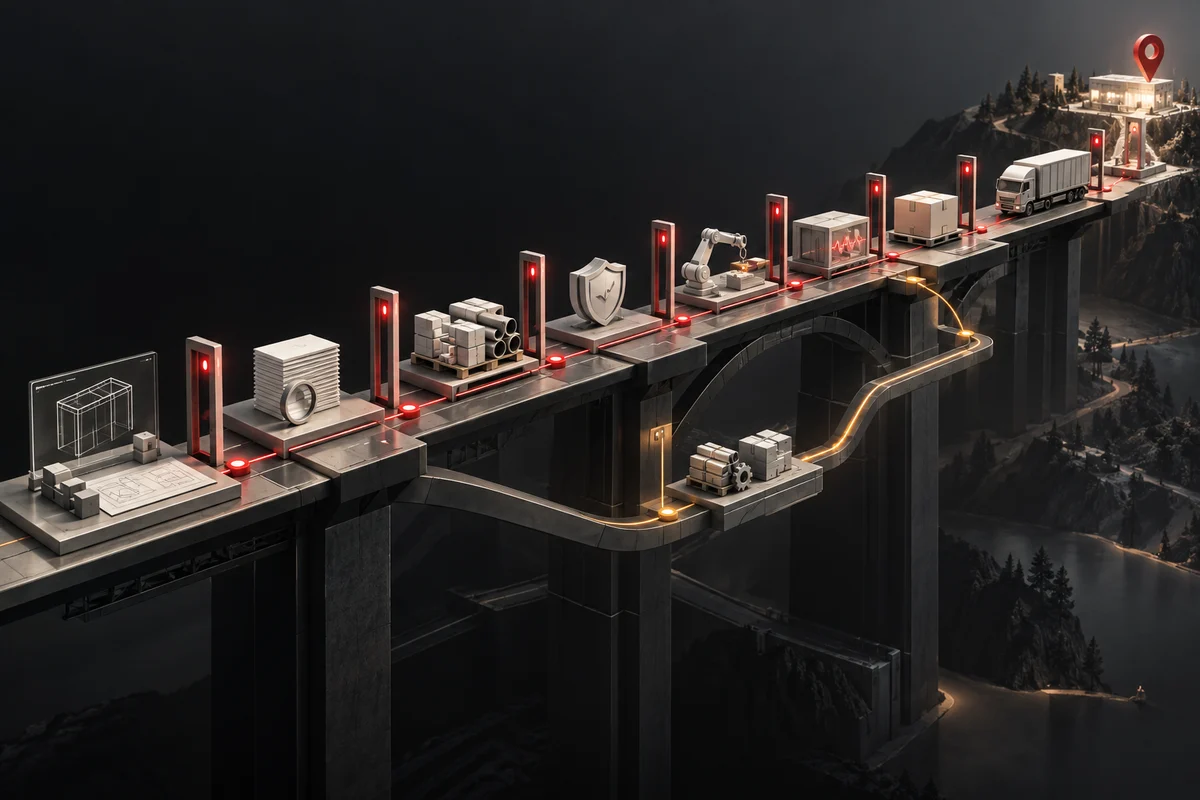
Plan UPS lead time as a chain of dated decisions rather than one supplier promise. Separate configuration freeze, evidence review, component availability, sample and drawing approval, production, testing, packing, dangerous-goods preparation, booking and destination clearance, then assign an owner, dependency and recovery option to each milestone before committing the required-on-site date.
The decision in practical terms
An OEM UPS project succeeds when electrical configuration, target market, branding, evidence, sample acceptance and change control are frozen before mass production. Commercial terms should be written against the exact configuration rather than assumed from a generic FAQ. The practical question here is: “How should procurement build schedule risk around configuration and quantity?” The following engineering and procurement checks make the answer measurable before an order is placed.
For “How should procurement build schedule risk around configuration and quantity?” Separate measured facts from assumptions, agree the required site outcome, and then compare configurations against one written baseline. The first three items to close are: Separate standard, customised and high-quantity configurations and record which electrical, battery, enclosure, branding, document and approval decisions must be frozen for each. Build the schedule backward from the site date through transport and clearance, booking, document readiness, packing, final test, production, material release and sample or drawing approval. Request dated supplier milestones, buyer approval deadlines, evidence dependencies, change-control rules and recovery options instead of treating a broad lead-time range as a delivery guarantee. Once these are controlled, differences between proposals become visible and testable.
Five checks that change the recommendation
Separate standard, customised and high-quantity configurations and record which electrical, battery, enclosure, branding, document and approval decisions must be frozen for each. Verify it with a measurement, drawing, nameplate, manufacturer requirement or approved project document. An unstated assumption here can invalidate the rest of the selection.
Build the schedule backward from the site date through transport and clearance, booking, document readiness, packing, final test, production, material release and sample or drawing approval. Ask competing suppliers to answer this item with the same scope, condition and evidence format. That makes the proposals technically comparable before price is considered.
Request dated supplier milestones, buyer approval deadlines, evidence dependencies, change-control rules and recovery options instead of treating a broad lead-time range as a delivery guarantee. Assign an owner to confirm this point before sample or commissioning tests. The final record should show both the required value and the evidence that the delivered system meets it.
Control model codes, nameplates, datasheets, manuals, labels and packaging as one approved document set. State who supplies the input, who approves it and when it becomes frozen. This prevents an unresolved assumption from moving into production or installation.
Agree lead time, warranty scope, packing, delivery, support and RMA responsibilities in the purchase documents. Link the requirement to the exact drawing, measurement, report or supplier declaration used to close it. Keep revisions visible when the configuration changes.
Make supplier proposals comparable
Give all suppliers one requirement schedule. Their replies should identify the proposed value, supporting evidence, assumptions, exclusions and deviations in the same place. For “UPS Lead-Time Planning: Separate Standard, Custom and High-Quantity Orders,” reject any response that silently changes a material project condition or evidence scope.
Where assumptions differ, normalize them or retain clearly labelled alternatives before making a commercial ranking.
Review item | Requirement to state | Decision record |
|---|---|---|
Technical check 1 | Separate standard, customised and high-quantity configurations and record which electrical, battery, enclosure, branding, document and approval decisions must be frozen for each. | Record the evidence, responsible approver and effect on the guide decision. |
Technical check 2 | Build the schedule backward from the site date through transport and clearance, booking, document readiness, packing, final test, production, material release and sample or drawing approval. | Record the evidence, responsible approver and effect on the guide decision. |
Technical check 3 | Request dated supplier milestones, buyer approval deadlines, evidence dependencies, change-control rules and recovery options instead of treating a broad lead-time range as a delivery guarantee. | Record the evidence, responsible approver and effect on the guide decision. |
Technical check 4 | Control model codes, nameplates, datasheets, manuals, labels and packaging as one approved document set. | Record the evidence, responsible approver and effect on the guide decision. |
Verify the approved requirement
Turn the agreed requirement into a verification record. Identify the exact supplied item and configuration, the evidence or test method, the applicable condition and the expected result for the question “How should procurement build schedule risk around configuration and quantity?” For performance tests, retain instruments, readings, alarms and timestamps; for document reviews, retain the issuer, scope and revision.
Record the approved result, any deviation and its disposition; a verbal acceptance is difficult to trace during commissioning or service. A successful verification applies only to the delivered configuration and stated conditions; it is not a blanket guarantee for a different load, site, document scope or operating mode.
Common failure modes in this decision
The most expensive mistakes usually begin with an unstated condition or a claim applied beyond its documented scope.
- Approving branding before freezing the electrical design
- Letting labels and manuals drift from the shipped unit
- Relying on unresolved sample or overseas-RMA terms
- Answering “How should procurement build schedule risk around configuration and quantity?” without naming the exact configuration and evidence
Where Highidea fits
Highidea states OEM/ODM capability and a staged development workflow. Sample charging, overseas RMA, inverter warranty scope, MOQ and Incoterms still require explicit sales confirmation.
Include these confirmed requirements in the Highidea enquiry. The resulting proposal should make the selected configuration and its evidence easy to trace.
Copy this into your RFQ
Use this wording as a base for the technical schedule, adding the project’s safety, regulatory and commercial conditions.
- Confirm in the quotation: Separate standard, customised and high-quantity configurations and record which electrical, battery, enclosure, branding, document and approval decisions must be frozen for each.
- Confirm in the quotation: Build the schedule backward from the site date through transport and clearance, booking, document readiness, packing, final test, production, material release and sample or drawing approval.
- Confirm in the quotation: Request dated supplier milestones, buyer approval deadlines, evidence dependencies, change-control rules and recovery options instead of treating a broad lead-time range as a delivery guarantee.
- Confirm in the quotation: Control model codes, nameplates, datasheets, manuals, labels and packaging as one approved document set.
- Confirm in the quotation: Agree lead time, warranty scope, packing, delivery, support and RMA responsibilities in the purchase documents.
Authoritative references and scope
The references below establish industry context. They are not a declaration that every Highidea model meets every cited requirement.
ISO: ISO 9001:2026 — Quality management systems requirements
IATA: 2026 Battery Guidance Document for lithium and sodium-ion batteries
FAQ
Frequently asked questions
How should procurement build schedule risk around configuration and quantity?
Plan UPS lead time as a chain of dated decisions rather than one supplier promise. Separate configuration freeze, evidence review, component availability, sample and drawing approval, production, testing, packing, dangerous-goods preparation, booking and destination clearance, then assign an owner, dependency and recovery option to each milestone before committing the required-on-site date.
Which project facts belong in the supplier enquiry?
Send the exact load and source data, required operating outcome, site conditions, interfaces, target market and evidence requirements. For this decision, include: Separate standard, customised and high-quantity configurations and record which electrical, battery, enclosure, branding, document and approval decisions must be frozen for each. Build the schedule backward from the site date through transport and clearance, booking, document readiness, packing, final test, production, material release and sample or drawing approval. Request dated supplier milestones, buyer approval deadlines, evidence dependencies, change-control rules and recovery options instead of treating a broad lead-time range as a delivery guarantee.
Is a product-family statement enough for final approval?
Use family information to shortlist an architecture, but confirm the exact model, configuration, operating mode, test conditions and document scope in the quotation or approved technical schedule.
Related
Products, solutions & further reading.
Put this into practice
Need help specifying the right unit?
Share the load, voltage, runtime, environment and destination for a configuration review.