Rack DC/DC Thermal Ratings: Match Output Power to Cooling Conditions
By Highidea Power · 24 October 2026 · 4 min read
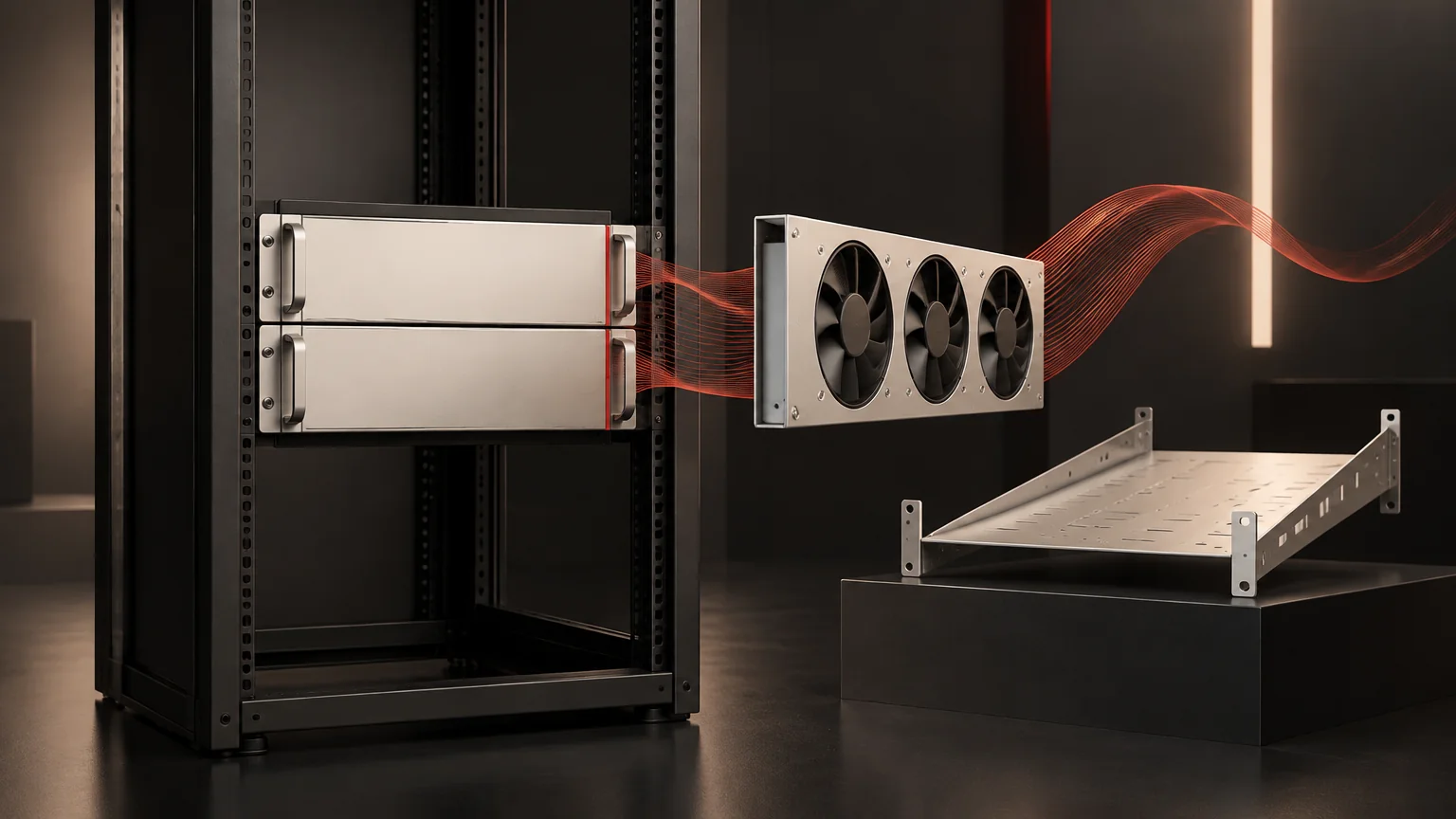
Match a rack DC/DC converter's required output to its documented thermal envelope and actual installation. A maximum operating temperature does not automatically mean full power is available there. Review ambient and case-temperature definitions, airflow, mounting, input conditions and the complete rack arrangement together.
Start with the installed assembly
A converter can fit a rack mechanically while its cooling conditions differ from those used for the rating. Doors, neighbouring equipment, cable space and the cabinet's air path can change the environment around the unit. Include service access as well as the normal installed position.
Highidea's RP power-conversion range uses a rack format. For a DC/DC enquiry, provide the intended cabinet, mounting arrangement and output duty alongside the source range. This helps the configuration discussion address the actual assembly rather than treating a chassis-height description as the complete installation requirement.
Keep temperature definitions separate
Ambient temperature describes the surrounding condition at a defined location. Case temperature describes a product surface at a specified point. An internal component limit describes another boundary. These values cannot be substituted merely because each is expressed in degrees.
RECOM's thermal-impedance guidance explains that converter heat transfer and derating depend on the cooling conditions. Its PCB-module examples also show why a rating can depend on the specified layout. This supports the general discipline of matching conditions; it does not supply a thermal model or airflow requirement for an RP rack product.
The available output may also vary with input voltage and load. Ask which curves and restrictions apply simultaneously. A broad operating-temperature range and a separate nominal power entry should not be read as a guarantee that every combination within both ranges is supported.
Read the derating curve as a conditional map
Identify the product and option, input condition, cooling method, orientation and temperature reference used by the applicable curve. Then locate the required operating points. Retain full-power operation, reduced-power operation and maximum permitted operation as separate outcomes.
In a hypothetical project, the required load lies below the headline power rating, but the intended cabinet condition lies in a reduced-output region of the offered product's applicable curve. The useful question is whether the available output still meets the task. Being below the nameplate alone does not answer it, and being in a derating region does not automatically reject the offer.
Use an installation-envelope schedule
Ask the supplier for the applicable equipment information and the responsible cabinet designer for the site arrangement. Connect those two answers with one controlled drawing and operating schedule.
Installation item | Information needed for approval |
|---|---|
Mechanical boundary | Exact assembly, mounting/support arrangement, dimensions and required access. |
Heat path | Applicable intake/exhaust or other cooling arrangement, with neighbouring equipment included. |
Thermal rating | Relevant curves, temperature reference, input/load conditions and any option dependency. |
Operating duty | Continuous and changing demand, duration and relevant cabinet conditions. |
Service state | Permitted work arrangement, temporary restrictions and restoration responsibility. |
This schedule is a design input. It provides no fan size, universal spacing or permission to alter an enclosure. A revised grille, shelf or fan can change more than temperature, including protection, serviceability and the product's supported installation.
Review changes that can invalidate the match
A cabinet rearrangement can redirect air even when the converter is unchanged. Another supply may add heat upstream of its intake. A closed door or added cable bundle may affect the intended path. Record these changes against the accepted configuration instead of relying on an earlier room-temperature reading.
A temperature observation is useful when its location, method, load and duration are retained. One brief measurement does not establish the entire steady thermal task. Agree representative verification with qualified parties and keep any untested conditions visible in the release record.
Our rack UPS cooling guide develops the cabinet airflow question for another equipment category. Use its layout discipline while retaining the converter's own product instructions. The input-window guide helps keep source conditions in the same review.
Prepare a useful RP installation enquiry
Send Highidea the required input/output duty, rack drawing, mounting and cooling proposal, relevant cabinet conditions and service constraints through our contact page. We can discuss the product route and the configuration information needed to assess the installation envelope.
Any energized measurements or equipment movement require the approved site method. Unusual heat, odor or other hazardous signs take priority over routine data collection. Do not open covers or defeat a protective feature to make an unsuitable thermal arrangement appear acceptable.
Reference
FAQ
Frequently asked questions
Does a permitted maximum temperature imply full output?
Read the applicable derating and operating conditions. Maximum permitted operation and full-power capability can have different boundaries.
Can a room sensor represent every rack inlet?
Only within an appropriate assessment. Retain the actual measurement location and local equipment conditions instead of assuming uniform temperature.
Should a fan be added whenever margin is small?
Use a supplier-supported installation and qualified design review. A fan choice needs the complete cooling, protection and service context.
Related
Products, solutions & further reading.
Put this into practice
Need help specifying the right unit?
Share the load, voltage, runtime, environment and destination for a configuration review.