Insights
UPS selection, standards & application guides.
Practical engineering guidance for specifying lithium UPS and power inverters, covering selection logic, voltage standards, topology and real application requirements.
More engineering guides.
Showing 13–24 of 224 guides
Isolated DC/DC Converters: Insulation and Noise Coupling Are Different Checks
Distinguish DC/DC insulation from capacitive noise coupling and prepare a two-axis requirement card for sensitive industrial control equipment.
DC/DC Remote Sense vs Output Adjustment: Define the Regulation Point
Compare DC/DC remote sensing with fixed output adjustment by regulation point, load state, compensation limits and the complete distribution design.

VRLA Battery Ripple Voltage and Ripple Current: Keep Both Boundaries
Keep VRLA ripple voltage and current distinct, then match battery and charging-source requirements by measurement basis, location and operating state.

VRLA Battery Ah vs Watts per Cell: Compare the Discharge Conditions
Read VRLA Ah and watts-per-cell ratings by duration, endpoint, temperature and boundary before comparing complete UPS backup proposals.
UPS Input Frequency, Synchronization and Slew Rate: Check Each Limit
Separate UPS input-frequency range, synchronization, slew rate and bypass conditions using a mode-by-mode enquiry and a worked trajectory example.
Adding an Input EMI Filter to a DC/DC Converter: Review System Stability
Review source, cable, filter, converter and load together when adding DC/DC input filtering, with distinct EMI, static and dynamic evidence.

VRLA Battery Ohmic Readings: Useful Trends, Not a UPS Capacity Certificate
Interpret VRLA ohmic trends with the right method, baseline and conditions, then choose the capacity or UPS runtime assessment your service decision needs.
Leading or Lagging Load Power Factor: Check the UPS Capability Range
Match leading or lagging load power factor to the UPS capability range, keeping rated output ratio, working points and conditions distinct.

DC/DC Minimum Load: No-Load Operation Is Not a Regulation Guarantee
Separate DC/DC no-load permission from output regulation coverage, then compare standby and operating states using a supplier evidence card.
Battery Self-Test Passed but UPS Runtime Fell Short: Compare the Evidence
Compare a passed UPS battery self-test with a runtime shortfall by purpose, load, starting condition and endpoint before choosing the next support action.

SNMPv3 on a UPS Card: Verify Security Level and Receiver Compatibility
Check SNMPv3 security level, algorithms, versions and access scope at both ends before accepting a UPS monitoring integration.
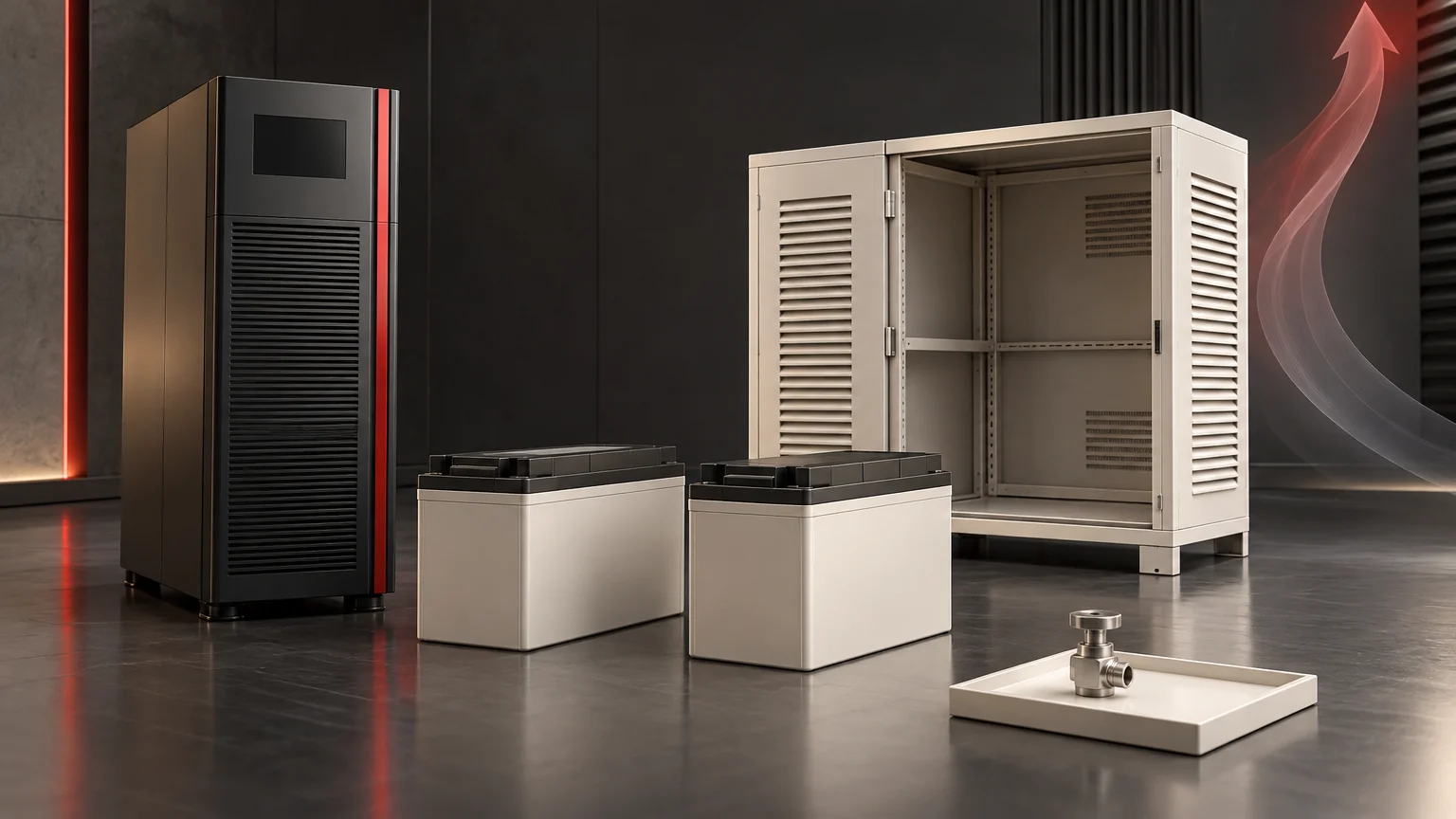
Does a Sealed VRLA UPS Battery Still Need Ventilation?
Understand VRLA sealed and maintenance-free wording, then review heat removal and gas ventilation as separate installation requirements.
Engineering guidance
Make a better power-system decision.
Every article answers a real buyer question — which battery chemistry, which topology, which voltage, which model for which environment — with the parameters and trade-offs an engineer needs to decide. Each links through to the relevant products and solutions.
Have a specific question?
Tell us your load and we'll advise.
Use these guides to frame the requirement, then send the load, voltage, runtime and destination for a configuration review.