ET vs C Series Online UPS: Compare Battery Chemistry Without Confusing Topology
By Highidea Power Engineering Team · 19 October 2026 · 5 min read
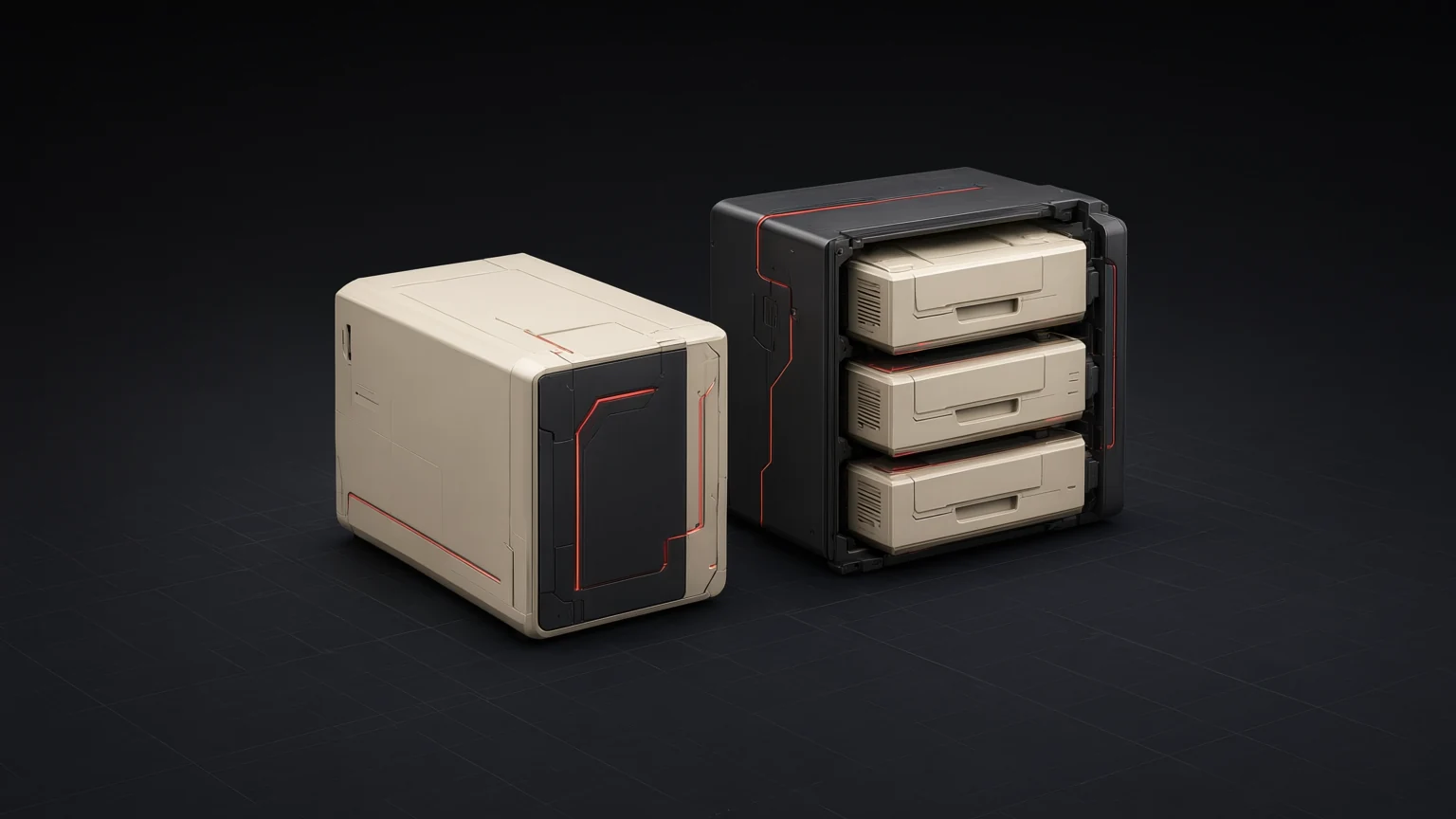
Both Highidea ET and C are online double-conversion UPS families. ET uses LiFePO4 batteries; C uses VRLA lead-acid batteries. Choosing lead-acid therefore does not mean choosing a standby UPS. Start with the load's required power-conversion behavior, then compare the exact battery and enclosure configurations at the same watts, runtime and installation conditions.
Separate the two decisions
A battery stores energy. The UPS topology determines how the load receives conditioned power and how the system changes operating modes. These are different design choices. A lithium label cannot tell you the battery-mode waveform or transfer behavior; a lead-acid label cannot tell you whether the UPS is online.
Highidea's range supplies useful counterexamples. C combines lead-acid batteries with online double conversion. ET combines LiFePO4 with online double conversion. MT combines lead-acid with line-interactive operation, while LT combines LiFePO4 with line-interactive operation. The four combinations prevent chemistry from being used as a shortcut for topology.
These are family identities, not interchangeable configurations. Voltage, capacity, waveform and installation requirements still belong to the exact offered model. This article compares ET and C online choices; LT and MT illustrate the distinction rather than being proposed replacements for a critical online load.
Battery chemistry | Details and decision |
|---|---|
LiFePO4 | Online examples: ET; Line-interactive examples: LT |
VRLA lead-acid | Online examples: C; Line-interactive examples: MT |
Build an ET/C shortlist from documented differences
The ET1–3K tower and ET1–3KR rack families use integrated LiFePO4 batteries. C1K through C10K are tower units with internal VRLA batteries. C's published output power factor is 0.9; the ET1–3K ratings list 1 kVA/800 W, 2 kVA/1600 W and 3 kVA/2400 W. Match both VA and W limits before comparing battery duration.
ET external-battery platforms should enter a separate architecture comparison. Their existence does not make an integrated-battery ET unit field-expandable. Likewise, a separately listed battery cabinet is not proof that a particular C host accepts it.
Selection question | Details and decision |
|---|---|
Where will it fit? | ET example: ET1–3K tower; ET1–3KR rack; C example: C tower family; Buying implication: Compare the complete installed arrangement, not one front photograph |
What stores energy? | ET example: Integrated LiFePO4 on the named ET models; C example: Internal VRLA, battery quantity varies by C model; Buying implication: Obtain model-specific replacement and charging requirements |
What is the power limit? | ET example: ET1–3K: 800/1600/2400 W; C example: C1K/C2K/C3K: 900/1800/2700 W; Buying implication: Equal kVA does not mean equal usable watts |
Which output is documented? | ET example: ET1–3K tower: 220 VAC ±3%, adjustable to 230/240 V; C example: C: 208/220/230/240 VAC, regulation ±1%; Buying implication: Check the exact offered output; do not copy tower regulation to ET rack models |
Can runtime be expanded? | ET example: Separate ET external-battery families exist; C example: Do not infer an external-battery option from the C name; Buying implication: Quote the host and battery configuration together |
Compare at one load, not one headline rating
Consider an illustrative 850 W load whose VA demand has also been checked. C1K is listed at 900 W, while ET1K is listed at 800 W. The ET1K fails the watts check even though both names contain 1 kVA. This is a rating illustration, not a recommendation to operate C1K near its limit: growth allowance, startup demand, overload behavior and operating conditions still need review.
After capacity passes, specify one autonomy target at that same load. Ask for a runtime table or test result identifying the exact host, battery configuration, ambient condition and end-of-discharge criterion. A battery-life statement and a runtime statement answer different questions. Neither establishes how long an installed system will support an unspecified load.
Check power paths separately
Online operation normally supplies the load through the inverter. Documented zero-time changeover to battery must be kept separate from transfer to static or maintenance bypass. Ask which source feeds the load in each mode and which voltage, waveform and interruption limits apply.
IEC 62040-3 describes performance and test requirements for UPS systems, including relevant switches. Its existence does not certify an ET or C quotation. For a sensitive instrument, turn its permitted supply conditions into an acceptance request, then obtain the offered model's corresponding performance evidence.
Put battery service into the comparison
Compare access space, replacement procedure, battery availability, transport documents and the time needed to return the system to service. A lighter or longer-lived chemistry may be useful, but a project-level saving requires actual prices, replacement assumptions and operating conditions. Do not use a general lithium advantage as a guaranteed lifecycle result.
A rack installation also needs rail support, depth, cable bend space and service clearance. A tower comparison needs floor space, ventilation and safe handling. An apparently compact host can require more total space once battery equipment and maintenance access are included.
Send a matched comparison request
Use one line per offered configuration: exact host and suffix; VA/W limit; nominal output and mode requirements; battery chemistry and arrangement; required runtime at stated watts; complete dimensions and mass; recharge condition; replacement scope; and applicable documents. Reject comparisons in which one supplier silently changes the runtime target or excludes battery equipment.
The useful conclusion is specific: which offered configuration satisfies the load and can be installed, maintained and verified at this site? Send Highidea that load schedule and the installation constraints. Request an ET/C comparison with any deviations made explicit, rather than asking whether lithium or lead-acid is universally better.
Sources and product context
The following primary references support the industry context. They do not establish conformity, compatibility or performance of every Highidea product. Model-specific product statements in this guide follow the cited Highidea product and application records.
IEC: IEC 62040-3:2021 — UPS performance and test requirements
FAQ
Frequently asked questions
Does a lead-acid battery make a UPS standby?
No. Highidea C is an online double-conversion family using VRLA lead-acid, while MT is line-interactive with lead-acid. Battery chemistry and power-conversion topology are separate choices.
Can I compare two UPS models by kVA alone?
No. Check their watts and VA limits, startup demand and operating conditions. The ET1K and C1K examples have different listed watt limits despite both being 1 kVA.
Does an external battery cabinet fit any C-series host?
A similar name does not establish compatibility. Obtain the exact host, approved battery arrangement, charging requirements and connection scope from the supplier.
Related
Products, solutions & further reading.
Put this into practice
Need help specifying the right unit?
Share the load, voltage, runtime, environment and destination for a configuration review.