Laboratory Relocation: Which UPS Evidence Still Applies?
By Highidea Power · 23 October 2026 · 3 min read
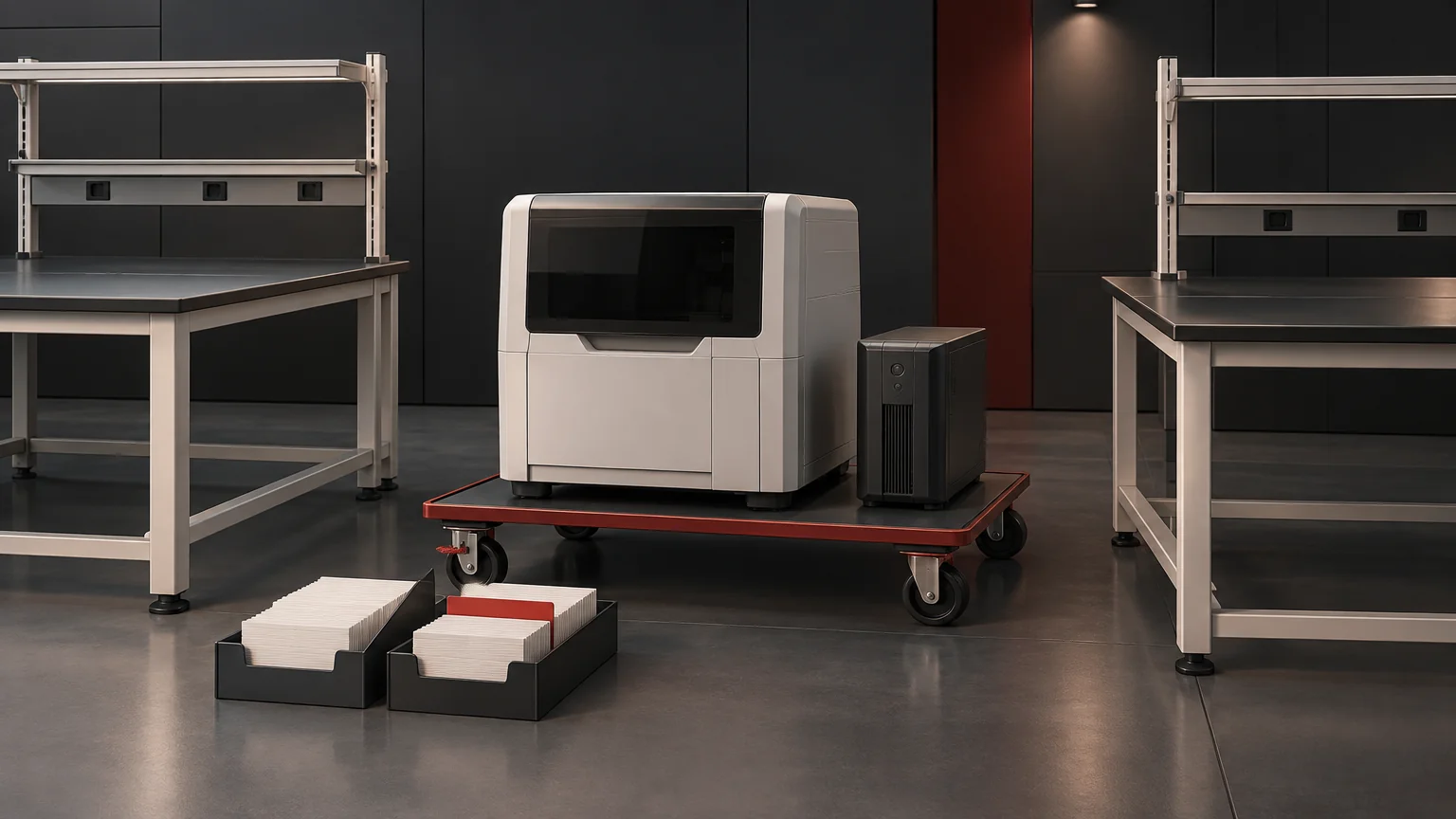
Moving an instrument and its UPS does not automatically invalidate every earlier result, but it changes the conditions that result can support. Compare the old and new installation, identify which evidence remains applicable and reassess the changed boundaries before return to service. A matching room voltage or an unchanged equipment label is not a complete evidence-transfer decision.
Preserve the previous configuration before moving
Retain the instrument, computer, accessories, UPS, batteries, settings and approved source-to-load map. Keep the original requirement and actual acceptance records, including conditions not tested. “It worked in the old room” is not a reproducible baseline.
Record planned changes before they are hidden by the move: source circuit, distribution, cable route, environmental conditions, physical support, service access, network dependencies and responsible users. Include any battery service or storage interval associated with relocation.
The instrument manufacturer determines its permitted handling and reinstallation. Do not move or energize equipment from a generic UPS checklist, especially where hazardous materials, contamination or restricted clinical uses are involved.
Transfer each conclusion at its own boundary
Prior evidence | Question at the new site |
|---|---|
Product identity and documented capability | Are the same configuration and applicable documents still in use, with no relevant substitution? |
Measured electrical behavior | Does the new source, distribution, mode and task remain within the recorded scope? |
Mechanical/access review | Do the new bench/rack, support, clearance, ventilation and service path meet the actual requirements? |
Monitoring and data workflow | Are addresses, receivers, shared services, ownership and time settings still valid? |
Application acceptance | Does the required instrument task and its authorized release need reassessment under the new conditions? |
A retained document and a new measurement serve different purposes. Neither should be copied into the other's result cell.
Use the equipment's site-preparation requirements
Thermo Fisher Scientific's QuantStudio Absolute Q guide separately specifies space, environment, electrical supply, network and safety responsibilities. Its scope is a named research-use instrument, and its numeric requirements do not apply to every laboratory.
The example shows why a relocation review must reach beyond nominal UPS capacity. The new location may satisfy power ratings while failing access or network requirements. Use the actual instrument and UPS documents to determine which criteria apply.
Do not convert the existence of this example into a universal obligation to repeat every qualification test. The equipment owner, manufacturer and applicable quality system determine the required reassessment and release.
Work a changed-dependency example
Suppose a hypothetical instrument, computer and UPS move together. The electrical task is unchanged, but the old arrangement depended on a nearby network switch and a shared storage service. In the new room, that switch uses a different, unassessed power path.
The original UPS runtime record may still describe its recorded load and battery condition. It cannot prove that the new complete data workflow continues during an outage. The new dependency requires review and appropriate evidence.
In a second case, only a room label changes while documented electrical, physical, environmental and workflow conditions remain equivalent. The responsible parties may retain relevant evidence with a justified applicability record. A label change alone does not decide either outcome.
Release the changed installation visibly
For each requirement, record retained with basis, reassessment required, not applicable or unresolved. Identify the actual new configuration, supporting observations, limits, owner and approving party. Preserve the old report as history instead of editing its site identity to imply it tested the new room.
Any functional verification needs a safe approved plan that protects samples, data and people. Do not pull the instrument's live supply to create an outage. Retain battery recharge/readiness and the final operational handover as well as the test result.
Send Highidea the old/new comparison, actual load and required continuity task through our contact page. This helps target the configuration questions without treating a move as either automatic acceptance or automatic wholesale rejection.
References
Related reading
FAQ
Frequently asked questions
Must every move trigger a full repeat of every test?
The changed conditions, equipment requirements and responsible quality/acceptance system determine the scope. Record the reasoning.
Can the old report simply be renamed for the new room?
No. Keep its original identity and attach a separate, justified applicability or reassessment record.
Does identical mains voltage prove the workflow is unchanged?
No. Distribution, environment, accessories, network and operating dependencies can change independently.
Put this into practice
Need help specifying the right unit?
Share the load, voltage, runtime, environment and destination for a configuration review.