Defining UPS Runtime Around a Laboratory Shutdown Workflow
By Highidea Power Engineering Team · 4 September 2026 · 5 min read
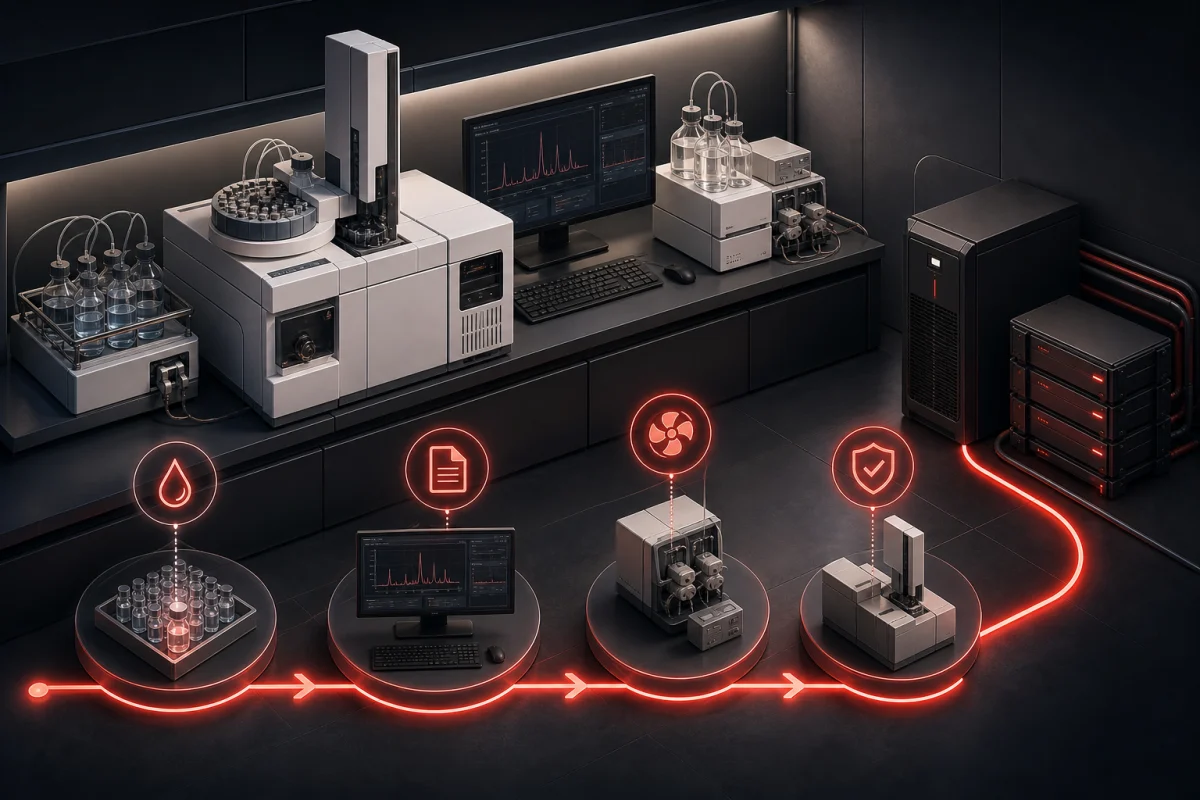
Define laboratory UPS runtime from the workflow that must finish during an outage: preserve the sample, save data, stop pumps or heaters in sequence, complete a controlled shutdown, or bridge to alternate power. Convert that procedure into minutes at a measured load instead of selecting autonomy from the instrument nameplate.
The decision in practical terms
Instrument and medical-support projects must be designed around the equipment manufacturer’s power requirements and the facility risk assessment. A stable UPS output can be useful, but it does not make an unverified UPS a medical-certified device or prove compatibility with every instrument. The practical question here is: “How much autonomy is needed to finish, preserve or safely stop an experiment?” It focuses the discussion on project conditions, configuration scope and evidence rather than catalogue shorthand.
For “How much autonomy is needed to finish, preserve or safely stop an experiment?” Treat the buyer question as a controlled engineering decision: establish evidence for the inputs, write the intended outcome and ask how the offered system will be verified. The first three items to close are: Map the instrument, computer, pumps, peripherals, network and environmental dependencies needed for a safe outcome. Time the real shutdown or transition procedure and state which steps require an operator and which are automated. Validate the proposed host-and-battery configuration with a representative operating cycle and agreed stop criterion. Once these are controlled, differences between proposals become visible and testable.
Five checks that change the recommendation
Map the instrument, computer, pumps, peripherals, network and environmental dependencies needed for a safe outcome. Check the boundary of the answer: model, option, load, environment, market and date. A correct statement can become misleading when any of those changes.
Time the real shutdown or transition procedure and state which steps require an operator and which are automated. Preserve the decision in the purchase file so engineering, procurement, commissioning and service teams work from the same approved condition.
Validate the proposed host-and-battery configuration with a representative operating cycle and agreed stop criterion. Put the value and its source in the technical schedule. A supplier should be able to point to the exact model, operating mode and condition used for the recommendation.
Build a complete load list that includes instrument accessories, pumps, heaters, computers and startup sequences. Treat this as an acceptance input, not a conversation note. If it changes after quotation, record the effect on capacity, battery, interfaces, evidence and delivery.
Derive runtime from the action needed: continue the process, preserve the sample, save data, or stop safely. Verify it with a measurement, drawing, nameplate, manufacturer requirement or approved project document. An unstated assumption here can invalidate the rest of the selection.
Make supplier proposals comparable
Use a common response format for every supplier, including requirement, offered value, evidence, deviation and responsible approver. For “Defining UPS Runtime Around a Laboratory Shutdown Workflow,” reject any response that silently changes a material project condition or evidence scope.
A lower price is meaningful only after the response format confirms that the configuration and obligations are comparable.
Review item | Requirement to state | Decision record |
|---|---|---|
Technical check 1 | Map the instrument, computer, pumps, peripherals, network and environmental dependencies needed for a safe outcome. | Record the evidence, responsible approver and effect on the guide decision. |
Technical check 2 | Time the real shutdown or transition procedure and state which steps require an operator and which are automated. | Record the evidence, responsible approver and effect on the guide decision. |
Technical check 3 | Validate the proposed host-and-battery configuration with a representative operating cycle and agreed stop criterion. | Record the evidence, responsible approver and effect on the guide decision. |
Technical check 4 | Build a complete load list that includes instrument accessories, pumps, heaters, computers and startup sequences. | Record the evidence, responsible approver and effect on the guide decision. |
Verify the approved requirement
Turn the agreed requirement into a verification record. Identify the exact supplied item and configuration, the evidence or test method, the applicable condition and the expected result for the question “How much autonomy is needed to finish, preserve or safely stop an experiment?” For performance tests, retain instruments, readings, alarms and timestamps; for document reviews, retain the issuer, scope and revision.
Verification supports one defined application and condition; record when a design or evidence revision triggers re-approval. A successful verification applies only to the delivered configuration and stated conditions; it is not a blanket guarantee for a different load, site, document scope or operating mode.
Common failure modes in this decision
Clarify the points below whenever they appear in a quotation, datasheet or project discussion.
- Selecting from the instrument nameplate alone
- Publishing medical conformity without model evidence
- Promising that a UPS prevents every data-loss event
- Answering “How much autonomy is needed to finish, preserve or safely stop an experiment?” without naming the exact configuration and evidence
Where Highidea fits
Highidea UPS systems are used in laboratory, mobile-laboratory and industrial settings. The final selection must still be validated for the specific instrument and installation; an application example is not universal medical compatibility or regulatory approval.
Provide Highidea with the resolved inputs and ask that the quotation state the exact equipment, battery configuration, interfaces and document scope.
Copy this into your RFQ
Tailor these requirements to the site, then keep the supplier’s answers with the approved order.
- Confirm in the quotation: Map the instrument, computer, pumps, peripherals, network and environmental dependencies needed for a safe outcome.
- Confirm in the quotation: Time the real shutdown or transition procedure and state which steps require an operator and which are automated.
- Confirm in the quotation: Validate the proposed host-and-battery configuration with a representative operating cycle and agreed stop criterion.
- Confirm in the quotation: Build a complete load list that includes instrument accessories, pumps, heaters, computers and startup sequences.
- Confirm in the quotation: Derive runtime from the action needed: continue the process, preserve the sample, save data, or stop safely.
Authoritative references and scope
The links below support the buyer’s evaluation framework. The quoted model needs its own applicable evidence and conditions.
IEC: IEC 60601-1 — Medical electrical equipment safety and essential performance
FAQ
Frequently asked questions
How much autonomy is needed to finish, preserve or safely stop an experiment?
Define laboratory UPS runtime from the workflow that must finish during an outage: preserve the sample, save data, stop pumps or heaters in sequence, complete a controlled shutdown, or bridge to alternate power. Convert that procedure into minutes at a measured load instead of selecting autonomy from the instrument nameplate.
What evidence should accompany this requirement?
Send the exact load and source data, required operating outcome, site conditions, interfaces, target market and evidence requirements. For this decision, include: Map the instrument, computer, pumps, peripherals, network and environmental dependencies needed for a safe outcome. Time the real shutdown or transition procedure and state which steps require an operator and which are automated. Validate the proposed host-and-battery configuration with a representative operating cycle and agreed stop criterion.
How should a catalogue claim be used?
Use family information to shortlist an architecture, but confirm the exact model, configuration, operating mode, test conditions and document scope in the quotation or approved technical schedule.
Related
Products, solutions & further reading.
Put this into practice
Need help specifying the right unit?
Share the load, voltage, runtime, environment and destination for a configuration review.