Modular, Parallel, Redundant or Hot-Swappable Inverters?
By Highidea Power · 22 October 2026 · 3 min read
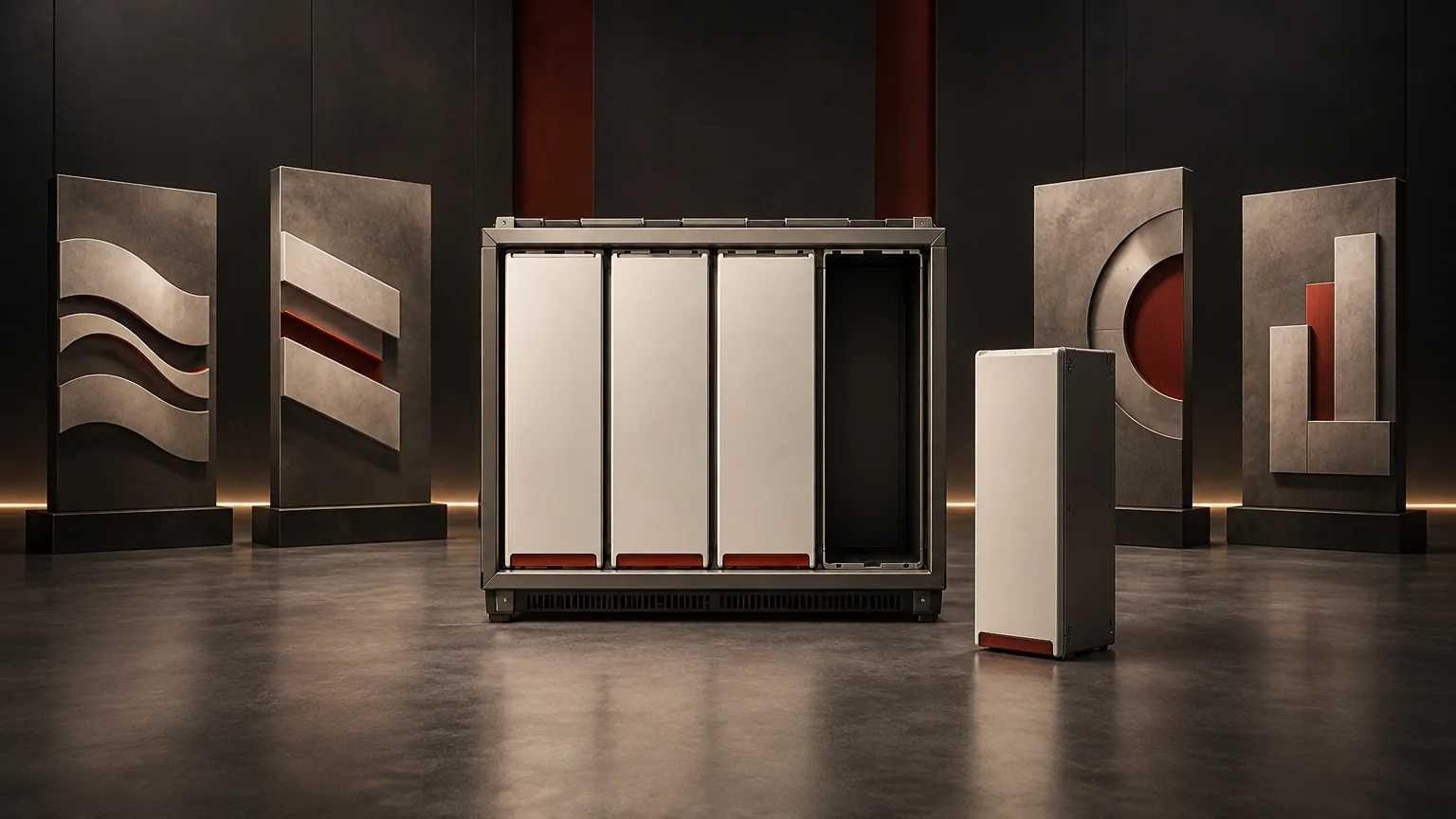
These four terms answer different questions. Modular describes construction; parallel describes coordinated supply to a shared output; redundant describes the ability to retain a defined service after a specified failure; hot-swappable describes an expressly permitted service operation while relevant parts remain energized. Confirm each required capability for the selected configuration.
Highidea's HM range provides a modular parallel telecom-inverter route. Start with that architecture, then define the operating and maintenance outcomes your site needs. This keeps a useful product shortlist separate from assumptions about fault tolerance or live service.
Translate the term into an observable result
Term | Requirement to make explicit |
|---|---|
Modular | Which functional units form the system, and which may be added or replaced under the documented procedure? |
Parallel | Which units share output, with what approved combinations, controls and capacity limits? |
Redundant | Which failure is considered, what remains available afterward, and whether the remaining system meets the load and service objective? |
Hot-swappable | Which exact part may be serviced energized, under which load, isolation, qualification and procedural conditions? |
A removable front panel is not a service authorization. A connector designed for replacement does not, by appearance, establish that live removal is permitted.
Three combinations that expose the difference
In a hypothetical modular system, individual conversion modules simplify replacement, but the approved procedure requires shutdown. Modularity brings a service benefit without establishing hot-swap capability.
In a hypothetical capacity-expansion system, several parallel units are all needed for the connected load. Losing one can leave insufficient capacity. Parallel operation has increased available capacity; the required failure tolerance has not necessarily been achieved.
In a hypothetical redundant conversion system, sufficient modules remain after a conversion-module failure, but a shared control or distribution component can still interrupt the service. The redundancy statement must identify its fault boundary.
These are conceptual examples, not descriptions of HM behavior. They show why one adjective cannot safely substitute for another.
Write the service objective before counting modules
Separate three situations in the enquiry:
- Normal operation: the required W and VA, source conditions and load characteristics.
- Specified failure: the component or path assumed unavailable, the required remaining output and any allowed interruption.
- Planned maintenance: what may be taken out of service, who performs the work and how the load stays protected.
A design that meets the normal total rating can still fail the second or third situation. Include the relevant battery/DC source, protection, control and distribution dependencies in the system review. Our related telecom inverter redundancy guide develops those system-level questions.
Use a capability confirmation card
For each required capability, keep one record containing: exact model/module, approved combinations, applicable firmware or controls, load/source conditions, permitted procedure reference, service outcome and responsible approver. Mark an unresolved item for clarification; do not infer approval from a family description.
Delta/Eltek's Converged Power material separately names modular architecture, redundancy, hot-swap capability and cabinet paralleling for its own solution. That is an example of distinct manufacturer declarations. Its ratings and service permissions do not apply to Highidea equipment.
Hot-swap terminology is not an invitation to remove a module experimentally. Qualified personnel must follow the exact equipment's approved method and the site's electrical-safety arrangements.
Discuss the right Highidea architecture
The HM 3–15K family is a rack-mounted 48 VDC modular parallel telecom-inverter offering with 220 VAC output. Send Highidea the required output, DC source, defined failure case and planned service task. We can discuss the relevant product route and the configuration information needed for the system review.
Manufacturer example
- Delta/Eltek: Converged Power Solutions, AC CPS. Referenced to illustrate separately declared capabilities, not interchangeable products or procedures.
FAQ
Frequently asked questions
Does “N+1” mean every component is duplicated?
It describes a capacity arrangement under stated assumptions. Identify the counted units and the failures covered; it does not automatically describe every shared component.
Does hot-swappable mean untrained staff may replace it?
No. Permission applies only under the manufacturer's specified conditions, procedure and personnel requirements.
What should a modular-inverter quotation state explicitly?
Request the module and system configuration, permitted service condition, redundancy objective, capacity after an unavailable module, approved expansion arrangement and required verification. Treat an unanswered capability as open rather than inferring it from the presence of removable modules. Each answer belongs to the exact offered system.
Related
Products, solutions & further reading.
Put this into practice
Need help specifying the right unit?
Share the load, voltage, runtime, environment and destination for a configuration review.