Three-Phase UPS Commissioning: Agree the Acceptance Evidence First
By Highidea Power Engineering Team · 20 October 2026 · 4 min read
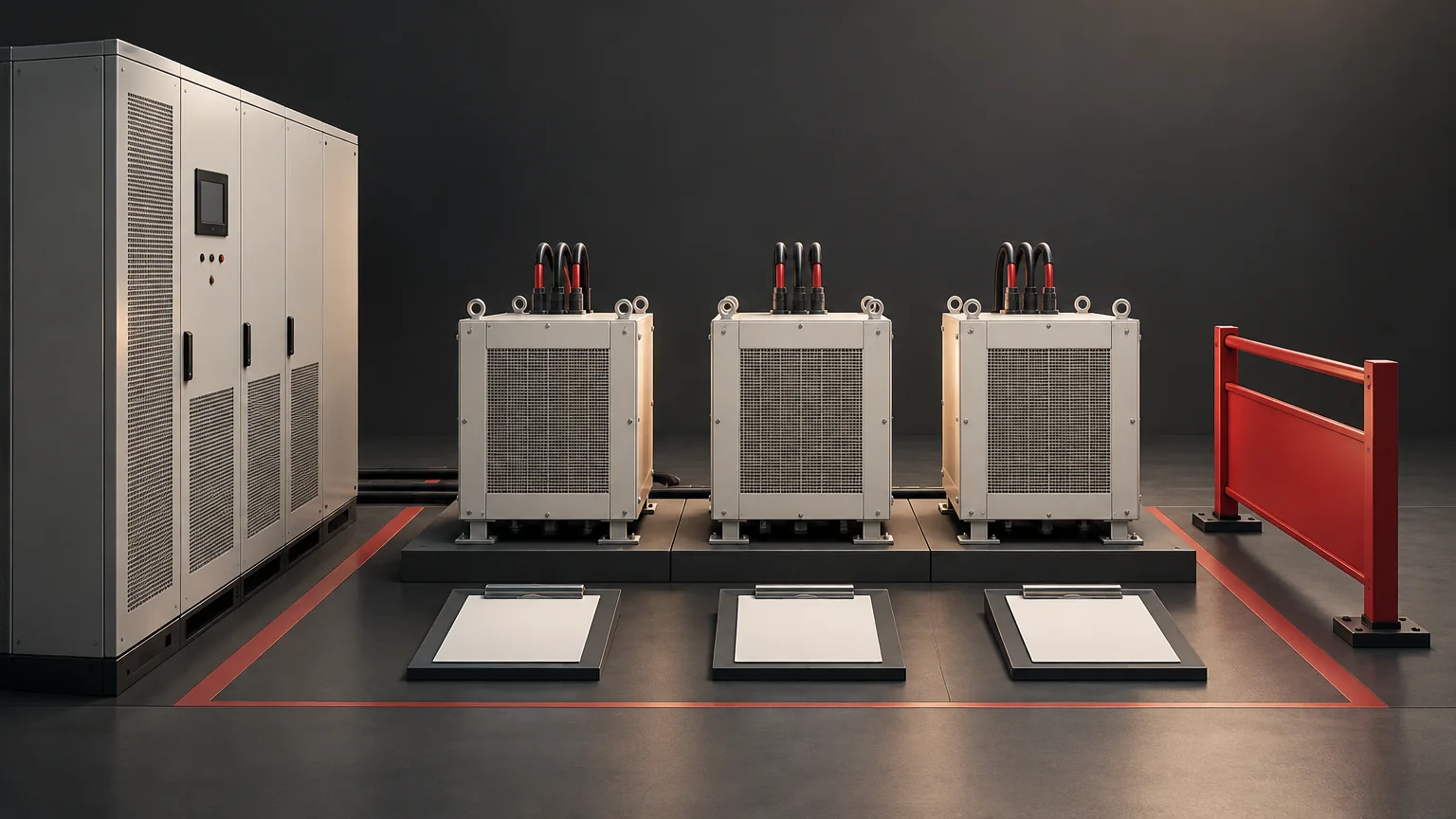
Agree the selected three-phase UPS's acceptance evidence before testing begins. Identify the phase arrangement, bypass conditions, per-phase limits, required observations and responsible approvers. This guide proposes an evidence plan; safe switching steps, pass criteria and installation approval must come from the actual equipment and site documents.
Separate readiness, testing and acceptance
An installation can have complete paperwork but unperformed tests. It can also have a test report with unresolved configuration differences. Keep readiness review, witnessed observations and final acceptance as separate decisions.
Identify the exact host, battery arrangement, output setting, options and approved drawing revision. Record which team owns electrical installation, supplier commissioning, load behavior and the buyer's acceptance decision. A demonstration by one party does not automatically sign off another party's scope.
SGS's description of factory acceptance testing supports a useful general principle: checks are tied to contractual specifications, functionality and documents. It does not provide a universal three-phase site-commissioning procedure. The matrix below is a proposed set of questions for qualified approval, not a complete mandatory test list.
Give every requirement an evidence row
Start with the agreed requirement and add a named source for its limit. Avoid rows that say only “voltage OK” or “bypass tested.” They hide the configuration and observation that made the result meaningful.
Evidence area | What the plan should identify |
|---|---|
Phase arrangement | Approved input/output configuration and the qualified party's phase-identity/rotation verification record. |
Sources and bypass | Documented source conditions, compatible modes and approved test-procedure reference. |
Per-phase behavior | Required load scenarios, each phase's observations and the selected model's limits. |
Battery configuration | Exact chemistry, arrangement and approved autonomy/recovery evidence. |
Alarms and reporting | Required events, source-to-receiver mapping and the scope actually demonstrated. |
Restoration | Authorized restoration record, final configuration and unresolved deviations. |
RFC 1628 provides per-input and per-output management-table concepts. Those definitions help specify telemetry evidence, but they neither prove that a selected card implements it nor replace qualified electrical measurements required by the approved plan.
Do not let an aggregate pass conceal a phase failure
Consider a hypothetical acceptance criterion with a verified 10 kW limit on each phase. Observed demands of 11, 7 and 6 kW total 24 kW. The total can look acceptable against a 30 kW aggregate, while the first phase fails the assumed individual limit.
These values illustrate the evidence problem; they are not Highidea phase limits. Retain each phase's result, its applicable condition and the document that establishes the criterion. A supplier must interpret the actual product's imbalance and per-phase requirements.
Highidea's 33ET documentation describes a three-input/three-output online family. The selected voltage, battery configuration and operating mode still matter. A family name or aggregate kVA label does not complete the acceptance criteria for a site.
Copy a result cell for each scenario authorized in the actual plan. The qualified engineer supplies the limits and measurement method; this is not a demand to perform every test.
Result cell | Complete for the approved scenario |
|---|---|
Requirement and authority | Requirement ID: __; exact model/configuration: __; source of criterion: __; procedure/authorized operator: __. |
Phase-specific record | Phase labels: __; each required observation with units: __; each applicable limit: __; individual results: __; aggregate result: __. |
Representative load stage | Authorized stage/scenario: __; actual demand and distribution: __; instrument/report: __; planned versus actual conditions: __. |
Evidence and disposition | Witnessed/supplied/not obtained: __; result: __; deviation owner: __; restoration record: __; acceptance approver: __. |
A stage not performed remains not obtained. Do not populate an untested stage from another load condition or infer a phase result from the total.
Define hold points before interruptions
For each proposed test, identify the approved procedure, authorized operator, protected-load consequence and release condition. A test should not begin merely because a witness is available. The responsible team must confirm readiness and a safe recovery arrangement.
Record whether evidence was witnessed, supplied as a report or not obtained. If the planned configuration changes, reassess the affected evidence instead of silently accepting a substitute battery, output setting or load scenario.
Do not derive a switching sequence from this checklist. Phase rotation, bypass transfers, protection and restoration can involve hazardous work and must follow the actual approved instructions.
Close deviations and preserve the final state
Each deviation needs a description, owner, disposition and supporting evidence. Distinguish a resolved technical result from a commercial agreement to accept a limitation; do not rewrite a failed observation as a pass.
The handover should identify the final drawing/configuration revisions, test records, remaining limitations and approval responsibility. Send Highidea the matrix early enough for the supplier to state what it can document or demonstrate. The purpose is an auditable acceptance decision, not a longer list of untraceable ticks.
Primary references
The references support the specific distinctions stated above. Manufacturer examples apply to their documented products; they do not establish the same capability in a Highidea model. Proposed worksheets and hypothetical examples are editorial decision tools, not approved installation or operating procedures.
IETF / RFC Editor: RFC 1628: UPS Management Information Base
FAQ
Frequently asked questions
Is a factory test enough for site acceptance?
Not automatically. Transport, installation, source conditions and connected loads can introduce site-specific requirements.
Can telemetry substitute for every electrical measurement?
No. Use the measurement method and evidence quality required by the approved plan, and confirm what the card actually reports.
Does this matrix authorize bypass testing?
No. It organizes approval questions. Only the responsible parties and equipment/site procedures can authorize the actual test.
Related
Products, solutions & further reading.
Put this into practice
Need help specifying the right unit?
Share the load, voltage, runtime, environment and destination for a configuration review.