AC/DC or DC/DC? Specify a Power Converter from the Equipment's Approved Input
By Highidea Power Engineering Team · 19 October 2026 · 5 min read
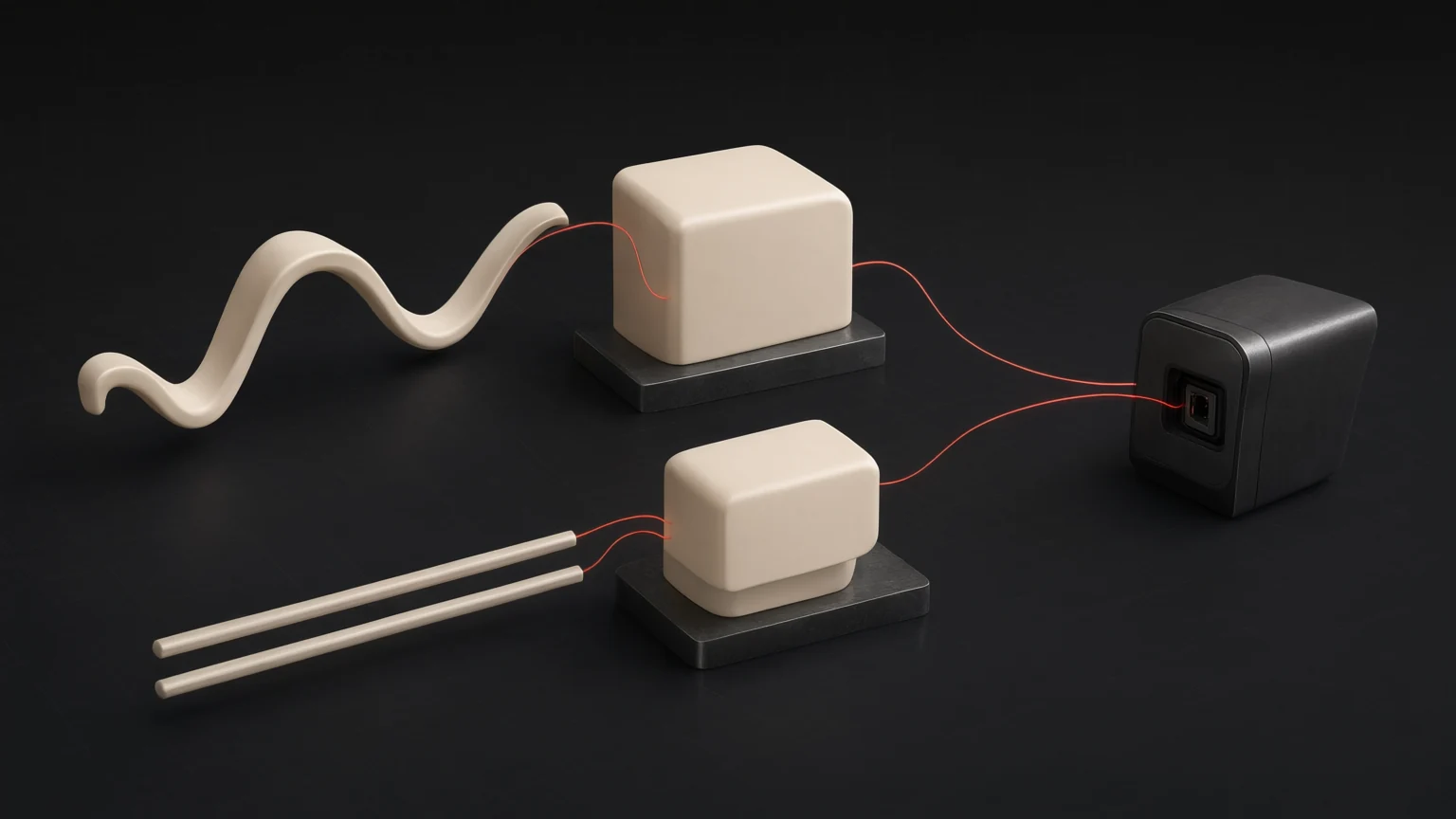
Choose the conversion path from the available source to the equipment's approved power input. AC source to DC input calls for an AC/DC supply; a DC source feeding a different DC voltage may need DC/DC conversion. A DC source feeding equipment that requires AC needs an inverter. An RP family name or a statement that equipment “uses DC internally” does not establish the correct interface.
Draw the two ends before choosing a product
Begin with a supply profile and an equipment input profile. The supply profile identifies AC or DC, nominal value, operating range, polarity or phase, frequency where applicable, and grounding arrangement. The equipment profile comes from its manufacturer: approved input type and range, current or power demand, startup behavior and connection requirements.
Some instruments use DC inside but accept power only through an approved AC adapter. Bypassing that adapter can change isolation, protection, EMC behavior or warranty conditions. A direct DC connection is appropriate only when the equipment manufacturer permits that input and the complete interface has been checked. Keeping an AC adapter may be the correct design.
Use the conversion-direction matrix
The table identifies a function, not a specific available input/output combination. A full model specification is still needed before ordering.
A rectifier's DC output does not automatically make it a suitable battery charger. Charging needs the correct battery-specific control, protections and operating limits. Similarly, “isolated” must be stated for the offered converter; it should not be inferred merely from a voltage change or a metal rack enclosure.
Source | Details and decision |
|---|---|
AC | Approved equipment input: DC; Function to investigate: AC/DC power supply or rectifier; Additional question: Is load supply alone required, or also approved battery charging? |
DC | Approved equipment input: Different DC range; Function to investigate: DC/DC converter; Additional question: Does it need step-down, step-up, both, or isolation? |
DC | Approved equipment input: AC; Function to investigate: DC-to-AC inverter; Additional question: Which AC voltage, frequency, waveform and starting load? |
DC | Approved equipment input: Matching permitted DC range; Function to investigate: Direct DC distribution may be possible; Additional question: Are protection, polarity, grounding and transients compatible? |
What the Highidea RP listing establishes
Highidea lists RP rack power-conversion products in a 2U format. The listing includes AC/DC supplies with 220/110/48/24 V output options and DC/DC converters for 24/48/110/220 V systems. This is enough to start a quotation conversation about conversion direction. It is not a cross-table proving that every listed input can produce every listed output.
Specify an actual requested pair, such as a nominal DC source and a permitted DC load range, then ask Highidea to identify an available model and its complete ratings. Do not turn a family voltage list into a promise of reversible conversion, arbitrary voltage settings, battery charging or all-model isolation.
A DC load can still need voltage conversion
A source marked 48 V and a load marked 24 V are plainly different, but matching nominal labels can also hide a mismatch. A battery-backed bus changes voltage between charging and discharge. The load's permitted range may be narrower than that bus, and polarity or grounding may differ. Obtain continuous and transient limits from both ends.
Texas Instruments explains that buck, boost and buck-boost functions depend on the relationship between input and output voltage, while isolation is a separate selection condition. Use those concepts to write requirements; do not apply a semiconductor application's illustrative power limits to an RP rack converter.
For a thought experiment, suppose a load permits 22–26 VDC while the available source spans 40–58 VDC. A direct connection fails the voltage-range comparison. The next design question is a converter that accepts the entire source envelope and maintains the required output under the load conditions. These hypothetical values are not RP specifications or a wiring instruction.
Compare a direct DC path with an AC-adapter path
If the equipment explicitly permits direct DC, a suitable DC/DC route can avoid an inverter followed by an AC/DC adapter. There is no universal efficiency saving to quote without the actual devices and load points. Multiple conversion stages can introduce losses, but a retained approved adapter may provide necessary functions or a supported interface.
Compare the complete alternatives on permitted operation, isolation, protections, standby consumption, part-load efficiency, thermal limits, service replacement and equipment-manufacturer support. Select the architecture that meets the application, rather than removing stages solely to make a diagram look simpler. Qualified designers should review the complete circuit and installation.
Make the quotation line unambiguous
Write “AC/DC supply” or “DC/DC converter” ahead of the model code. State source type and full range, required output type and tolerance, continuous and startup demand, isolation requirement, polarity/grounding, ambient conditions, cooling, mounting and protective interfaces. Ask for the exact datasheet and a connection drawing for the offered configuration.
A complete response distinguishes the approved operating envelope from nominal values and identifies exclusions. If input direction, output range or charging capability is unanswered, keep that item open before order approval. Send Highidea both profiles together so the quotation names a compatible conversion function and model instead of relying on the letters RP alone.
Sources and product context
The following primary references support the industry context. They do not establish conformity, compatibility or performance of every Highidea product. Model-specific product statements in this guide follow the cited Highidea product and application records.
Texas Instruments: How to Approach a Power-Supply Design — Part 2
FAQ
Frequently asked questions
Can every listed RP voltage convert into every other voltage?
The family listing does not establish that. Specify the requested input and output operating ranges and obtain the exact available model and complete datasheet.
Can I bypass an AC adapter because the instrument uses DC internally?
Only if the equipment manufacturer permits the proposed direct DC input and the complete interface is checked. Otherwise, retaining the approved AC adapter may be necessary.
Is every AC/DC supply a battery charger?
No. Battery charging requires the appropriate control, protections and limits for the actual battery system. A suitable nominal DC output alone does not establish that function.
Related
Products, solutions & further reading.
Put this into practice
Need help specifying the right unit?
Share the load, voltage, runtime, environment and destination for a configuration review.