Coordinate Split UPS and Battery Deliveries for Installation Readiness
By Highidea Power · 21 October 2026 · 5 min read
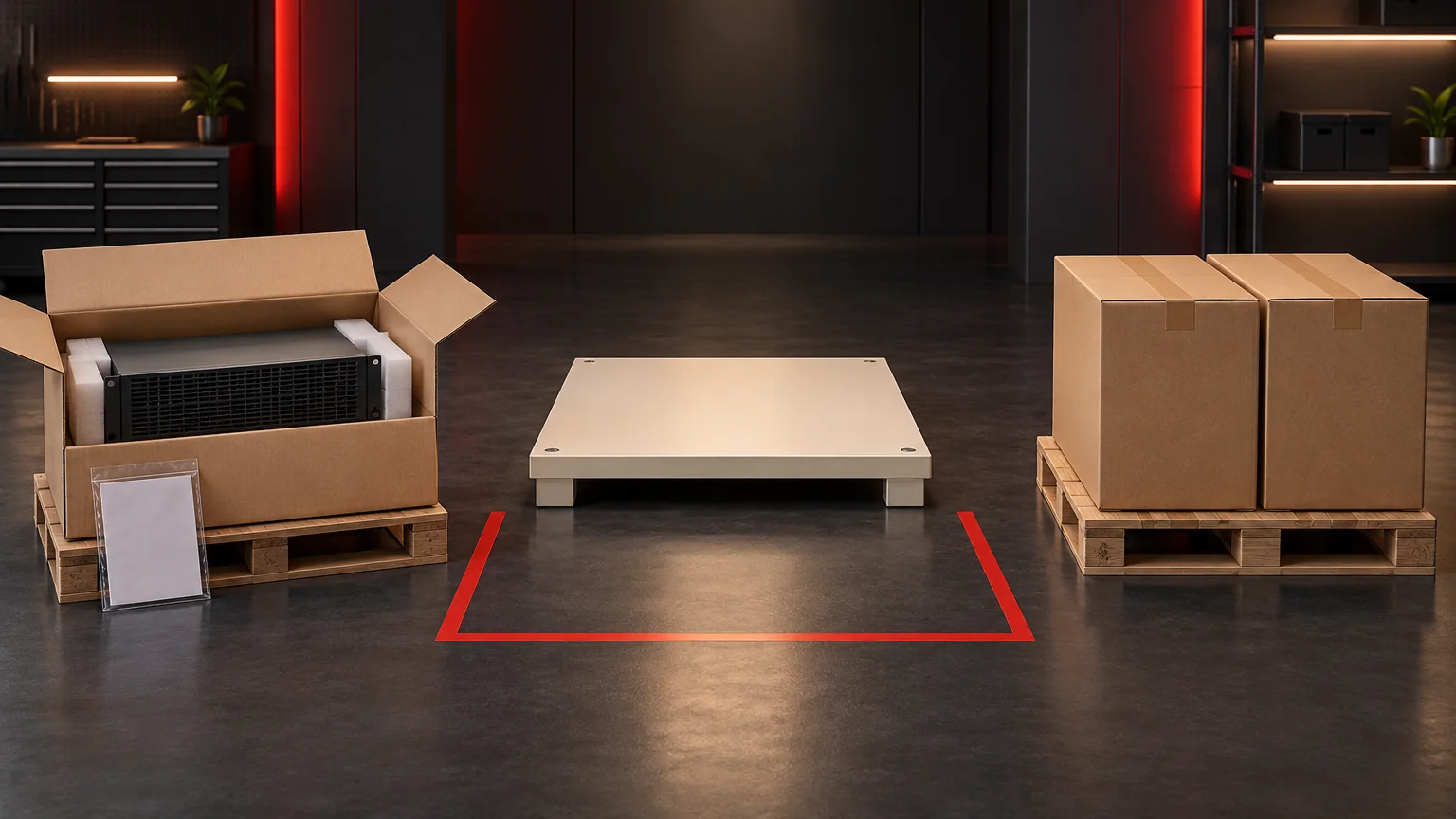
When a UPS host, batteries and accessories arrive separately, track them as parts of one approved system. Give each shipment its own receiving and custody record, then assess installation readiness against the complete configuration. The first delivery can satisfy a logistics milestone while the system still needs batteries, connection parts, documents or an approved installation location.
Highidea Power supplies built-in-battery UPS products and external-battery configurations. We match product and export documents to the ordered host and battery. A split-delivery plan helps buyers coordinate these items with the installer, warehouse and site team before dispatch.
Split the packing list without losing the system identity
Give the complete assembly a project/configuration reference and retain a row for every host, battery, accessory and document. Show which shipment contains each item. Where several installations share a delivery, keep the destination site against each row so a battery intended for one configuration is not casually allocated to another.
Record full part references and quantities. Terms such as “battery set” and “standard accessories” need an attached contents list. The external and replacement battery checklist explains the host, charging, interface and protection information needed for the approved pairing.
System element | Shipment record / Readiness question |
|---|---|
UPS host | Shipment record Model, quantity, package and destination Readiness question Does it match the approved configuration? |
Batteries | Shipment record Exact identity, quantity and shipment reference Readiness question Is the full approved storage arrangement present? |
Connections and protection | Shipment record Named supplied parts and installation drawings Readiness question Are all required parts available to the qualified installer? |
Mechanical support | Shipment record Supplied rails, cabinet or other approved support Readiness question Can the complete system be installed as planned? |
Monitoring | Shipment record Host/card identity and required configuration information Readiness question Is the planned receiving network and owner ready? |
Documents | Shipment record Model/configuration, language and revision Readiness question Does the installer have the applicable instructions? |
The system reference joins the rows; it does not make unmatched items interchangeable. Resolve a substitution with the supplier and system designer before assigning it to an installation.
Give each arrival a safe receiving decision
The receiver checks package identities, counts, visible condition and the packing list through the agreed receiving process. The installer later confirms the assembly and installation requirements. Keep these responsibilities separate so a signed delivery note does not become an unintended statement that the electrical system is ready.
If equipment is damaged, wet, deformed or shows signs of a battery safety problem, use the site's quarantine or emergency arrangements and obtain qualified guidance. Do not energize or charge a shipment to see whether it survived transport. Our transit-damage checklist covers the receiving evidence to retain.
Assign custody for the gap between shipments
Someone must own the equipment during the interval. Agree the holding location, applicable storage instructions, inspection duties, access arrangements and the next due task before the first delivery. A warehouse signature establishes receipt; preservation duties need an explicit handover.
Ask the supplier for instructions covering the actual host and battery arrangement. Do not improvise a universal lithium recharge interval, copy an older lead-acid schedule or use a temporary power connection as an assumed storage method. If an instruction or responsibility is still open, escalate it before extending the holding period.
Use a custody line that stays with each item:
Item/configuration: __. Location: __. Custodian and substitute: __. Instruction/revision: __. Last required task: __. Next due task: __. Exceptions: __. Incoming custodian's acceptance: __.
Commercial delivery, payment and risk-transfer terms should be agreed separately. A custody worksheet helps teams carry out responsibilities; it does not change the purchase contract or transport terms.
Plan by dependencies, not arrival dates alone
This is a hypothetical coordination example, with no promised dates or Highidea delivery result.
Event | What can progress / What remains blocked |
|---|---|
Host arrives before batteries | What can progress Receiving checks, approved storage and document review What remains blocked Complete-system installation/release if required items are absent |
Batteries arrive but a specified connector is missing | What can progress Identity and condition review under the receiving plan What remains blocked Assembly using that connection; no improvised substitute |
All hardware arrives but the installation drawing is superseded | What can progress Reconcile documents and obtain the approved revision What remains blocked Work dependent on the unresolved drawing |
Complete configuration and prerequisites are accepted | What can progress Qualified installation and commissioning under the approved plan What remains blocked Operational handover until its required checks are complete |
A qualified project plan may allow selected preparatory work. It must define that work explicitly; arrival of the host alone does not authorize energizing an incomplete external-battery system.
Use a complete-system readiness gate
Before booking the final installation or commissioning activity, collect the following decisions in one place:
- The approved host, batteries and required accessories are present, with discrepancies resolved.
- The site, delivery route, support and installation conditions are accepted by the responsible parties.
- Applicable manuals, drawings and configuration records have reached the installer.
- Preservation records and any overdue tasks or environmental exceptions have a disposition.
- Qualified installation, test, monitoring and handover responsibilities are assigned.
Mark each item ready, held or not applicable, with a reason and owner. Avoid reporting the project as fully ready merely because its package count is complete. Keep the actual lead-time milestones updated when a late component changes the installation sequence.
Match documents to each shipment
Provide the actual shipment contents and transport mode to the supplier, importer and qualified shipping provider. They should determine the applicable battery, packaging and destination requirements for each consignment. A document bundle retained from the first shipment may describe different contents from the second.
Highidea's export-document matching service checks the named host, battery or cell against the relevant documents. Keep this shipment review alongside the configuration schedule so logistics and technical teams can identify the same items.
Coordinate the order with Highidea
Share the planned consignments, site dates and installation scope. Our team can discuss the host/battery configuration and document requirements with your procurement team. Keep freight arrangements, holding duties and staged-release decisions explicit in the project agreement.
Product and service references
FAQ
Frequently asked questions
Can the host be installed before the batteries arrive?
Only the responsible project parties can approve a staged installation using the actual equipment instructions and site conditions. Distinguish permitted preparatory work from connection, energization and operational release.
Does a missing accessory matter if the main units are present?
If it is required by the approved arrangement, it is a readiness blocker until supplied or replaced through an approved change. A connector that looks similar is not an accepted substitute.
Who should own the batteries in temporary storage?
Name a custodian and substitute, then specify applicable instructions, tasks and escalation contacts. Record custody changes rather than assuming that the carrier, warehouse or installer has accepted every duty.
Put this into practice
Need help specifying the right unit?
Share the load, voltage, runtime, environment and destination for a configuration review.