IP and NEMA Ratings in a UPS Cabinet: Check the Protected Boundary
By Highidea Power · 24 October 2026 · 4 min read
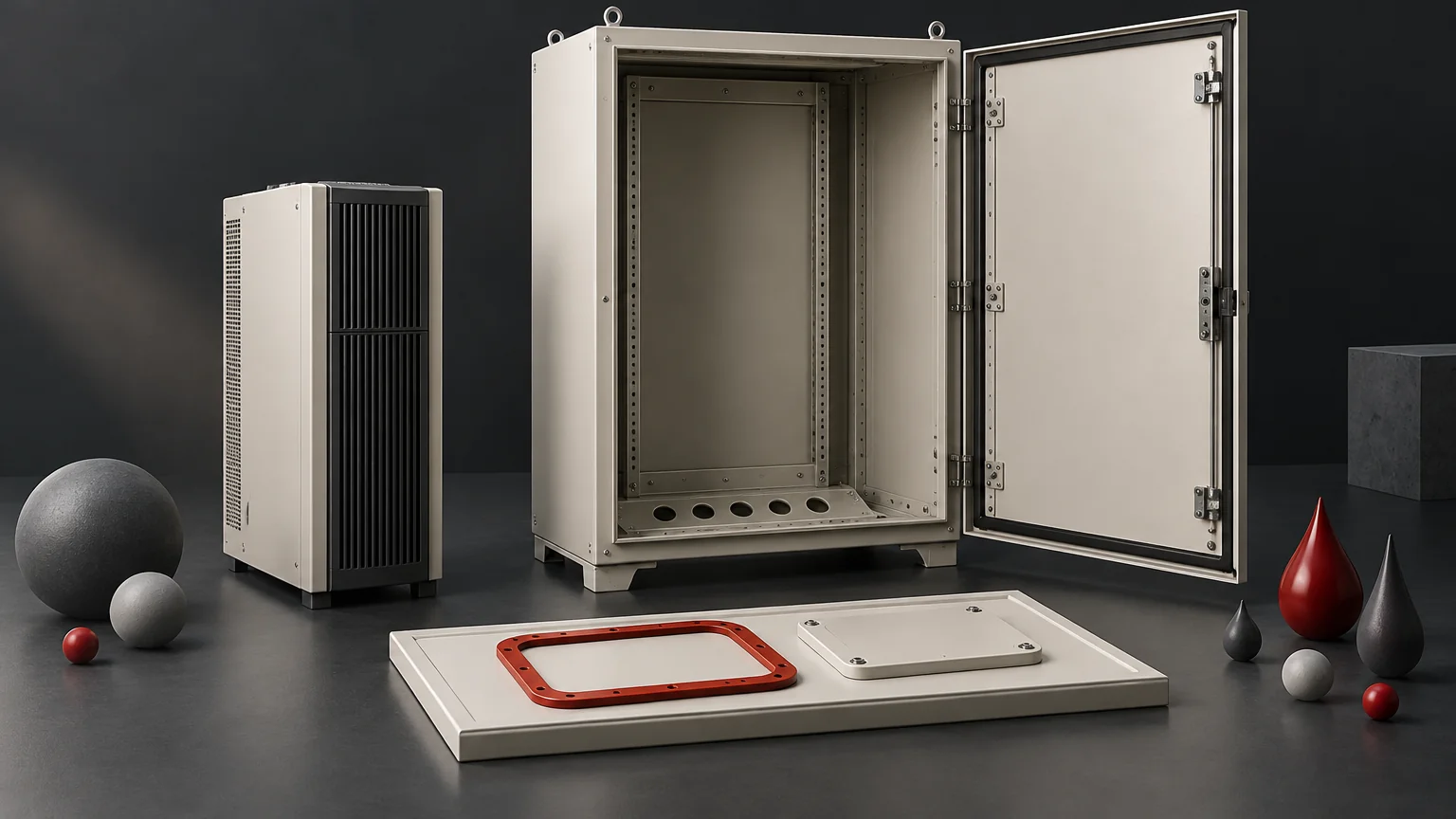
Read an IP or NEMA claim against the enclosure and assembly it actually describes. An outer cabinet’s rating does not automatically establish the permitted environment of the UPS inside it, or cover every later change to doors, cooling and cable entries. Highidea can discuss UPS configurations for industrial projects alongside your enclosure requirements. Define both boundaries early so environmental protection and dependable operation can be planned together.
Put the rating on the correct object
A project can contain several nested boundaries: the room, an outer cabinet, the UPS enclosure and its interfaces. Give each claimed rating an owner on the arrangement drawing. Identify whether the supporting document describes an empty enclosure, a particular assembled cabinet or the complete supplied equipment.
This avoids a common quotation mismatch. One offer may price a rated empty cabinet; another may include an equipment assembly with specified accessories. The same headline rating does not establish equal scope. Ask what is included and which operating arrangement the manufacturer’s declaration covers.
Keep the UPS’s own environmental conditions in the same review. Its temperature, humidity and cooling requirements still matter inside an outer enclosure. The outer boundary changes the environment around the UPS; it does not remove those requirements.
Read IP and NEMA as different systems
IEC 60529 classifies degrees of protection provided by enclosures. IP information concerns protection against access and solid foreign objects, and ingress of water under the applicable conditions. It is not a general score for every environmental hazard.
Gore’s explanation of IP and NEMA ratings identifies additional NEMA requirements such as corrosion resistance, gasket aging, oil resistance and external icing, depending on the type. It explicitly cautions against converting an IP rating into a NEMA rating. A comparison table is therefore not permission to treat two declarations as interchangeable in both directions.
Do not turn an immersion description into a universal water depth and duration, or assume that a larger code number proves every kind of protection is stronger. Use the actual declared standard, designation and applicable conditions. Corrosion, condensation, hazardous locations and thermal performance may require separate project answers.
Follow the boundary through installed details
Cable entries, doors, removable panels and cooling components are part of the arrangement being reviewed. Ask the enclosure or assembly supplier how the claimed protection applies with the specified fittings and normal operating positions.
A field change does not have one universal certification outcome. What matters is whether the changed assembly remains within its supported configuration and evidence. Obtain the applicable answer before treating a different cable gland, opening or cooling unit as an equivalent substitute.
The following boundary record helps the UPS supplier, enclosure supplier and project designer discuss the same installation.
Boundary or detail | Evidence and decision to record |
|---|---|
Room and exposure | Actual dust, water, corrosive agents and environmental conditions relevant to this location |
Outer enclosure | Exact enclosure/assembly identity, standard and rating with its covered configuration |
Doors and entries | Required operating positions, approved fittings and treatment of service openings |
Cooling system | Selected ventilation or heat-transfer arrangement and how its scope relates to protection |
UPS and interfaces | Applicable equipment environment, connections, access and remaining limitations |
Finish each entry with an owner and a result: confirmed for this arrangement, unsuitable, or awaiting clarification. The record is a procurement tool, not an authorization to modify or install an enclosure.
Check cooling and ingress protection together
A sealed boundary and a fresh-air arrangement solve environmental problems differently. A design that limits ingress must still remove the heat generated within it. Conversely, admitting cooling air changes which outside conditions reach the equipment.
Our rack cooling guide covers the air path and heat boundary. Use that information alongside the enclosure’s protection requirements rather than assigning unused cabinet space as proof of cooling.
Likewise, ingress protection does not settle condensation caused by temperature transitions or moisture already inside. The monitoring-cabinet condensation guide addresses that separate preparation question. A satisfactory result in one assessment should not be copied into the other as a pass.
Compare complete enclosure proposals
Consider a hypothetical industrial project comparing an empty rated enclosure with an assembled UPS cabinet. Ask both bidders to identify the equipment, entries, cooling and normal door positions their statements cover. Then compare the complete arrangements against the same site exposure.
If the first offer needs separately designed cooling and cable entries, keep that work in its cost and responsibility schedule. If the second offer changes an accessory after approval, return the changed configuration for confirmation. Neither an attractive cabinet photograph nor a familiar rating designation closes these interfaces.
Avoid improvised sealing, opening a door as a permanent cooling remedy or cutting new openings to make equipment fit. The responsible suppliers and qualified installation team should resolve the arrangement through supported documentation.
Prepare the Highidea cabinet discussion
Highidea offers rack-mounted online UPS options and industrial-frequency UPS routes. Share the proposed enclosure, load, local exposure, maintenance needs and required protection documents through our contact page.
We can discuss the selected UPS against those inputs while the enclosure and project teams confirm the complete assembly. This keeps the quotation focused on a workable installed system rather than a rating printed beside one component.
Primary references
- IEC: IEC 60529 consolidated edition 2.2, official enclosure-protection scope.
- Gore: IP and NEMA Ratings and What They Mean, differences in test coverage and conversion limits.
FAQs
FAQ
Frequently asked questions
Does an outer cabinet’s IP rating become the UPS rating?
Keep each declaration with its stated object and configuration. The inner UPS retains its applicable environmental requirements, and the complete assembly needs its own supported scope.
Does a dust-and-water rating establish corrosion resistance?
Obtain the separate applicable corrosion information. An IP designation alone does not describe every environmental resistance required by the site.
Should the review change when a cooling component is replaced?
Return the proposed change to the responsible supplier or designer. Confirm its effect on the supported protection configuration, cooling duty and installation conditions before substitution.
Related
Products, solutions & further reading.
Put this into practice
Need help specifying the right unit?
Share the load, voltage, runtime, environment and destination for a configuration review.