A Logger Failed During a UPS Runtime Test: What Evidence Remains?
By Highidea Power · 22 October 2026 · 3 min read
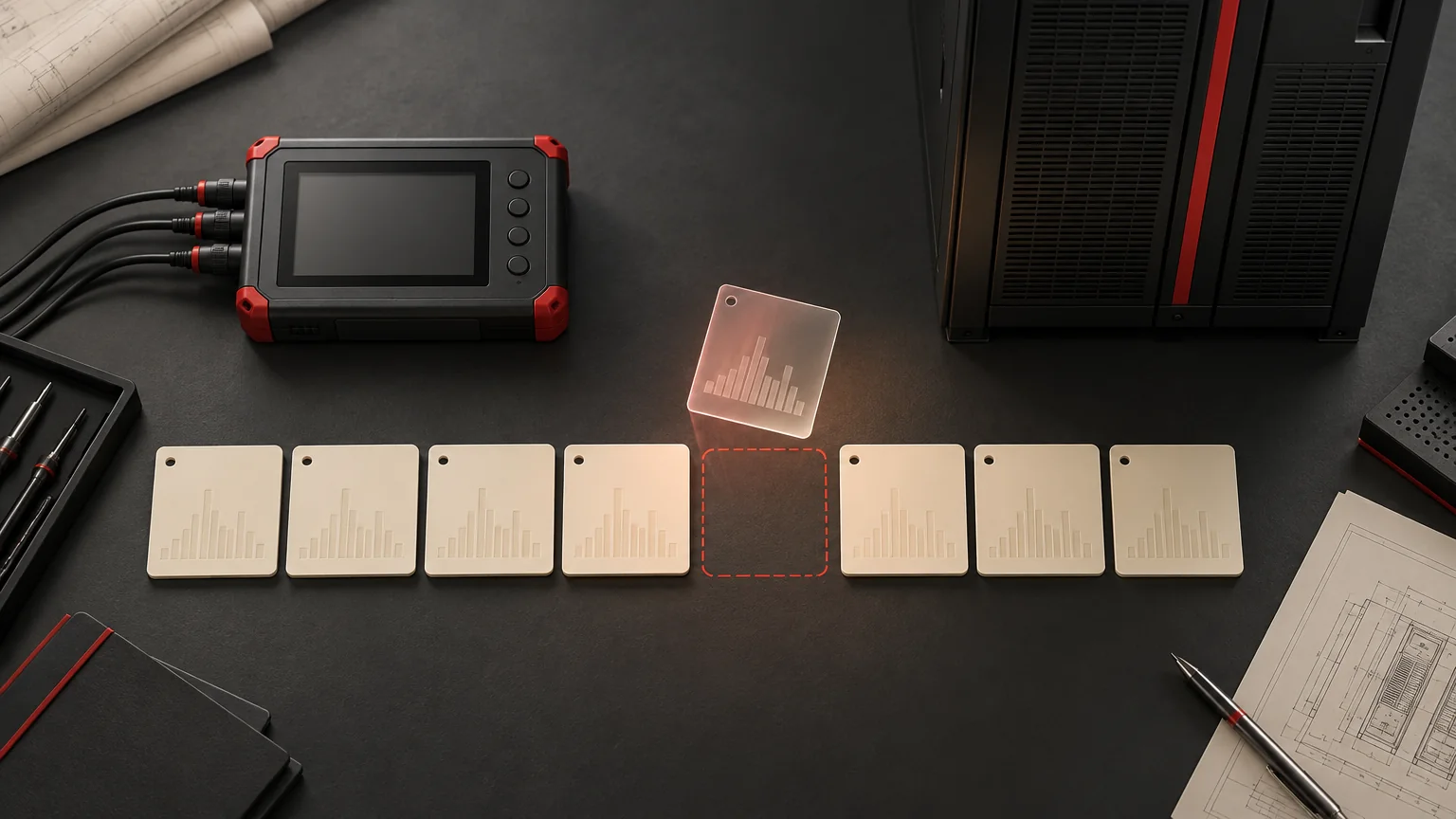
A failed logger does not make every observation worthless, but it changes what the test can establish. Preserve the original records, mark the missing interval and compare each acceptance requirement with the evidence that remains. A final “equipment still running” observation cannot reconstruct an unrecorded output-quality history. Interpolated values must never be presented as measurements.
Highidea's external-battery UPS route lets projects specify runtime for an actual load. A clear test record helps the project team distinguish the configuration's performance from a gap in the measurement arrangement.
Preserve the break before planning recovery
Retain original files, logger identity, configuration, clocks, last valid reading and first known missing or invalid point. Keep error messages and any independent records. A logger that continues writing repeated values may have lost its input rather than its storage; file continuity is not proof of valid acquisition.
Record what is known about the failure time. A blank interval with an uncertain start should remain uncertain. Do not edit the raw file to produce a smooth graph. A separate annotated analysis can show known and missing sections clearly.
Keep the site's approved load-protection and test-stop arrangements in force. Restoring a logger is not permission to extend a discharge or repeat an outage on production equipment.
Decide requirement by requirement
Acceptance question | Evidence needed after the logger fault |
|---|---|
Did the specified task continue for the required duration? | Valid task observations over the relevant period, with sufficient timing and coverage for the agreed criterion. |
Was output within the specified limits throughout? | Suitable continuous or otherwise agreed measurement coverage. An endpoint observation cannot fill a missing interval. |
What was the runtime to the agreed endpoint? | A reliable start, endpoint definition and endpoint observation; uncertainty and any missing event remain visible. |
Did a particular alarm or shutdown action occur? | Independent source/receiver/action records covering that event, not an assumption based on eventual power loss. |
This worksheet organizes a decision; the contract and responsible acceptance authority determine which evidence is sufficient.
Three hypothetical cases
The plot stops, but an independent validated recorder continues. Compare the second recorder's quantity, resolution, timing and coverage with the original requirement. It may support the missing period, provided it was actually measuring the required thing. Retain the original failure as part of the test record.
The electrical trace stops, but a person sees the application still running at the end. That observation can support a limited statement about the application at that time. It cannot prove voltage or continuity throughout the gap.
The start is known, but the agreed endpoint was not recorded. A later shutdown observation may bound the result only if the evidence supports that bound. Do not choose the last saved sample as the actual endpoint simply because it is convenient.
None of these cases automatically means the UPS failed. Measurement failure and equipment failure require separate findings.
Issue a bounded decision
For every requirement, record supported, partly supported or not demonstrated, the surviving evidence and the approving person. Keep a claimed equipment failure separate from a requirement not demonstrated because of missing data.
Where retesting is necessary, define the question to resolve. Confirm the load profile, battery starting condition, environment, instrumentation and safe window again. A second run under different conditions is another test; it cannot be spliced into the first and labelled one continuous measured discharge.
A reusable decision note should contain: original test ID; missing interval and uncertainty; requirement affected; alternative evidence; accepted scope; retest scope; owner; approval and final result.
Prepare the next test with Highidea
Use our runtime acceptance guide for the original test plan. Send Highidea the selected host/battery configuration, load profile, criterion and surviving records to discuss configuration questions. The project's acceptance authority retains the decision on contractual evidence.
FAQ
Frequently asked questions
Can missing readings be estimated for analysis?
Estimates may be useful if clearly identified, method and uncertainty retained, and separated from measured data. They do not become acceptance measurements merely by appearing on the same chart.
Must every logger fault require a full retest?
The affected criterion and valid alternative evidence determine the scope. Document the decision rather than automatically accepting or automatically discarding the entire run.
Who decides whether the partial test is acceptable?
The party responsible for the agreed acceptance criterion should make a bounded decision from the surviving evidence. Identify which requirement each record supports and which interval remains unknown. Retesting, if needed, requires its own safe approved plan; do not retrospectively describe missing observations as successful results.
Related
Products, solutions & further reading.
Put this into practice
Need help specifying the right unit?
Share the load, voltage, runtime, environment and destination for a configuration review.