How to Build a UPS Sample Validation Plan Before a Bulk Order
By Highidea Power Engineering Team · 26 August 2026 · 4 min read
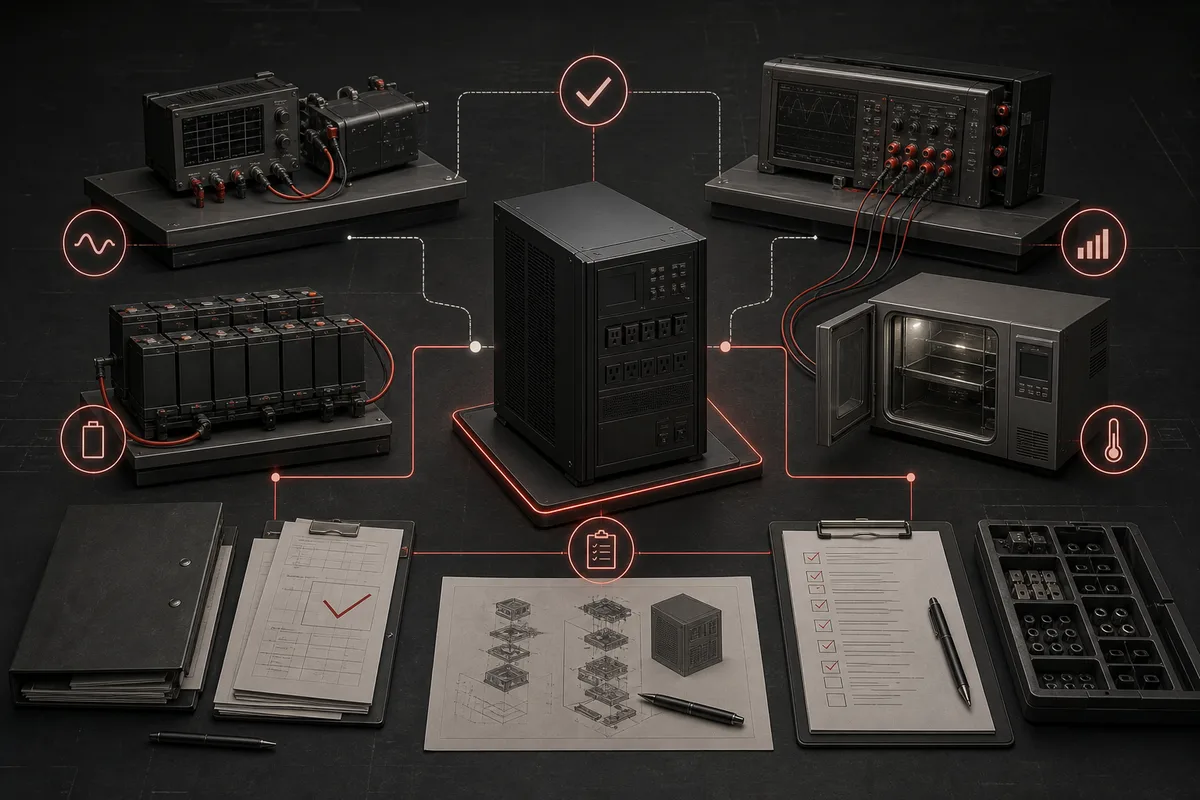
A UPS sample plan should verify the intended electrical configuration, representative load, runtime, transfer behavior, monitoring, documentation and packaging before bulk release. Keep technical acceptance separate from sample price, freight and refund terms, which require explicit sales confirmation.
The decision in practical terms
An OEM UPS project succeeds when electrical configuration, target market, branding, evidence, sample acceptance and change control are frozen before mass production. Commercial terms should be written against the exact configuration rather than assumed from a generic FAQ. The practical question here is: “What should a buyer test and record on an engineering sample?” It focuses the discussion on project conditions, configuration scope and evidence rather than catalogue shorthand.
For “What should a buyer test and record on an engineering sample?” Treat the buyer question as a controlled engineering decision: establish evidence for the inputs, write the intended outcome and ask how the offered system will be verified. The first three items to close are: Define pass evidence and approvers before the sample ships. Record model, serial, firmware/configuration, battery and test instruments with every result. Close deviations through controlled changes and repeat affected tests before mass production. Once these are controlled, differences between proposals become visible and testable.
Five checks that change the recommendation
Define pass evidence and approvers before the sample ships. Check the boundary of the answer: model, option, load, environment, market and date. A correct statement can become misleading when any of those changes.
Record model, serial, firmware/configuration, battery and test instruments with every result. Preserve the decision in the purchase file so engineering, procurement, commissioning and service teams work from the same approved condition.
Close deviations through controlled changes and repeat affected tests before mass production. Put the value and its source in the technical schedule. A supplier should be able to point to the exact model, operating mode and condition used for the recommendation.
Freeze load, topology, voltage, frequency, runtime, battery, environment, interfaces and target-market requirements. Treat this as an acceptance input, not a conversation note. If it changes after quotation, record the effect on capacity, battery, interfaces, evidence and delivery.
Define sample tests, evidence, approvers, change control and the conditions for release to mass production. Verify it with a measurement, drawing, nameplate, manufacturer requirement or approved project document. An unstated assumption here can invalidate the rest of the selection.
Make supplier proposals comparable
Use a common response format for every supplier, including requirement, offered value, evidence, deviation and responsible approver. For “How to Build a UPS Sample Validation Plan Before a Bulk Order,” reject any response that silently changes a material project condition or evidence scope.
A lower price is meaningful only after the response format confirms that the configuration and obligations are comparable.
Review item | Requirement to state | Decision record |
|---|---|---|
Technical check 1 | Define pass evidence and approvers before the sample ships. | Record the evidence, responsible approver and effect on the guide decision. |
Technical check 2 | Record model, serial, firmware/configuration, battery and test instruments with every result. | Record the evidence, responsible approver and effect on the guide decision. |
Technical check 3 | Close deviations through controlled changes and repeat affected tests before mass production. | Record the evidence, responsible approver and effect on the guide decision. |
Technical check 4 | Freeze load, topology, voltage, frequency, runtime, battery, environment, interfaces and target-market requirements. | Record the evidence, responsible approver and effect on the guide decision. |
Verify the approved requirement
Turn the agreed requirement into a verification record. Identify the exact supplied item and configuration, the evidence or test method, the applicable condition and the expected result for the question “What should a buyer test and record on an engineering sample?” For performance tests, retain instruments, readings, alarms and timestamps; for document reviews, retain the issuer, scope and revision.
Verification supports one defined application and condition; record when a design or evidence revision triggers re-approval. A successful verification applies only to the delivered configuration and stated conditions; it is not a blanket guarantee for a different load, site, document scope or operating mode.
Common failure modes in this decision
Clarify the points below whenever they appear in a quotation, datasheet or project discussion.
- Approving branding before freezing the electrical design
- Letting labels and manuals drift from the shipped unit
- Relying on unresolved sample or overseas-RMA terms
- Answering “What should a buyer test and record on an engineering sample?” without naming the exact configuration and evidence
Where Highidea fits
Highidea states OEM/ODM capability and a staged development workflow. Sample charging, overseas RMA, inverter warranty scope, MOQ and Incoterms still require explicit sales confirmation.
Provide Highidea with the resolved inputs and ask that the quotation state the exact equipment, battery configuration, interfaces and document scope.
Copy this into your RFQ
Tailor these requirements to the site, then keep the supplier’s answers with the approved order.
- Confirm in the quotation: Define pass evidence and approvers before the sample ships.
- Confirm in the quotation: Record model, serial, firmware/configuration, battery and test instruments with every result.
- Confirm in the quotation: Close deviations through controlled changes and repeat affected tests before mass production.
- Confirm in the quotation: Freeze load, topology, voltage, frequency, runtime, battery, environment, interfaces and target-market requirements.
- Confirm in the quotation: Define sample tests, evidence, approvers, change control and the conditions for release to mass production.
Authoritative references and scope
The links below support the buyer’s evaluation framework. The quoted model needs its own applicable evidence and conditions.
ISO: ISO 9001 — Quality management systems requirements
European Commission: Low Voltage Directive 2014/35/EU
FAQ
Frequently asked questions
What should a buyer test and record on an engineering sample?
A UPS sample plan should verify the intended electrical configuration, representative load, runtime, transfer behavior, monitoring, documentation and packaging before bulk release. Keep technical acceptance separate from sample price, freight and refund terms, which require explicit sales confirmation.
What evidence should accompany this requirement?
Send the exact load and source data, required operating outcome, site conditions, interfaces, target market and evidence requirements. For this decision, include: Define pass evidence and approvers before the sample ships. Record model, serial, firmware/configuration, battery and test instruments with every result. Close deviations through controlled changes and repeat affected tests before mass production.
How should a catalogue claim be used?
Use family information to shortlist an architecture, but confirm the exact model, configuration, operating mode, test conditions and document scope in the quotation or approved technical schedule.
Related
Products, solutions & further reading.
Put this into practice
Need help specifying the right unit?
Share the load, voltage, runtime, environment and destination for a configuration review.