Remote Monitoring Station Offline: Power, Connectivity or Sampling?
By Highidea Power · 22 October 2026 · 3 min read
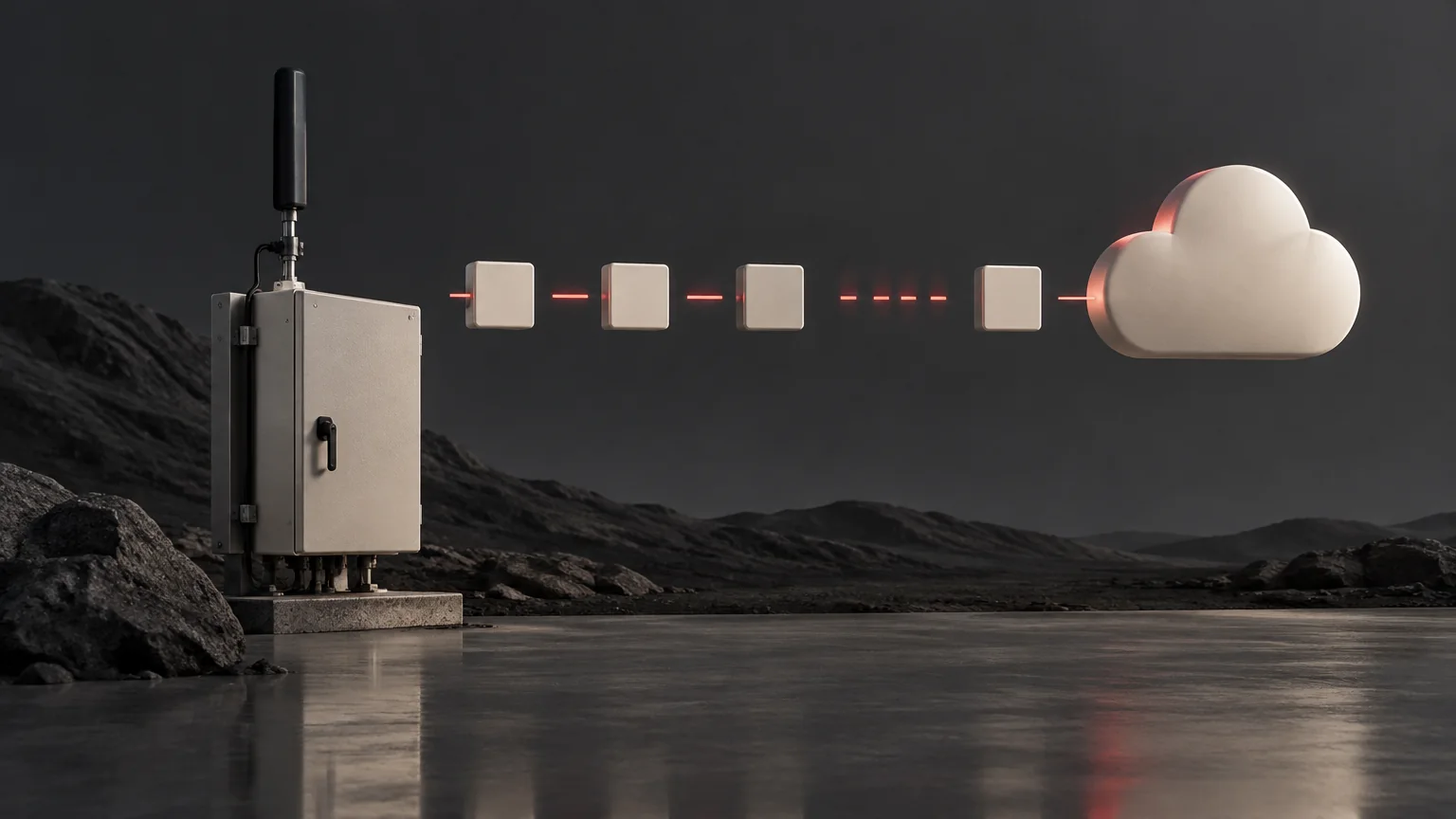
A remote station with no new data can have a power problem, a sampling problem, a storage problem or an upload problem. Establish these states separately using existing authorized observations. Old records prove only that those records exist; they do not prove that new valid measurements are being taken. Protect people and the required service before investigating the data path.
Highidea's environmental-monitoring UPS application provides a relevant power route. A station-wide status record helps identify whether the next question belongs to the power, network or instrument team.
Separate four functions
Function | Evidence to seek where the installation provides it |
|---|---|
Supply | Timestamped authorized observation of equipment power and relevant UPS/source state, not merely whether a remote page responds. |
Sampling | A fresh sample identity and method-validity evidence from the instrument or measurement owner. |
Local commitment | Evidence that the intended sample was actually stored in the approved location. |
Upload | Receipt or reconciliation at the destination, preserving the original sample identity and collection time. |
Not every station has independent views, local buffering or a secondary communication channel. Record unavailable observations as unknown. Do not create a new access route or expose management interfaces to get an answer quickly.
Compare three hypothetical outages of visibility
In case A, a qualified site observation confirms the instrument is powered, valid new samples are stored, but upload has stopped. The investigation can focus on the upload dependencies without declaring measurement loss.
In case B, old files remain readable but the sampling function has stopped. Restoring the network alone will not restore valid measurement. The instrument/method owner must define readiness and the first valid new result.
In case C, remote evidence is stale and no safe local observation is available. Power, sampling and storage remain unresolved. Treating the old dashboard as proof of healthy operation would hide the uncertainty.
These examples are conceptual, not tests of a particular station. A communications recovery may deliver a backlog; its arrival time must not replace the original collection time.
Start with the service consequence
Identify what must continue and who is responsible for missing or invalid samples. A loss of upload may be tolerable if approved retention and later retrieval are available; the same assumption is unsafe when that capability is absent or unknown.
For signs of electrical danger, output loss or hazardous batteries, follow the site's response arrangements first. Do not send someone into an unsafe or restricted location to obtain a photograph or reading.
For a functioning site with degraded visibility, use the approved interim observation and response plan while the responsible teams investigate.
Build a cross-team handover
Preserve station/instrument/logger/UPS identities, the last confirmed valid sample, first known gap, raw time basis, four function states, observation sources and recent changes. Name which questions remain unknown and who will answer them.
The instrument team addresses sampling and data validity. IT or the communications provider addresses the approved transmission path. Power support addresses the source and UPS evidence. Correlation across several stations can suggest a shared dependency, but does not prove a common cause.
Avoid resets, clock changes or deleting/rebinding accounts as experiments. They can remove evidence and affect recovery.
Close with a reconciled sampling record
Verify the first valid new sample, its stored identity, destination receipt and any missing/invalid interval. Keep backlog delivery distinct from fresh sampling. Reconcile the original records instead of filling the graph with values described as measurements.
For a UPS-specific reporting fault, use our UPS monitoring chain guide. For the complete sampling requirement, see the environmental-monitoring guide.
Send Highidea the power-side observations and required station task when the investigation involves the protected supply.
FAQ
Frequently asked questions
Does a reachable logger prove continued sampling?
No. Reachability, readable history and valid new measurements are different observations.
Should a missing upload trigger a UPS reset?
Not without a diagnosed boundary, applicable procedure and authorization. Preserve evidence and protect the load first.
Does delivery of a backlog close a measurement gap?
It closes only the records that can be reconciled with valid original samples. Keep collection time, validity, local storage and destination receipt distinct. Missing or invalid samples remain separately identified; an eventual upload cannot create a measurement that was never taken or repair an invalid collection method.
Related
Products, solutions & further reading.
Put this into practice
Need help specifying the right unit?
Share the load, voltage, runtime, environment and destination for a configuration review.