Planning RCD Compatibility for a UPS Installation
By Highidea Power · 23 October 2026 · 4 min read
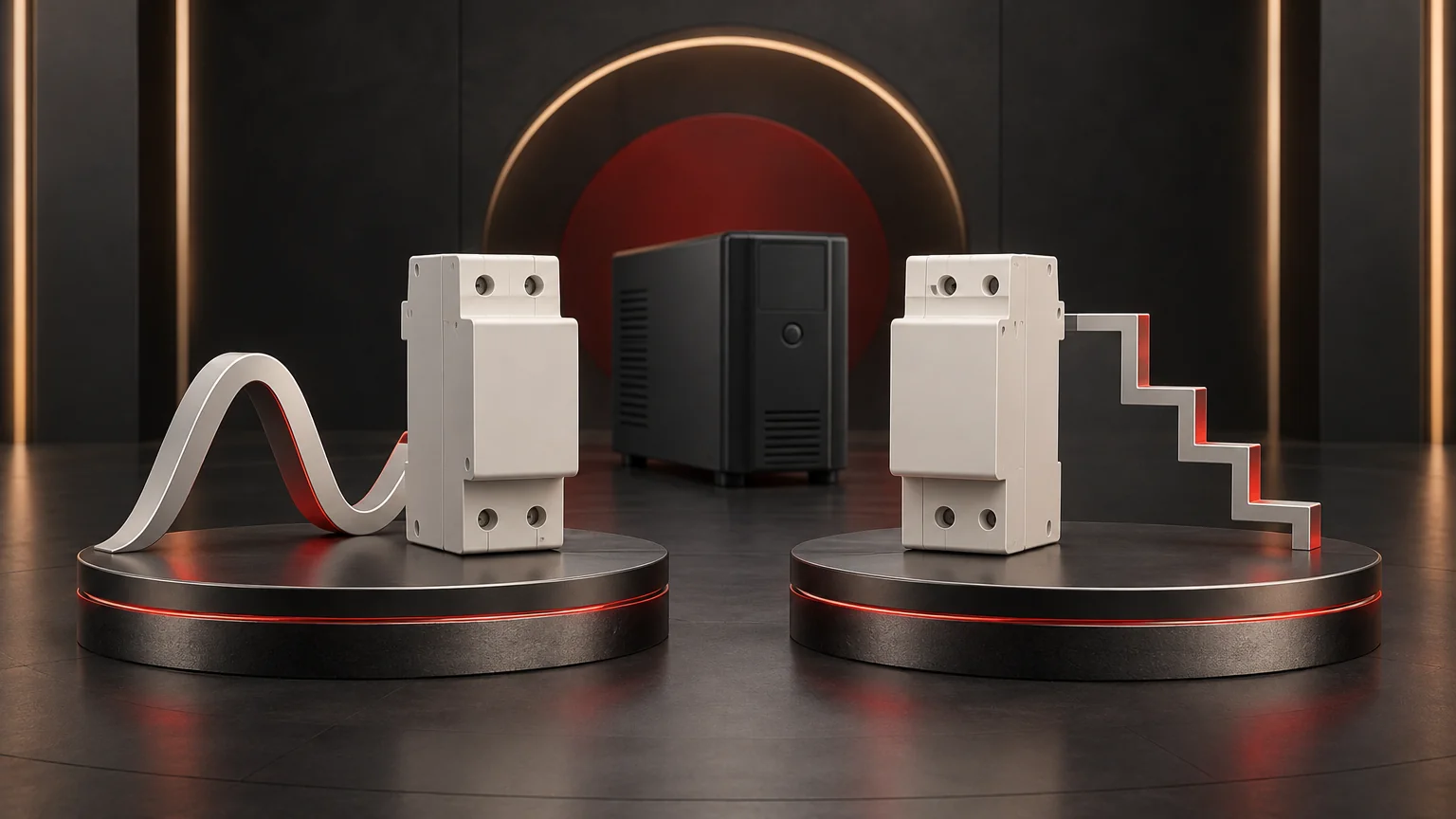
RCD compatibility depends on the equipment’s residual-current characteristics, the circuit being protected and the actual supply paths. Agree the UPS-specific information with the supplier and have the installation designer select protection under the project’s applicable requirements. Highidea can discuss the proposed UPS configuration using those inputs; a UPS current rating or topology name alone cannot determine the RCD arrangement.
Begin with the protected circuit
Identify where residual-current protection is proposed and what function it must provide. Input, bypass and output arrangements are different circuit positions. The designer needs the actual system drawing, grounding arrangement, connected equipment and operating modes to establish the relevant conditions.
A UPS can continue supplying a load from stored energy when its normal source is absent. That makes it important to describe each intended source condition, rather than treating the installation as one ordinary mains-fed appliance. Keep the assessment tied to the actual design and manufacturer instructions.
Record the project location and responsible electrical designer as part of the request. Requirements may depend on jurisdiction, installation type and application. A historical example from one country cannot define a current worldwide prescription.
Separate two meanings of Type B
An RCD’s type describes its residual-current detection characteristics. A miniature circuit-breaker’s B, C or D curve describes an overcurrent time-current characteristic. These are different classifications even when the same letter appears on a device.
The IET’s 2019 article Which RCD Type? explicitly warns about this confusion. An RCBO can combine residual-current and overcurrent protection, so both sets of characteristics need identification. Seeing a B marking without establishing what it describes is insufficient to answer the compatibility question.
Also distinguish an RCCB without integral overcurrent protection from an RCBO that includes it. A procurement line saying only “RCD fitted” leaves the device function and coordination unclear. Obtain the actual device identification and relevant documentation.
Ask about the residual-current waveform
Power electronics can produce different residual-current waveforms under normal or fault conditions. The IET article explains how a DC component can affect the magnetic operation of an unsuitable RCD. This is why residual-current detection must be considered in relation to the connected equipment.
Do not infer the complete waveform or compatibility requirement from “online,” “transformer-based” or another broad UPS category. Request the selected configuration’s installation requirements and the information the designer needs. Normal protective-conductor current, possible fault residual current and overcurrent behavior should be provided as distinct information where applicable.
The IET source uses a 2019 UK regulatory context. Here it supports the classification and equipment-information principles; current device choice, sensitivity, timing and coordination require the applicable project rules and current manufacturer instructions.
Use a shared clarification matrix
Clarification | Supplier input and designer output |
|---|---|
Equipment identity | Supplier: model, configuration and applicable instructions. Designer: correct equipment basis for the design. |
Circuit and mode | Supplier: relevant input, bypass and output characteristics. Designer: protected boundary in each intended state. |
Residual behavior | Supplier: applicable waveform and compatibility information. Designer: suitable residual-current protection approach. |
Normal conductor current | Supplier: relevant equipment data and conditions. Designer: assessment of the complete connected circuit. |
Device identity | Supplier: any supplied protection and its documentation. Designer: required external devices and coordination. |
Project requirements | Supplier: product conditions to be respected. Designer: applicable installation requirements and approval. |
Attach document revisions and identify unresolved items. Do not turn a supplier’s missing answer into an assumed safe value.
Resolve changes and unexplained trips properly
Consider a hypothetical replacement UPS on an existing circuit. Its normal load fits within the old current rating, but that alone does not establish that the existing RCD remains appropriate. The designer must compare the new equipment requirements with the actual protective arrangement and connected loads.
Similarly, an unexplained trip is a reason for qualified investigation. Removing the RCD, changing its settings without design approval or repeatedly restoring power does not establish compatibility. Keep any unsafe condition under the applicable site procedures and provide the equipment and event information to the responsible technical team.
Prepare your Highidea installation discussion
Our rack online ET1-3KR and three-phase online 33ET ranges address different configurations. Share the single-line arrangement, intended protection positions, project location, existing device information and operating requirements with Highidea. Ask for the selected model’s applicable installation information and keep the final protection decision with the responsible designer.
The UPS installation guide and isolation-path guide address related questions. Review them alongside the RCD clarification, without treating one completed checklist as a substitute for the other electrical design work.
Primary reference
- IET Wiring Matters: Which RCD Type?, 2019, classification and equipment-compatibility principles in its stated UK context.
FAQ
Frequently asked questions
Does a B-curve circuit-breaker provide Type B residual-current detection?
No. The curve and residual-current type describe different functions. Identify both explicitly where a combined device is used.
Does a UPS’s own protection replace the installation RCD assessment?
No. Equipment protection and installation protection have defined boundaries that must be coordinated.
Should every UPS use the same RCD type?
No universal choice is established here. Use the exact equipment information and applicable installation requirements through the responsible designer.
Related
Products, solutions & further reading.
Put this into practice
Need help specifying the right unit?
Share the load, voltage, runtime, environment and destination for a configuration review.