Insights
UPS selection, standards & application guides.
Practical engineering guidance for specifying lithium UPS and power inverters, covering selection logic, voltage standards, topology and real application requirements.
More engineering guides.
Showing 133–144 of 224 guides

Laboratory UPS RFQ Template for Precision and Analytical Equipment
A laboratory UPS RFQ should combine the instrument manufacturer’s input limits with a complete operating-cycle load list and a defined outage outcome. A buyer can use this guide to define the input, evidence and acceptance result before comparing models.

127 V UPS Selection for Underground Monitoring and Communications
Select a 127 V UPS for underground monitoring or communications only after the project defines the real source and load ranges, hazardous-area classification, environmental limits, isolation and grounding, protection, runtime, interfaces and required approvals. The following engineering and procurement checks make the answer measurable before an order is placed.

Telecom Power Acceptance Testing: From DC Bus to Critical AC Load
A telecom power acceptance test should witness the complete path from the live DC bus and alternate source through the inverter to representative critical AC loads. Use the checks below to turn that question into a comparable supplier requirement.

UPS Maintenance Records and a Support Email You Can Reuse
Keep useful UPS maintenance records and prepare a clear support email with equipment identity, load condition, event timelines and safe attachments.

Commissioning a UPS for Laboratory or Medical-Support Loads
Commission a UPS for laboratory or medical-support loads against the equipment manufacturer’s requirements and the facility risk assessment. Use the checks below to turn that question into a comparable supplier requirement.
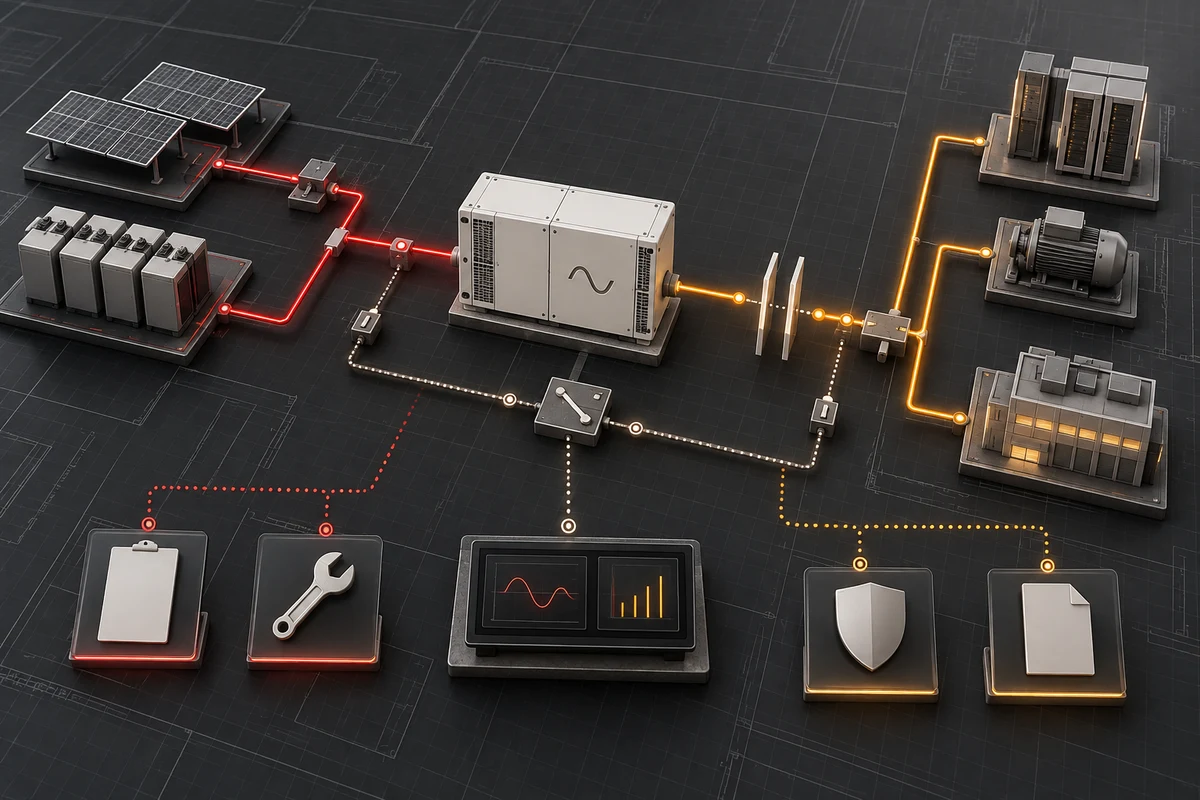
Utility Inverter RFQ Template for Substations and Power Plants
A comparable utility-inverter RFQ starts with the station DC bus and the required source-to-load behavior. It focuses the discussion on project conditions, configuration scope and evidence rather than catalogue shorthand.

Migrating a Telecom Backup System to LiFePO4: A Compatibility Review
Do not connect a LiFePO4 battery system to an existing telecom DC plant solely because the nominal voltage matches. The result is a decision record that engineering, procurement and the supplier can all verify.

Planning UPS Maintenance Without an Unplanned IT Outage
Plan UPS maintenance as a controlled change to the complete source-to-load path. A buyer can use this guide to define the input, evidence and acceptance result before comparing models.

External and Replacement UPS Batteries: What to Check Beyond Amp-Hours
Match external or replacement batteries to the host, BMS, charger, protection and transport evidence before comparing capacity and price.
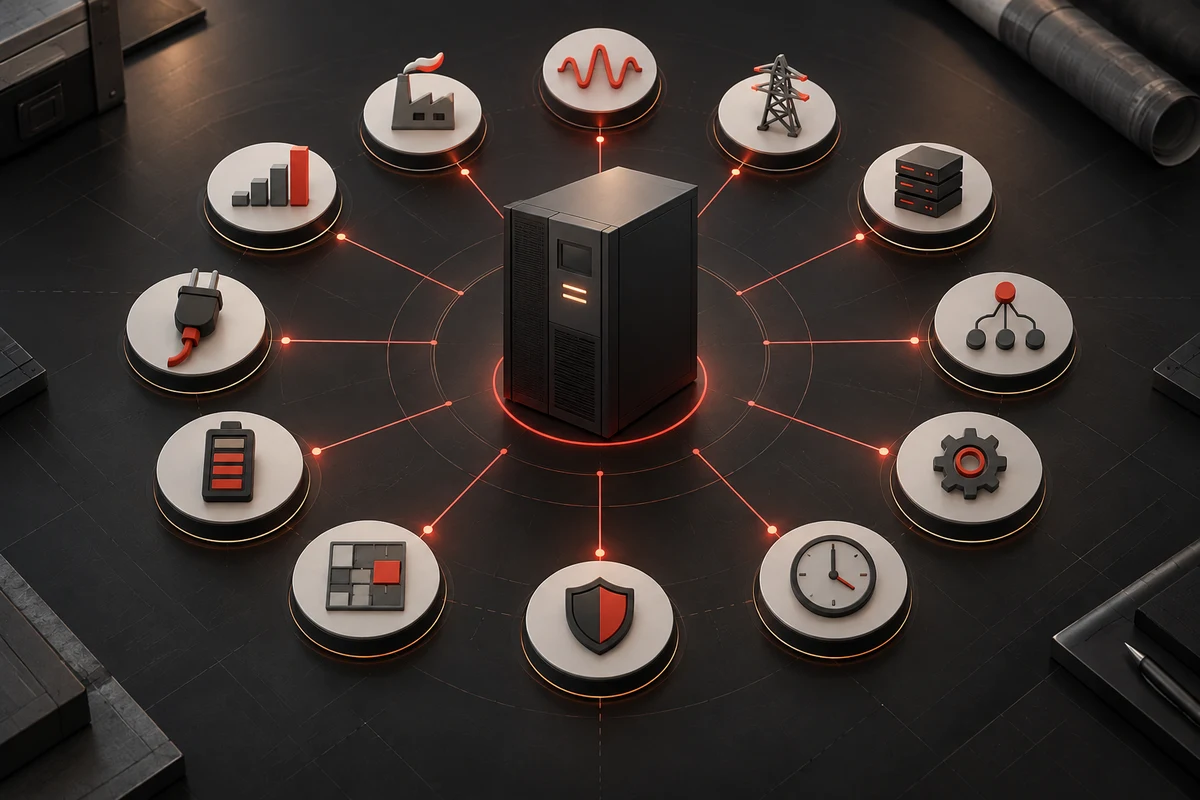
The 12 Electrical Data Points a UPS Supplier Needs Before Recommending a Model
A UPS supplier cannot make a defensible recommendation from a kVA request alone. Use the checks below to turn that question into a comparable supplier requirement.

Build an Export-Document Matrix for a Lithium UPS Purchase Order
Build the export-document matrix at configuration and shipment level: list each UPS host, battery or cell, accessory, legal entity, destination market and transport mode, then map the required declaration, certificate, test report, test summary, safety data, label and shipping record to the exact item and revision. The following engineering and procurement checks make the answer measurable before an order is placed.

Why Output Waveform and Regulation Matter to Precision Instruments
Output waveform, voltage regulation, frequency behavior, transfer events and grounding can affect how a precision instrument starts, measures and shuts down. Use the checks below to turn that question into a comparable supplier requirement.
Engineering guidance
Make a better power-system decision.
Every article answers a real buyer question — which battery chemistry, which topology, which voltage, which model for which environment — with the parameters and trade-offs an engineer needs to decide. Each links through to the relevant products and solutions.
Have a specific question?
Tell us your load and we'll advise.
Use these guides to frame the requirement, then send the load, voltage, runtime and destination for a configuration review.