Insights
UPS selection, standards & application guides.
Practical engineering guidance for specifying lithium UPS and power inverters, covering selection logic, voltage standards, topology and real application requirements.
More engineering guides.
Showing 145–156 of 224 guides

The UPS Role in OT Resilience: Power Continuity Is Not Data Backup
A UPS supports OT resilience by keeping defined controllers, communications and supporting equipment energized through selected power events. It focuses the discussion on project conditions, configuration scope and evidence rather than catalogue shorthand.
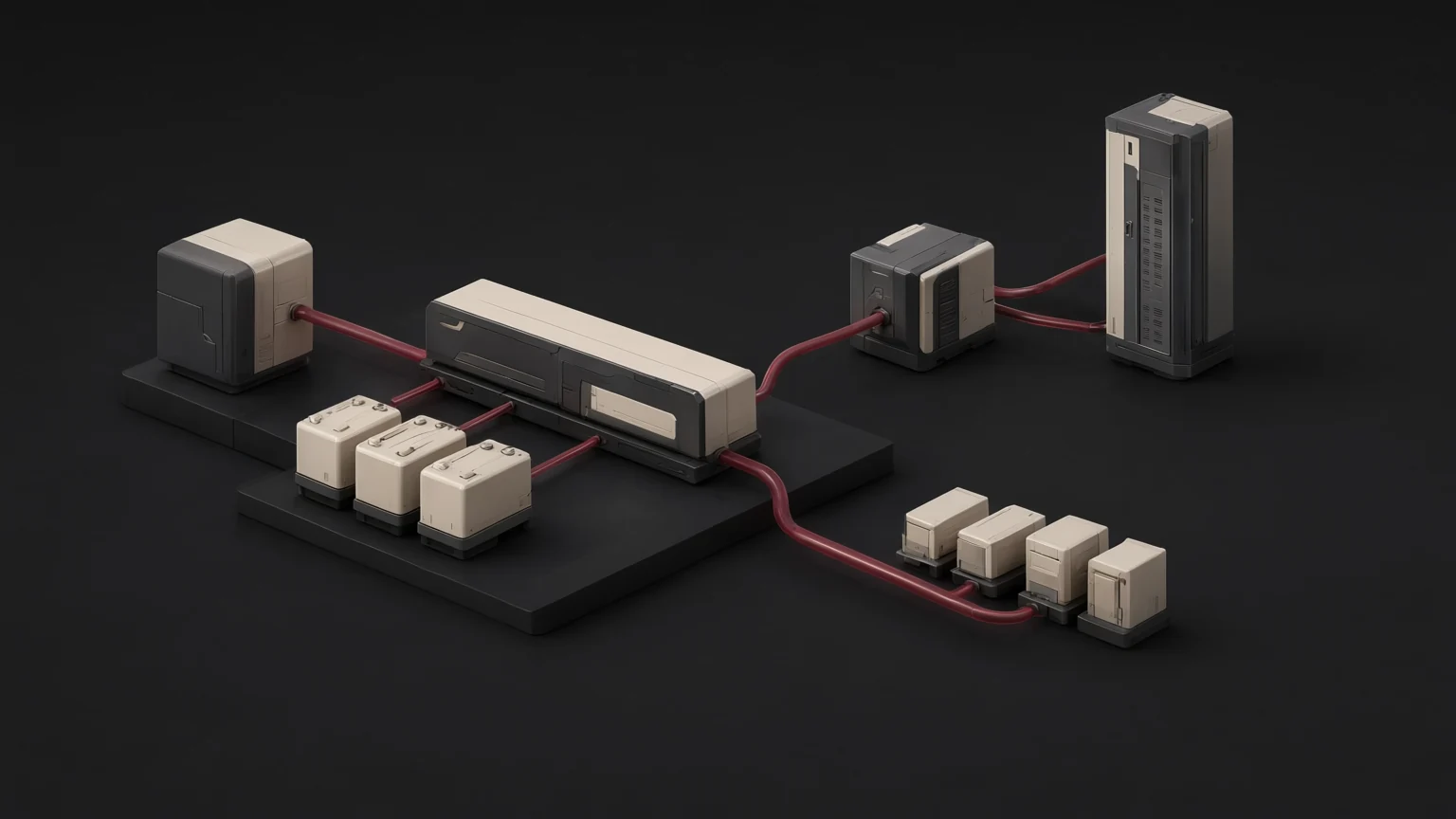
Telecom Backup Power: How Rectifiers, Batteries and Inverters Share the Load
Map generator, rectifier, battery and inverter responsibilities, distinguish DC and AC branches, and account for added inverter demand on the DC plant.

How Much Growth Margin Should You Put in a Data-Centre UPS?
Choose data-centre UPS growth margin from a dated load forecast and an expansion architecture, not a universal spare-capacity percentage. A buyer can use this guide to define the input, evidence and acceptance result before comparing models.
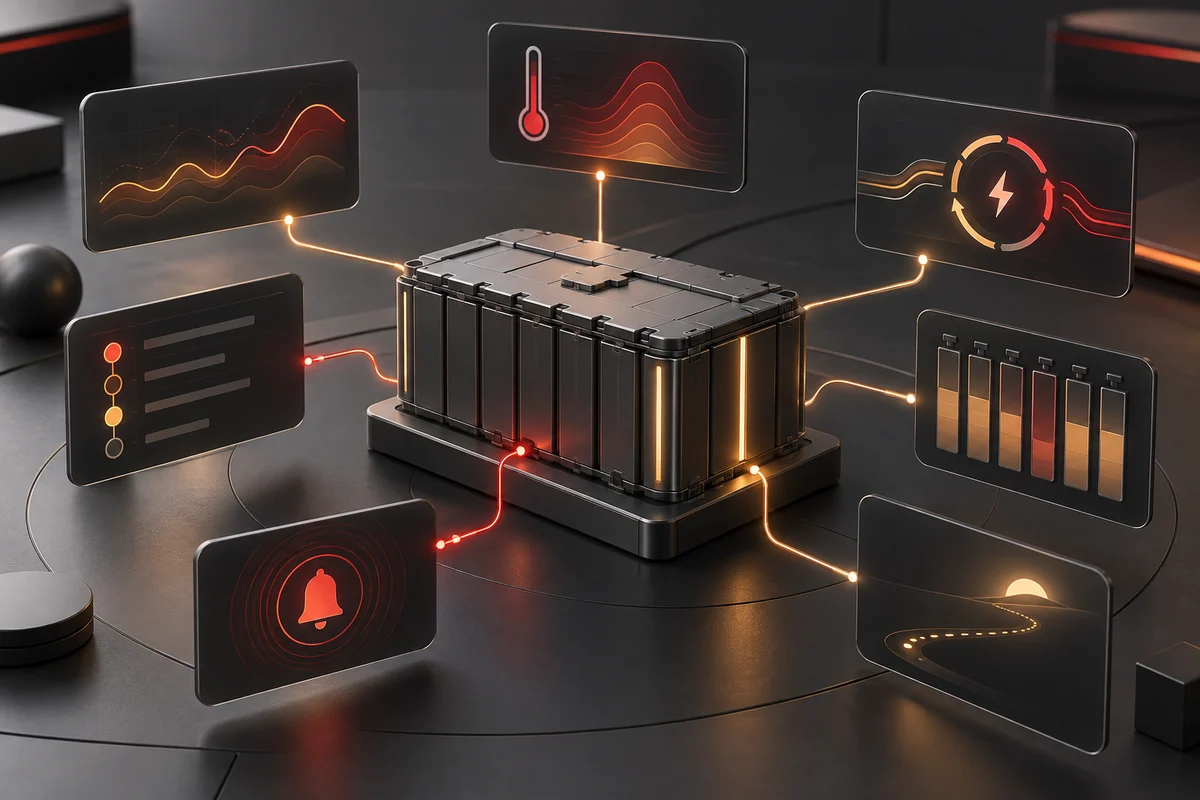
What to Monitor in a Lithium UPS Battery System Beyond State of Charge
State of charge is only one view of a lithium UPS battery system. The following engineering and procurement checks make the answer measurable before an order is placed.

N+1 UPS Redundancy: Availability Benefit, Part-Load Cost and Sizing Trade-Offs
N+1 improves continuity only when the remaining modules can carry the defined load after one module is unavailable and the design avoids unexamined common points of failure. Use the checks below to turn that question into a comparable supplier requirement.
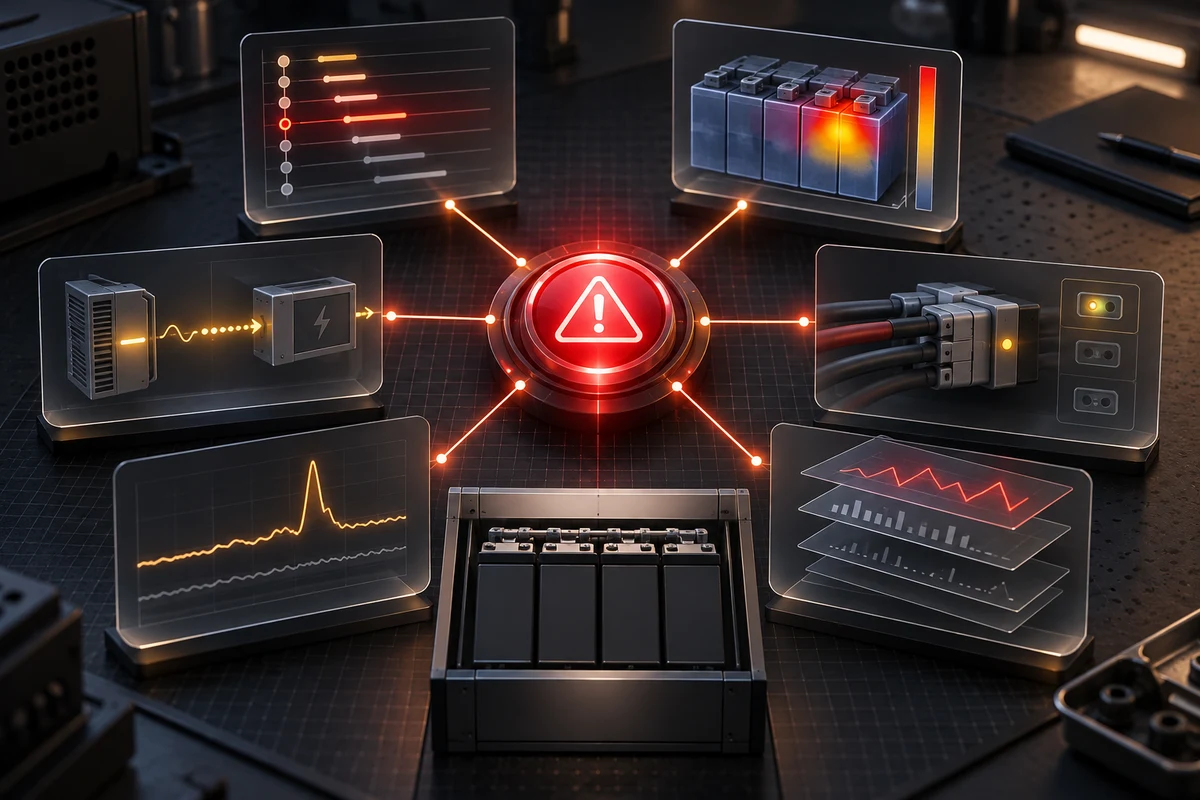
UPS Battery Alarm: What Information to Capture for Technical Support
Before acting on a UPS battery alarm, protect the load and preserve evidence that can separate battery state, charger behavior, temperature, connection and configuration causes. The following engineering and procurement checks make the answer measurable before an order is placed.

Specialty-Voltage UPS RFQ Checklist for Marine and Mining Projects
A specialty-voltage UPS RFQ must name the actual source and load ranges instead of relying on labels such as 110 V, 120 V or 127 V. Use the checks below to turn that question into a comparable supplier requirement.
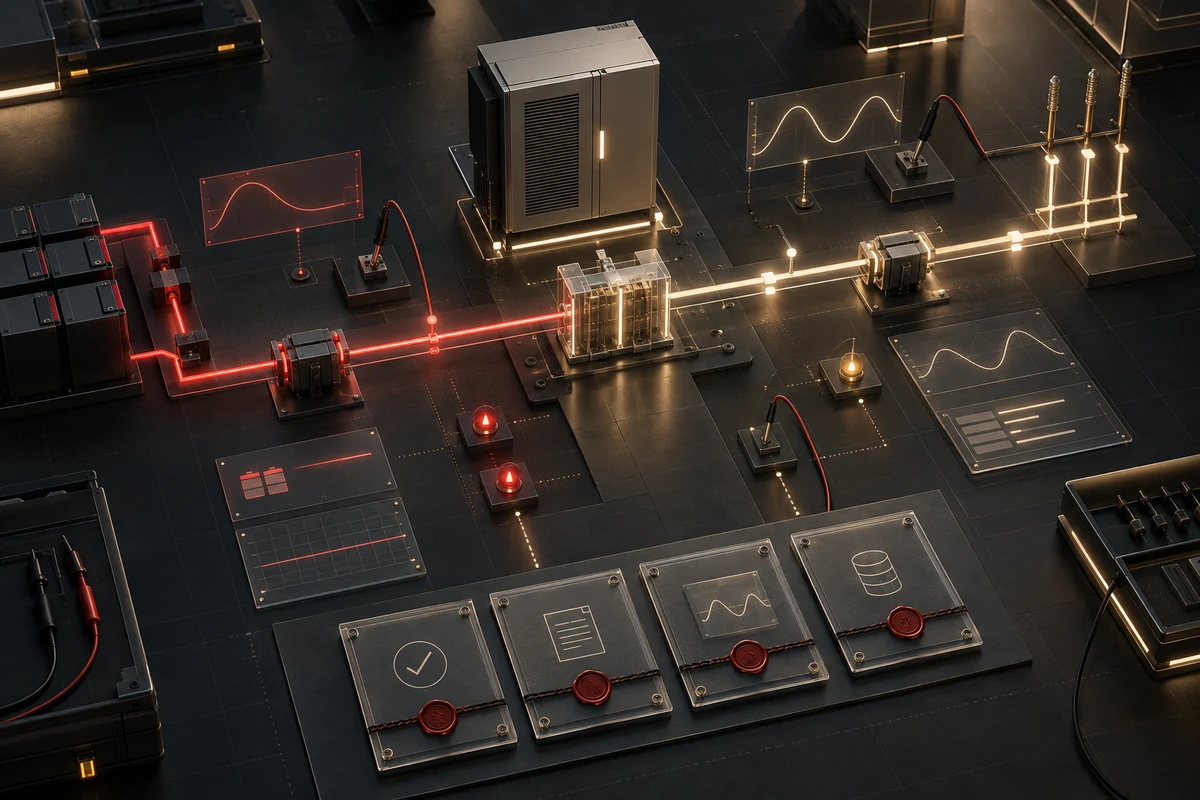
Commissioning a Utility DC-to-AC Inverter: Evidence to Record
Utility inverter commissioning should leave evidence that the installed configuration matches the approved design and behaves correctly through normal, backup, bypass and abnormal conditions. It focuses the discussion on project conditions, configuration scope and evidence rather than catalogue shorthand.

Telecom Inverter RFQ Checklist: −48 V DC Input to 220 V AC Output
A telecom inverter RFQ should describe the complete DC-to-AC path: actual DC-bus operating range, polarity and grounding; AC load in watts and VA; startup demand; output voltage, frequency and waveform; source priority and transfer paths; isolation; protection; monitoring; environment; and handover tests. The result is a decision record that engineering, procurement and the supplier can all verify.
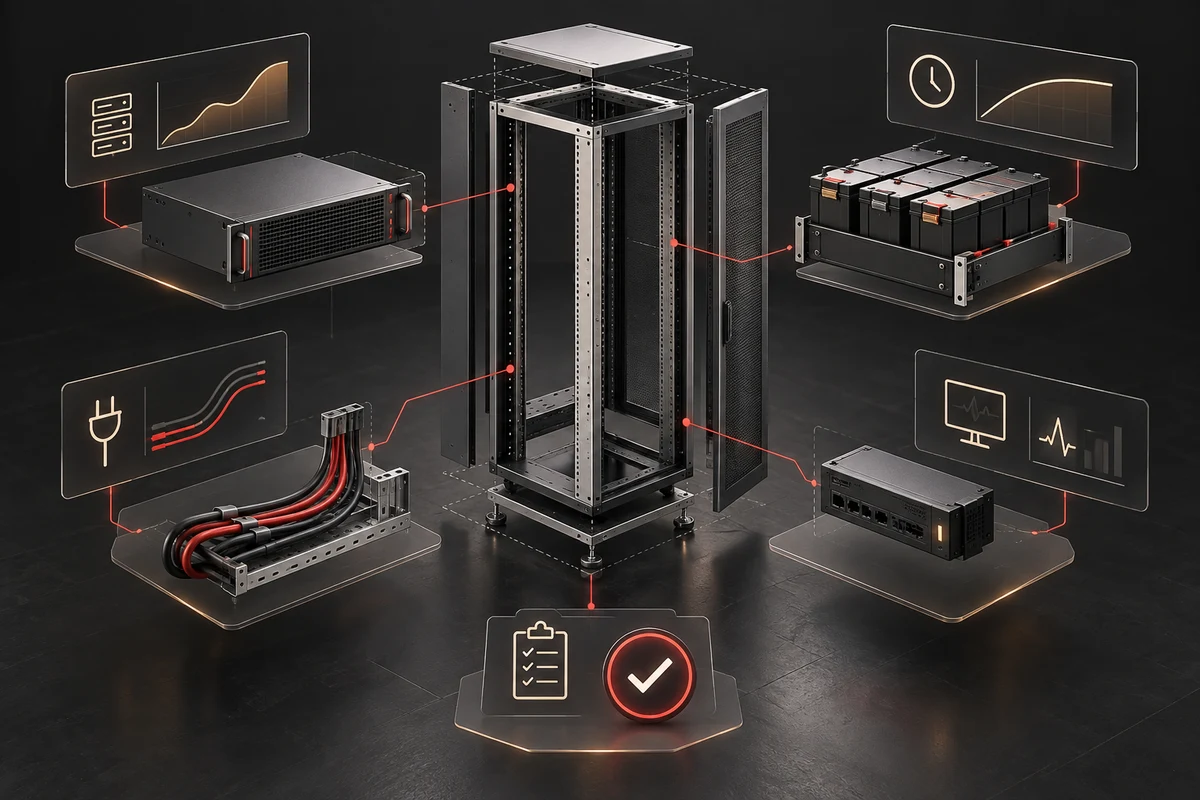
Rack UPS RFQ Template for Data Centres and Server Rooms
A comparable rack UPS RFQ needs one controlled data set for load, source, output, autonomy, redundancy, rack fit, battery architecture, interfaces and acceptance. A buyer can use this guide to define the input, evidence and acceptance result before comparing models.
UPS Recharge Time After an Outage: Why It Matters for Repeated Events
Plan UPS recharge around the next required duty, not only a nominal “full charge” time. The following engineering and procurement checks make the answer measurable before an order is placed.
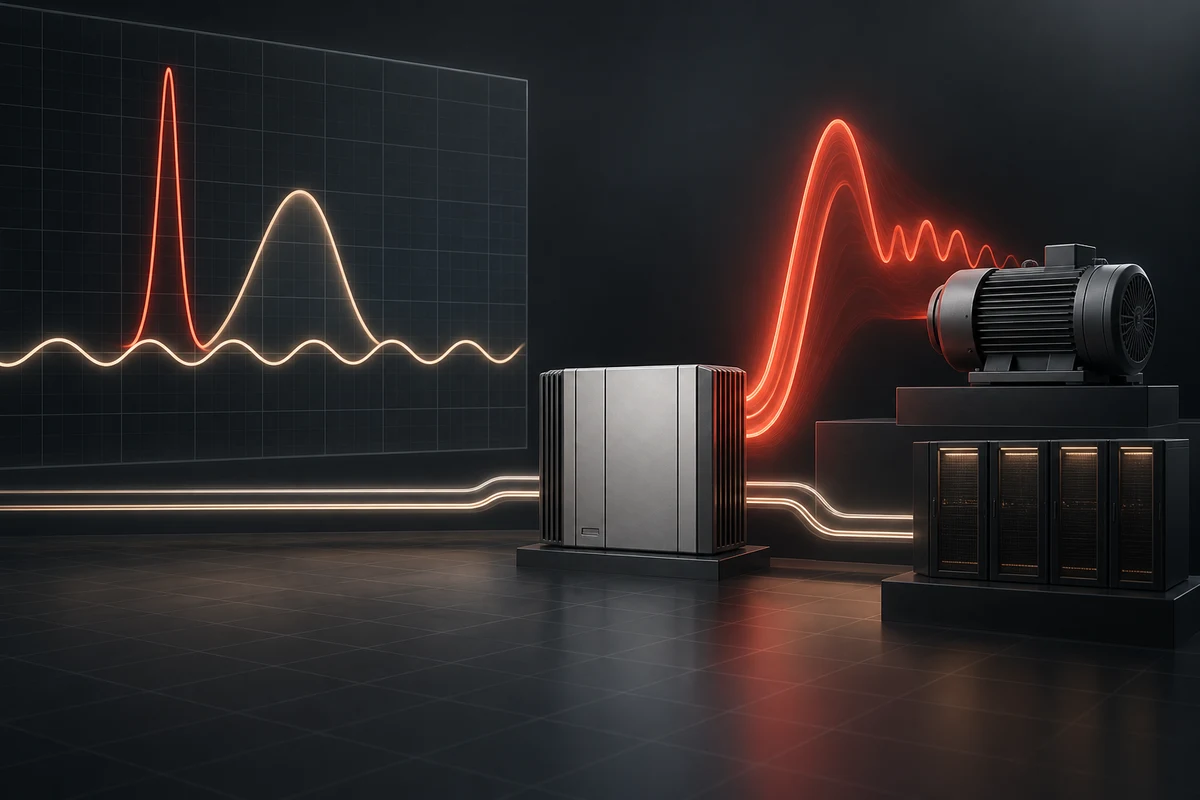
Crest Factor and Inrush Current: Two UPS Sizing Inputs Buyers Often Miss
A UPS can carry the steady watts and still fail when a load starts or draws a sharply peaked current. Use the checks below to turn that question into a comparable supplier requirement.
Engineering guidance
Make a better power-system decision.
Every article answers a real buyer question — which battery chemistry, which topology, which voltage, which model for which environment — with the parameters and trade-offs an engineer needs to decide. Each links through to the relevant products and solutions.
Have a specific question?
Tell us your load and we'll advise.
Use these guides to frame the requirement, then send the load, voltage, runtime and destination for a configuration review.