Insights
UPS selection, standards & application guides.
Practical engineering guidance for specifying lithium UPS and power inverters, covering selection logic, voltage standards, topology and real application requirements.
More engineering guides.
Showing 193–204 of 224 guides
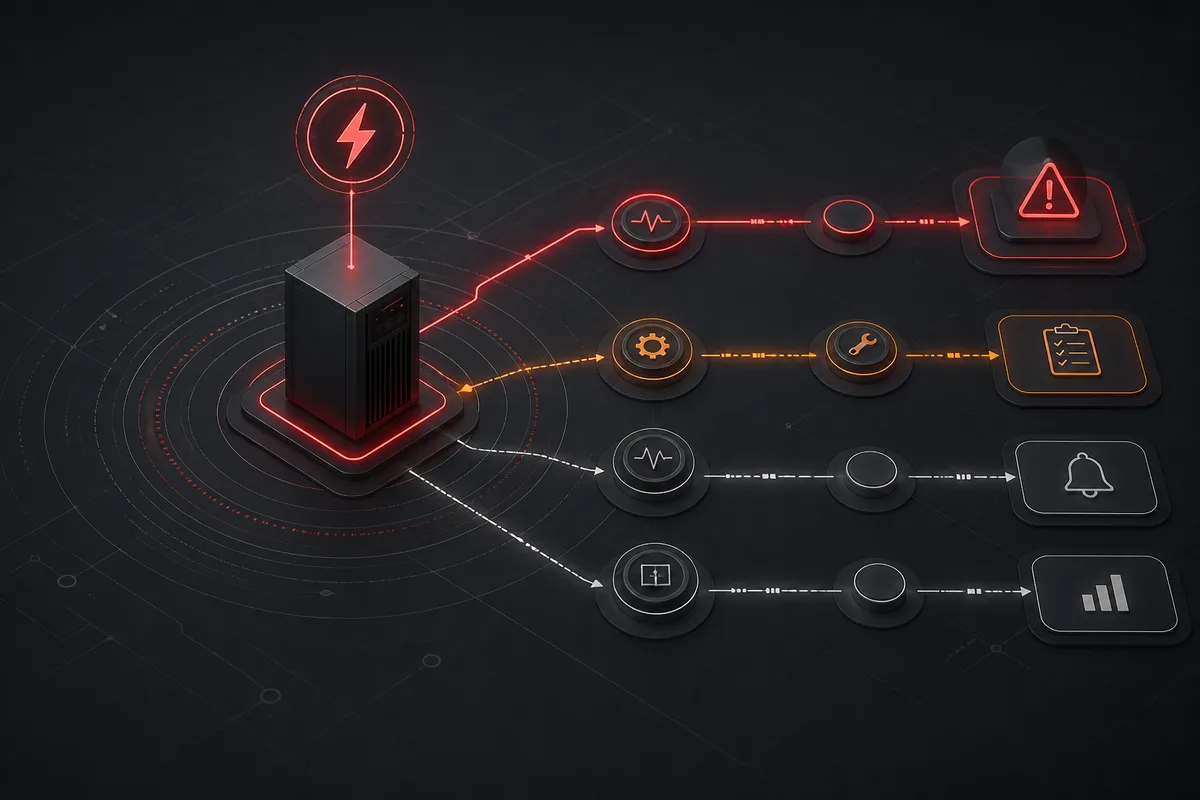
UPS Alarm Priorities: Which Events Need Immediate Action?
Prioritize UPS alarms by their effect on the protected load: informational events, degraded redundancy or battery readiness, imminent loss of protection, and active load risk. Use the checks below to turn that question into a comparable supplier requirement.
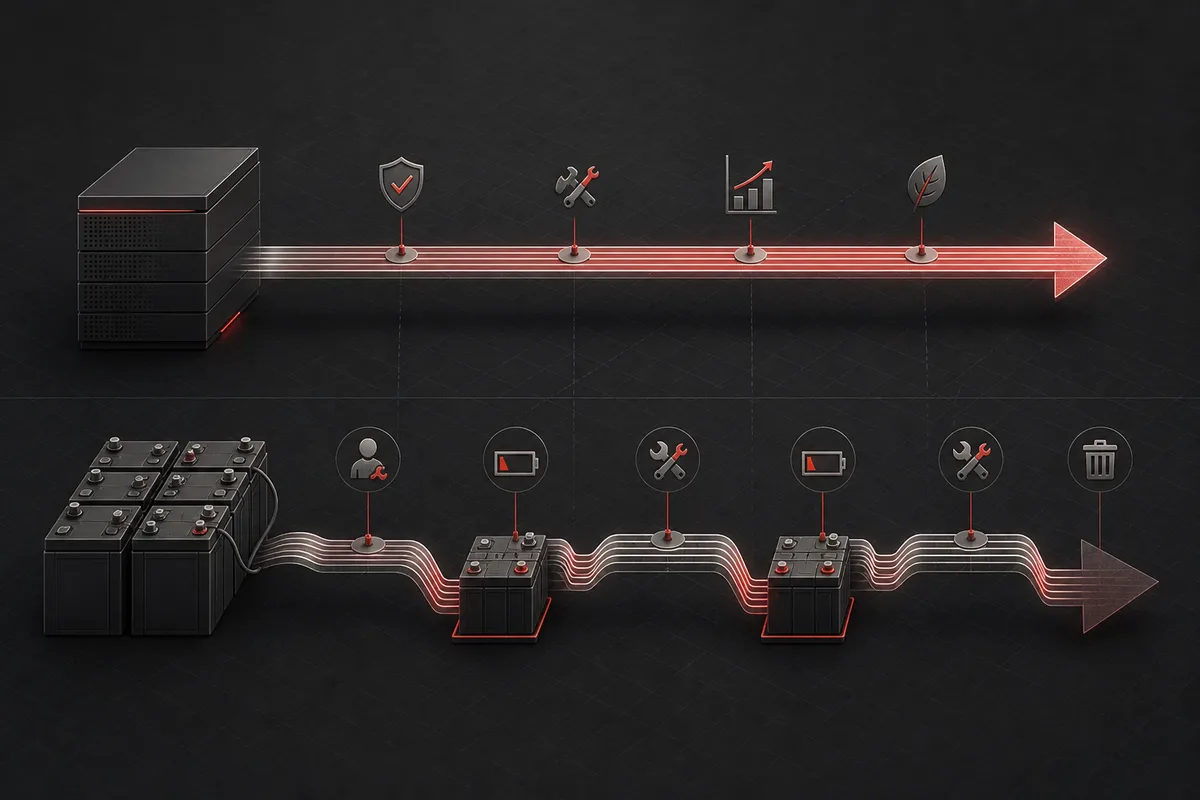
Lithium UPS vs Lead-Acid: TCO, Lifespan & When to Switch (2026)
A side-by-side comparison of LiFePO4 and lead-acid UPS batteries — cycle life, lifespan, weight, runtime and total cost of ownership — and a decision framework for when switching pays off.

UPS Selection for SMT Lines: Separate Controls, Motion and Heat
Define SMT backup by approved process functions, dependencies and transient loads rather than assuming one UPS rating protects the whole line.
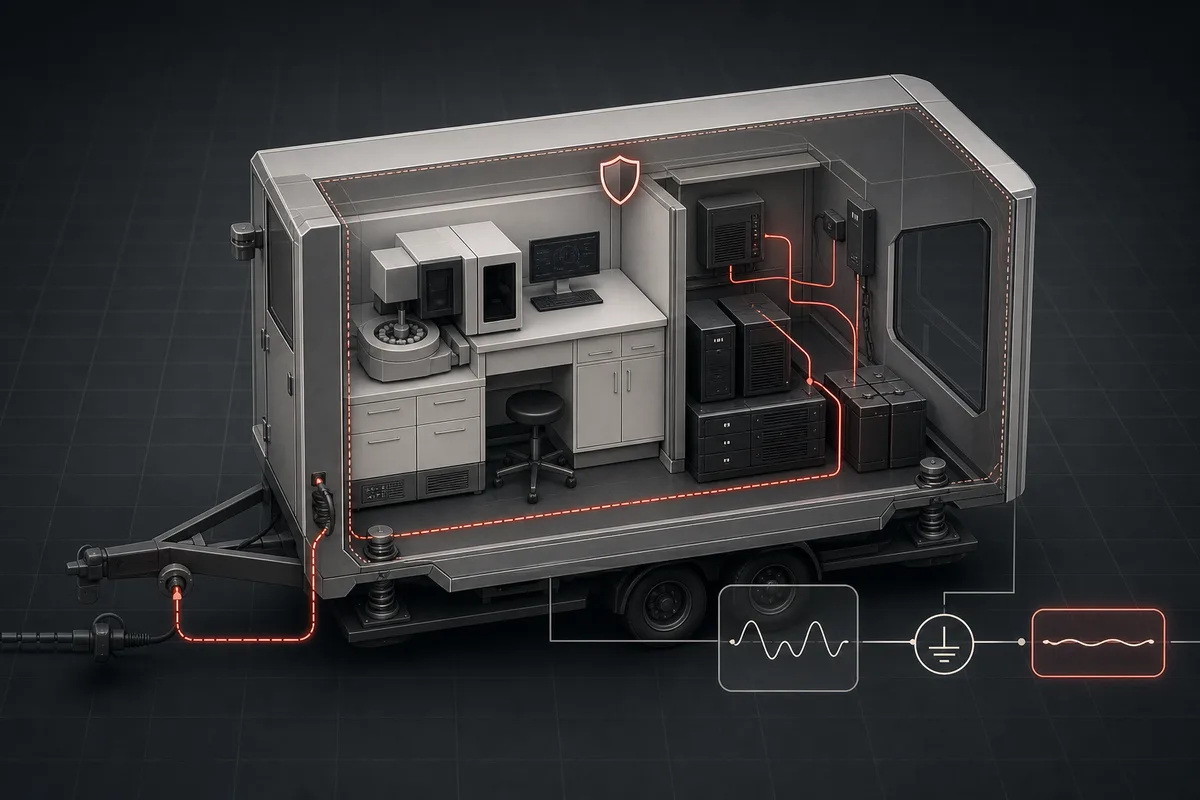
Mobile Laboratory UPS Design: Vibration, Space, Input Power and Runtime
A mobile-laboratory UPS must work within vehicle space, weight, vibration, temperature and upstream-source constraints while supporting the instrument’s operating or shutdown plan. The result is a decision record that engineering, procurement and the supplier can all verify.
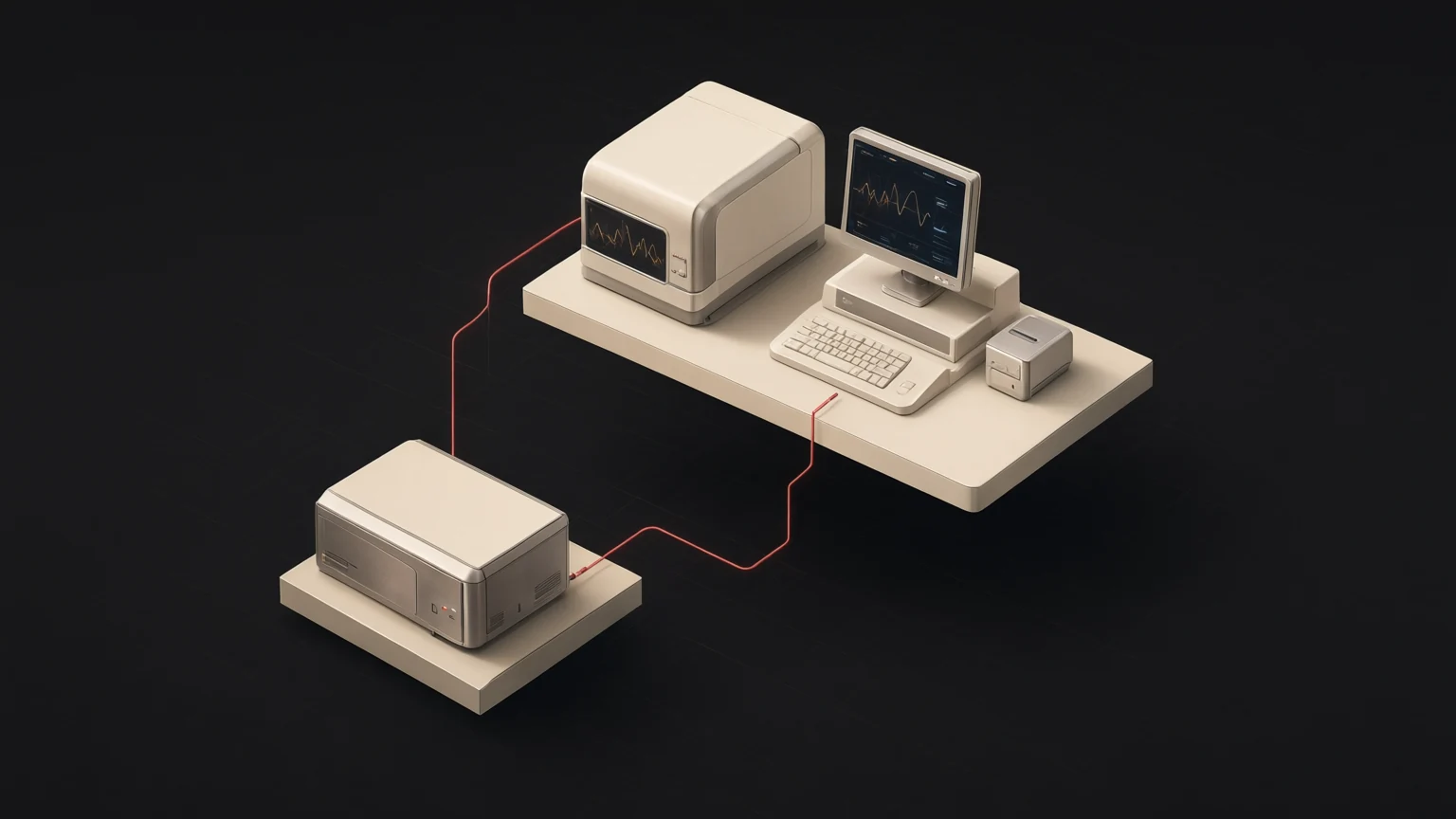
UPS Sizing for Analytical Instruments: Build the Load and Shutdown Record First
Build a laboratory UPS load and shutdown record, distinguish project-reference evidence from performance proof, and request configuration-specific autonomy.
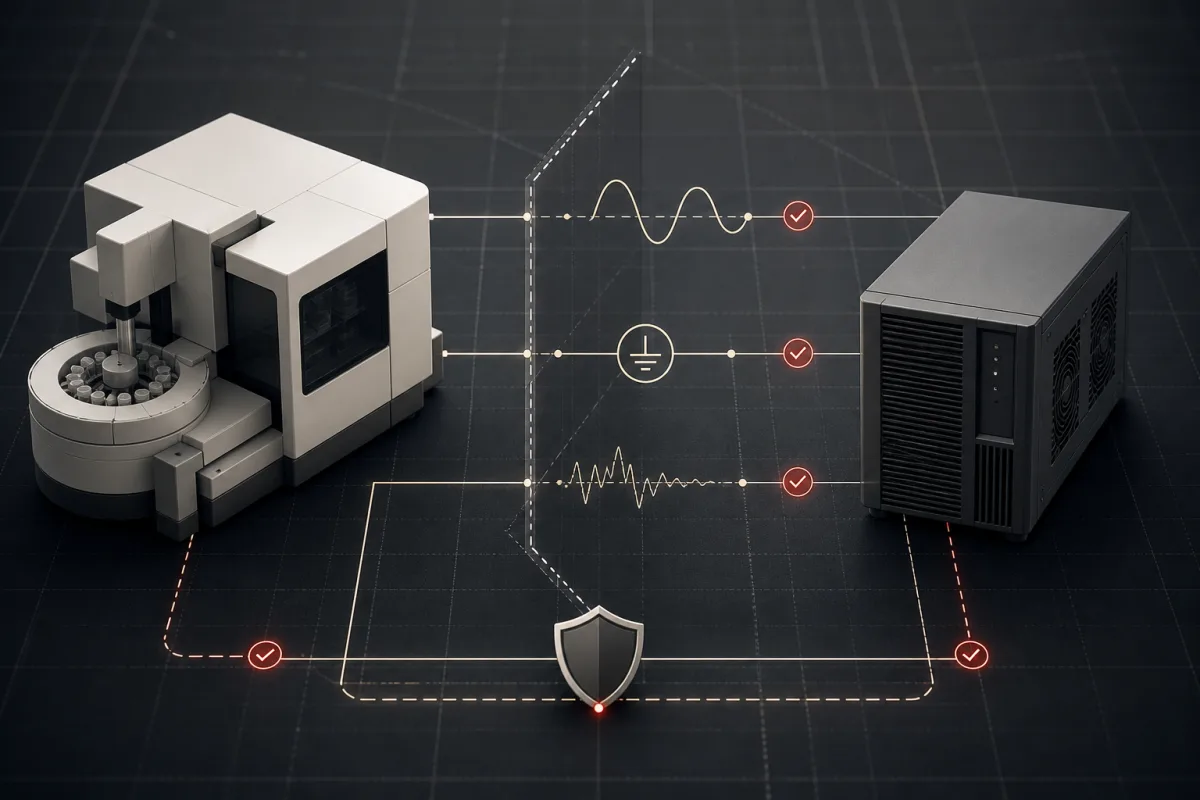
UPS for Medical Equipment: Compatibility Questions Before Any Product Claim
Before connecting a UPS to medical electrical equipment, obtain the equipment manufacturer’s power requirements and have the facility team verify the applicable safety, essential-performance, grounding, leakage, EMC and installation rules. The following engineering and procurement checks make the answer measurable before an order is placed.
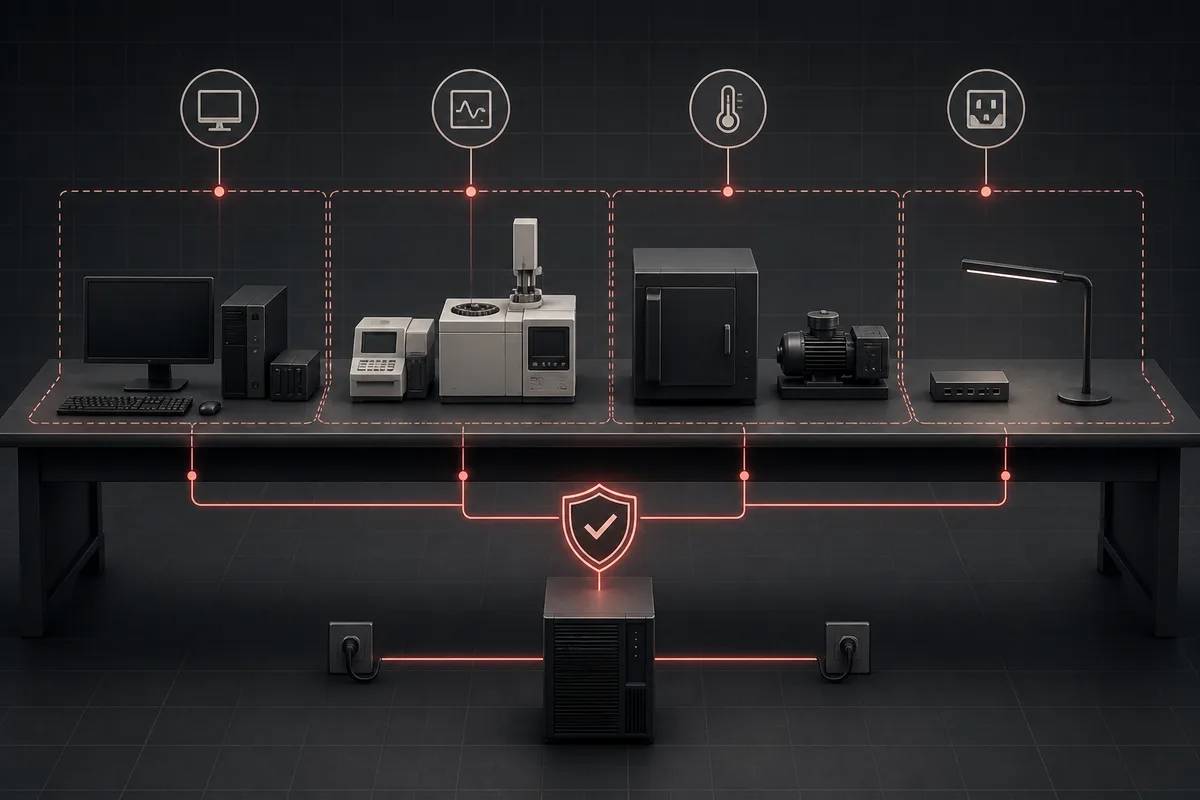
How to Classify Laboratory Loads Before Selecting a UPS
Classify laboratory loads by what must happen during a power event: continue operating, preserve a sample, save data and shut down, or stop immediately. Use the checks below to turn that question into a comparable supplier requirement.
100/110 V UPS Selection: Compare D, DT, LT and MT on Equal Terms
Compare D, DT, LT and MT by voltage, topology, battery chemistry and battery waveform; treat 100 V as an explicit D/DT configuration.
ECDIS UPS Runtime: Define the Navigation Dependencies Before Choosing a Battery
Specify ECDIS backup from the protected navigation dependencies, equipment supply limits, project autonomy and acceptance conditions, without case-result extrapolation.
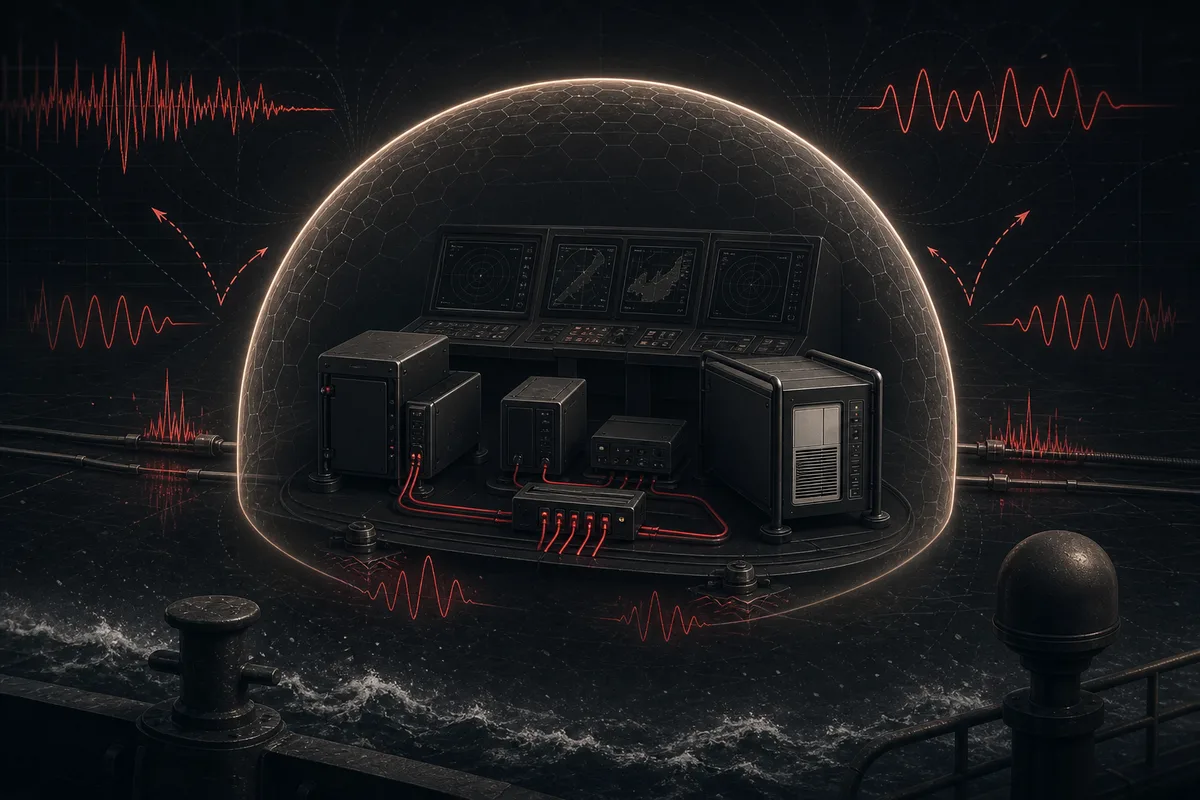
Marine UPS Procurement: Why IEC 60945 Context Matters
IEC 60945 gives buyers relevant context for environmental and EMC expectations around maritime navigation and radio equipment, but citing the standard does not prove a UPS complies. A buyer can use this guide to define the input, evidence and acceptance result before comparing models.
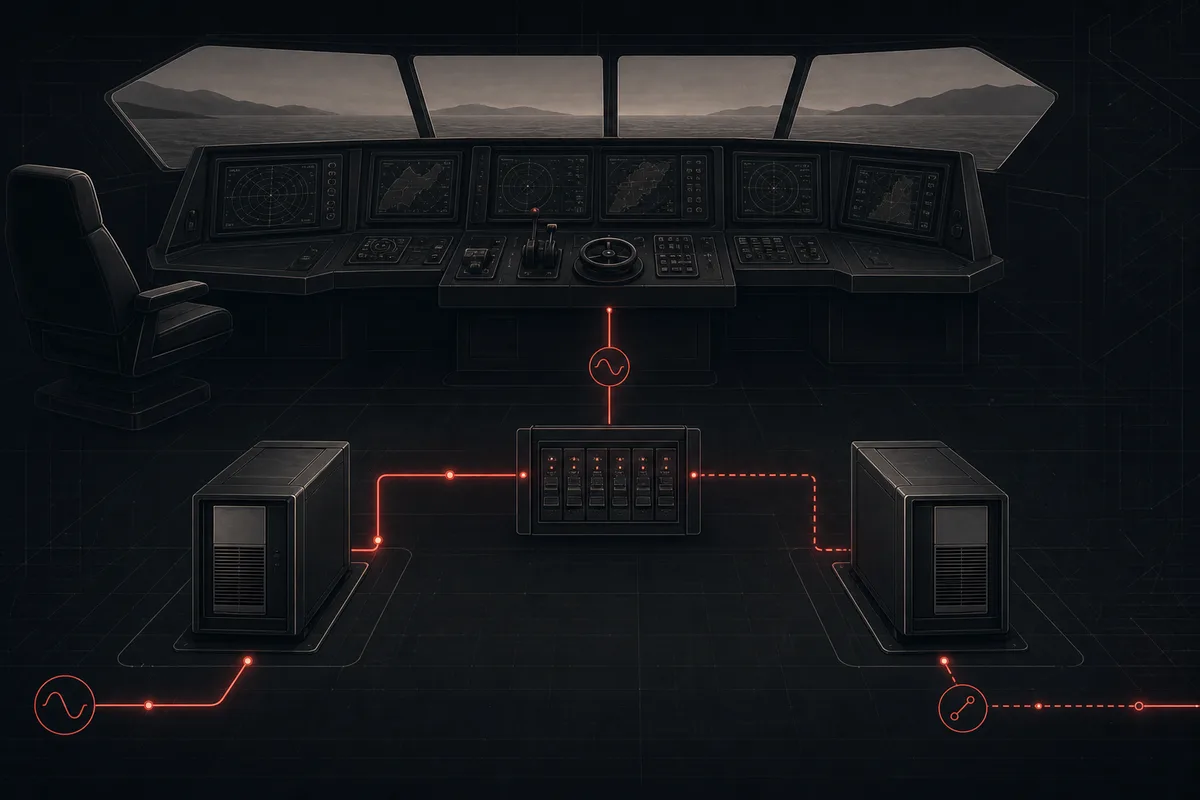
Online vs Line-Interactive 110 V UPS for Marine Electronics
Use line-interactive 110 V backup when the load accepts its transfer time and battery-mode waveform; use an online 110 V design when continuous conditioning and online-to-battery continuity are required. The following engineering and procurement checks make the answer measurable before an order is placed.
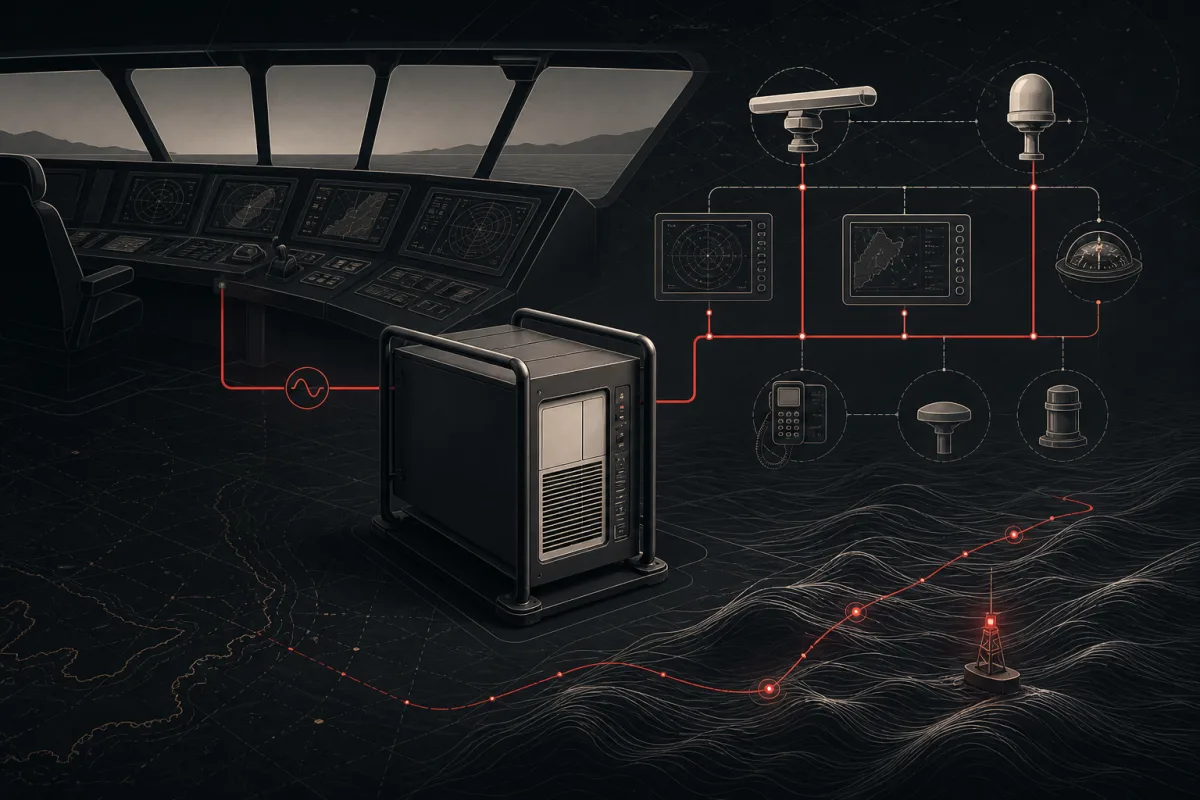
110 V Marine UPS Selection Starts with the Navigation Load List
A 110 V marine UPS recommendation should begin with the bridge or navigation load list: equipment voltage and frequency, watts/VA, startup behavior, transfer tolerance, waveform needs and required autonomy. Use the checks below to turn that question into a comparable supplier requirement.
Engineering guidance
Make a better power-system decision.
Every article answers a real buyer question — which battery chemistry, which topology, which voltage, which model for which environment — with the parameters and trade-offs an engineer needs to decide. Each links through to the relevant products and solutions.
Have a specific question?
Tell us your load and we'll advise.
Use these guides to frame the requirement, then send the load, voltage, runtime and destination for a configuration review.