Insights
UPS selection, standards & application guides.
Practical engineering guidance for specifying lithium UPS and power inverters, covering selection logic, voltage standards, topology and real application requirements.
More engineering guides.
Showing 169–180 of 224 guides

ISO 9001 in UPS Supplier Evaluation: Verify the Certificate, Not the Logo
ISO 9001 is evidence of a certified quality-management system within a stated scope; it is not proof that a UPS model meets a performance or market-access requirement. Use the checks below to turn that question into a comparable supplier requirement.

Defining UPS Runtime Around a Laboratory Shutdown Workflow
Define laboratory UPS runtime from the workflow that must finish during an outage: preserve the sample, save data, stop pumps or heaters in sequence, complete a controlled shutdown, or bridge to alternate power. It focuses the discussion on project conditions, configuration scope and evidence rather than catalogue shorthand.

Industrial UPS Site Conditions: Dust, Heat, Salt Mist and Service Access
Industrial UPS selection must include the installation environment as an engineering input. The result is a decision record that engineering, procurement and the supplier can all verify.
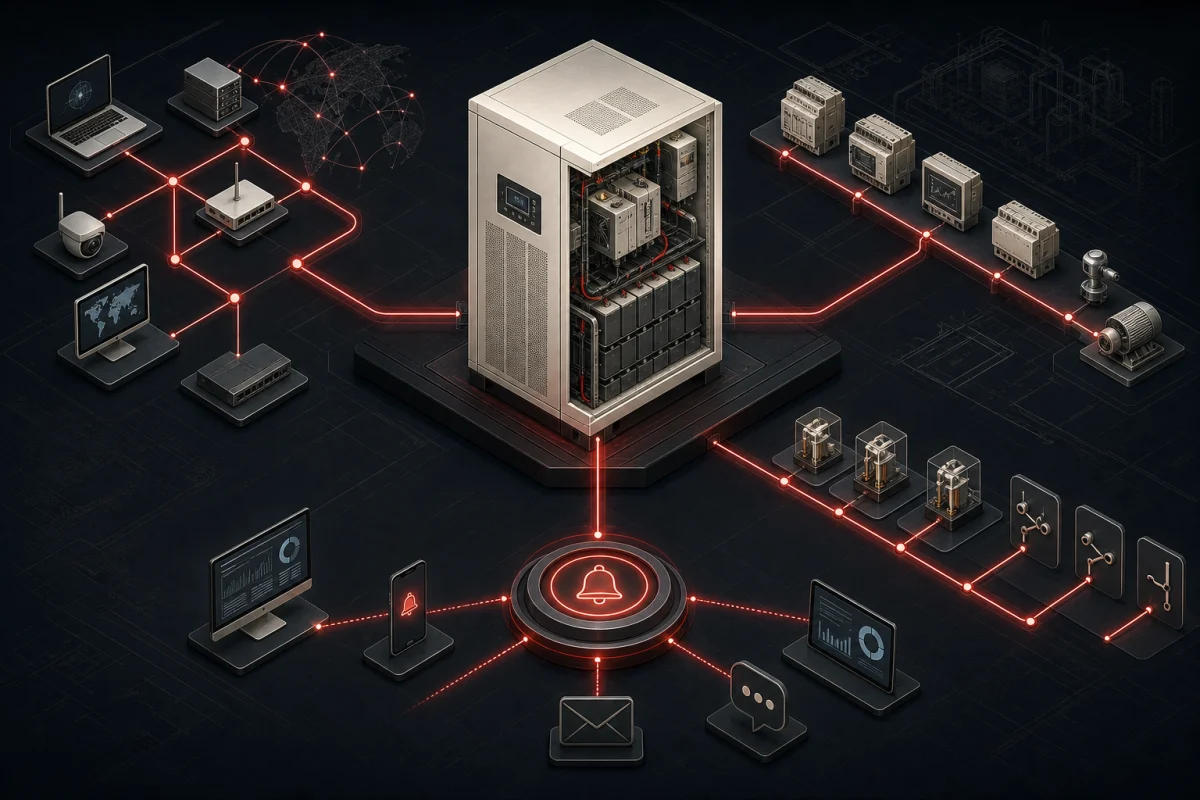
SNMP, RS485 and Dry Contacts: Choosing UPS Monitoring Interfaces
Choose a UPS monitoring interface from the receiving system and required actions. A buyer can use this guide to define the input, evidence and acceptance result before comparing models.
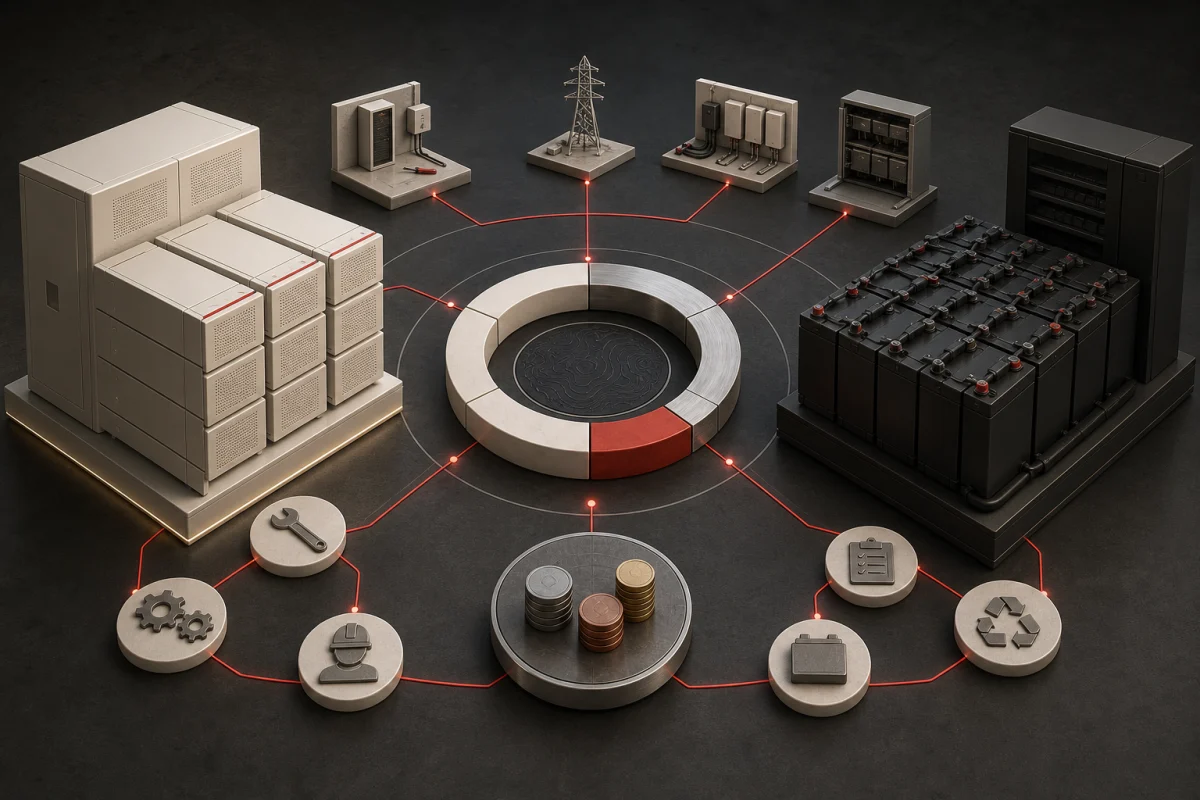
LiFePO4 UPS TCO: The Inputs You Need Before Claiming a Saving
A credible LiFePO4 UPS total-cost comparison uses matched power, runtime, duty, temperature and service assumptions. The following engineering and procurement checks make the answer measurable before an order is placed.
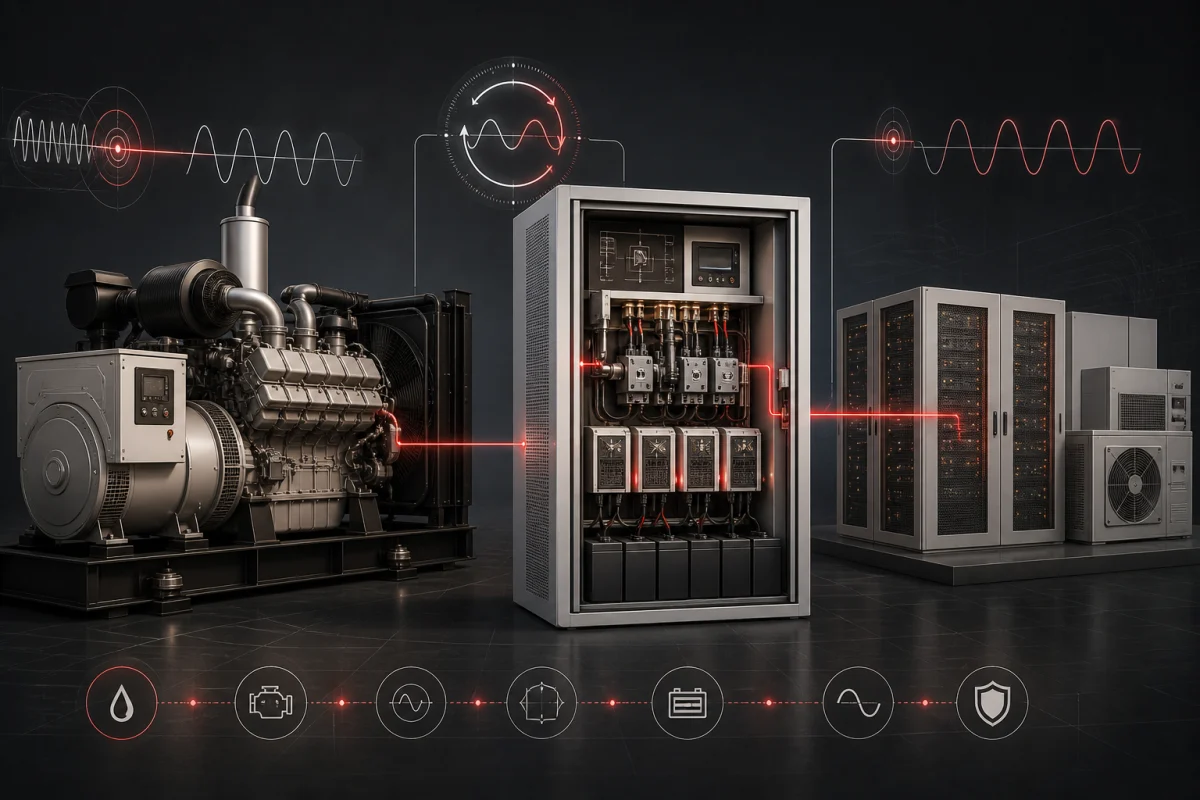
UPS and Generator Compatibility: A Pre-Commissioning Checklist
UPS and generator compatibility must be checked as one source-to-load system. Use the checks below to turn that question into a comparable supplier requirement.
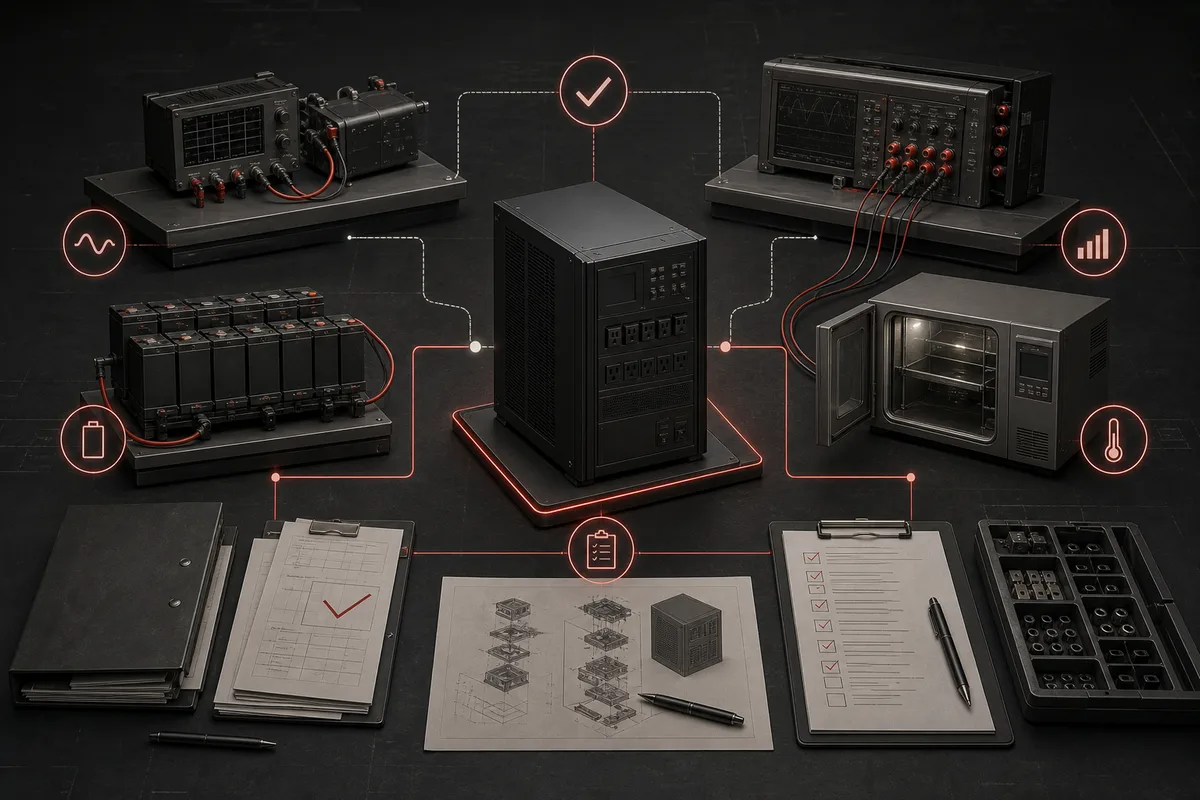
Build a UPS Sample Validation Plan and Close Shipment Deviations
Plan UPS sample validation, preserve the accepted configuration and close production-to-shipment deviations through review and affected verification.
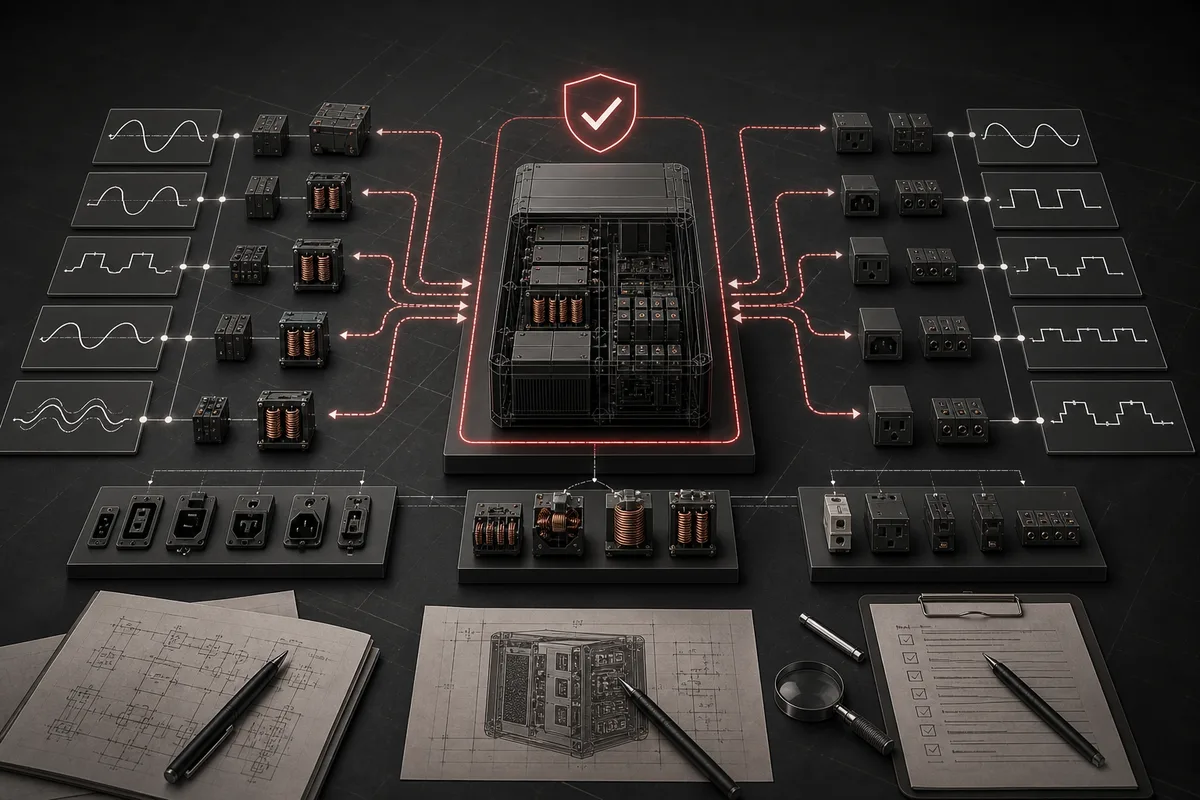
Custom-Voltage UPS Projects: How to Freeze the Electrical Specification
Freeze a custom-voltage UPS project with a signed input/output matrix covering nominal values, operating ranges, frequency, phase, connectors, grounding, bypass and the protected load. The result is a decision record that engineering, procurement and the supplier can all verify.

Private-Label UPS Documentation: Model Codes, Datasheets, Manuals and Labels
Private-label UPS documents must describe the same shipped configuration. A buyer can use this guide to define the input, evidence and acceptance result before comparing models.
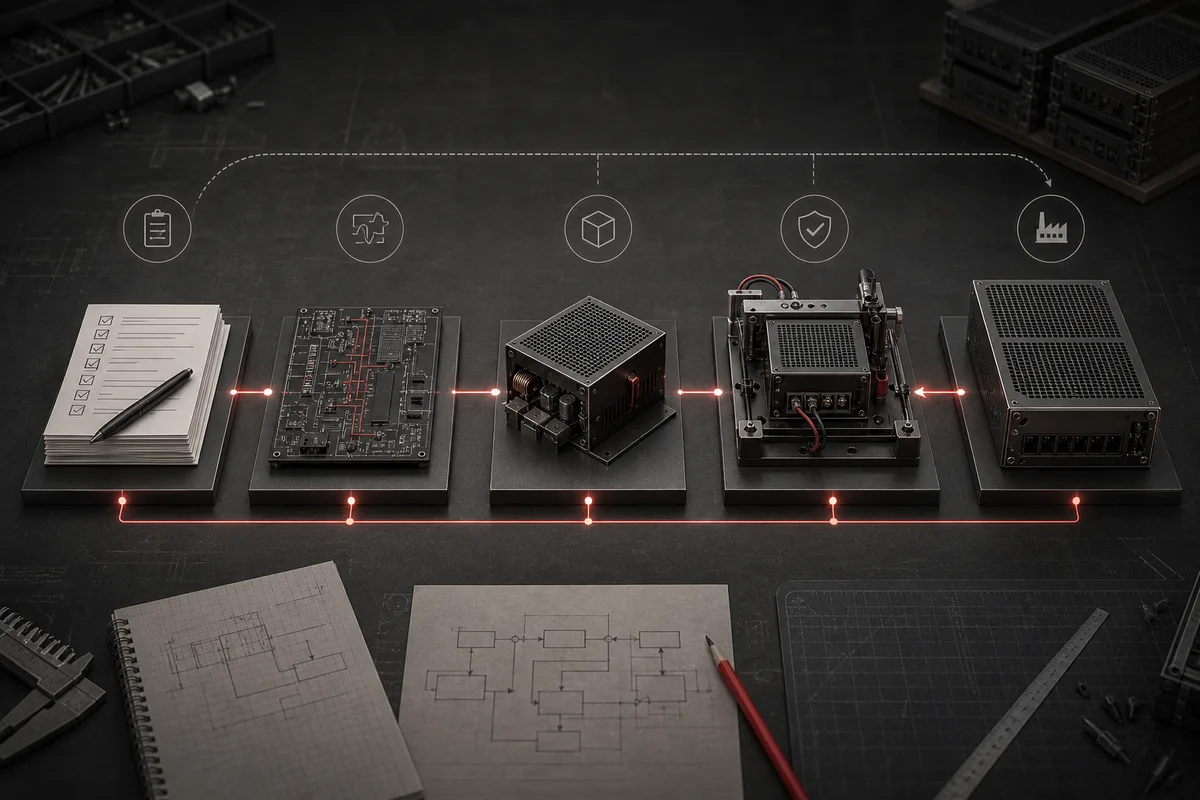
From Requirement to Mass Production: A Five-Stage OEM UPS Workflow
A controlled OEM UPS workflow moves through requirements, proposal and branded design, prototype and aging test, sample approval, then mass production. The following engineering and procurement checks make the answer measurable before an order is placed.
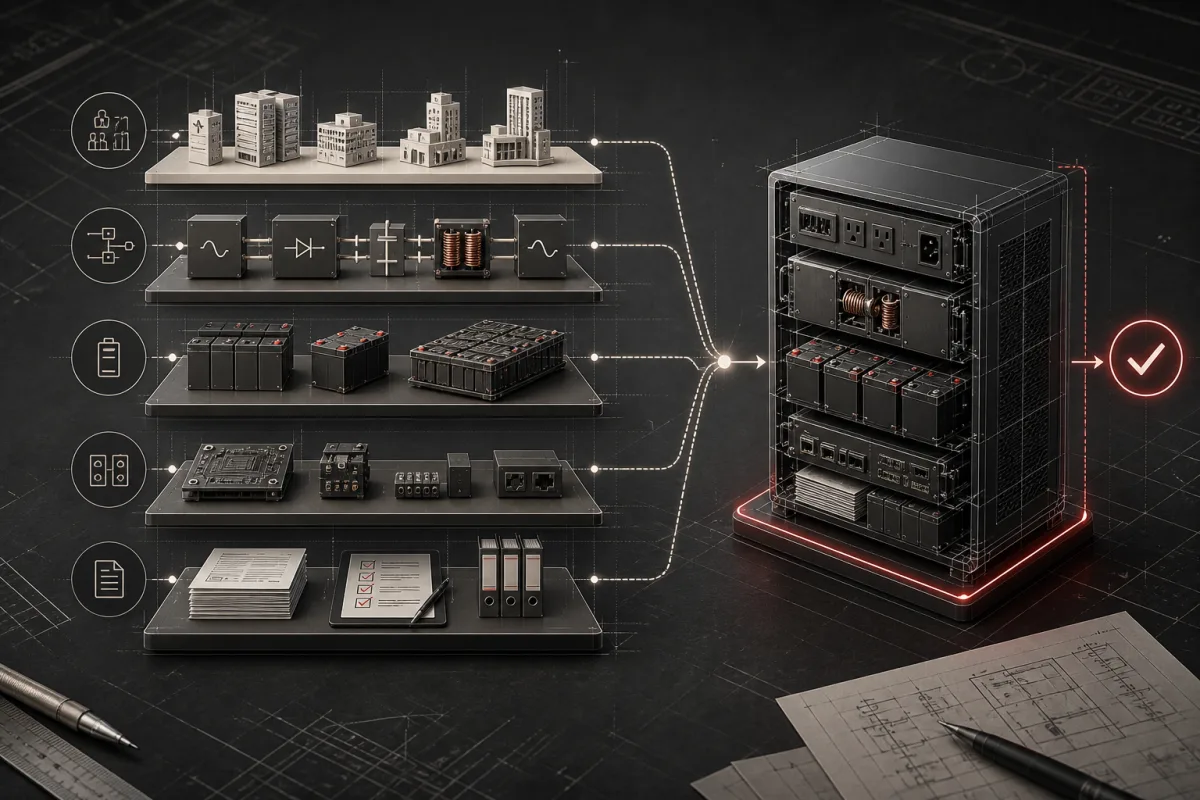
OEM Lithium UPS Requirements Brief: What to Decide Before Design Starts
An OEM lithium UPS brief should freeze application, load, topology, voltage and frequency, runtime, battery architecture, environment, interfaces, target market, branding and evidence before detailed design. Use the checks below to turn that question into a comparable supplier requirement.

RoHS Evidence for a UPS Order: What an Importer Should Request
A useful RoHS evidence package identifies the legal entity, product or homogeneous-material scope, restricted substances, test or assessment method, report issuer and date. It focuses the discussion on project conditions, configuration scope and evidence rather than catalogue shorthand.
Engineering guidance
Make a better power-system decision.
Every article answers a real buyer question — which battery chemistry, which topology, which voltage, which model for which environment — with the parameters and trade-offs an engineer needs to decide. Each links through to the relevant products and solutions.
Have a specific question?
Tell us your load and we'll advise.
Use these guides to frame the requirement, then send the load, voltage, runtime and destination for a configuration review.