Insights
UPS selection, standards & application guides.
Practical engineering guidance for specifying lithium UPS and power inverters, covering selection logic, voltage standards, topology and real application requirements.
More engineering guides.
Showing 97–108 of 224 guides

OEM UPS Orders: Agree Firmware and Configuration Access Rights
Agree access, custody, change authority and support responsibility in the actual OEM contract.

Remote UPS Factory Tests: Link the Unit to the Evidence
Agree how a remote witness will connect each observation to the ordered unit, setup and instruments.

Returning a Lithium UPS Overseas: Two Approvals Before Dispatch
Obtain supplier return authorization and a separate, current transport assessment for the actual unit and battery condition before dispatch.

Can Two DC/DC Converter Outputs Be Paralleled?
Only propose parallel outputs when the manufacturer approves the exact configuration and its sharing, startup, fault and thermal conditions.

Aligning UPS, Server and Network Event Clocks
Preserve original timestamps, then normalize them using known time zones, observed clock offsets and uncertainty.

Define the UPS Data Dictionary Before Quoting DCIM Integration
Define each required point before pricing an integration.

Does a UPS Replace Building-Level Surge Protection?
Buying a UPS does not by itself complete a building's surge-protection design.
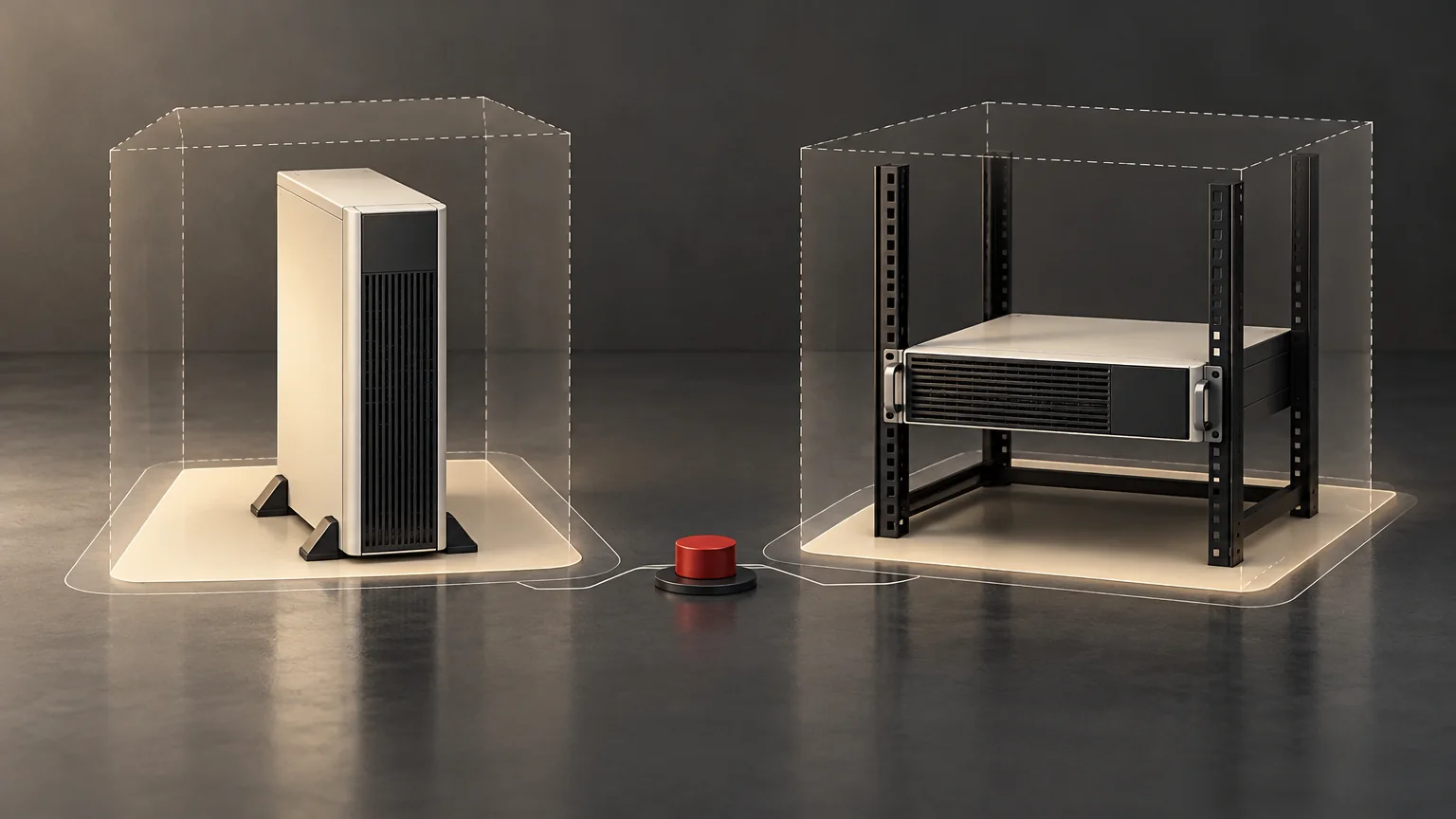
Tower or Rack UPS When There Is No Suitable Cabinet?
Compare complete supported installations, not just chassis footprints.

Store a Lithium UPS Through Seasonal Shutdowns and Site Delays
Plan lithium UPS storage through seasonal shutdowns and site delays, with model-specific instructions, continuous custody and return-to-service release.

UPS Delivery Route Survey: Check the Path Before Arrival
Survey the route for the actual packaged equipment, handling method and site constraints before delivery.

Three-Phase UPS Commissioning: Agree the Acceptance Evidence First
Agree the selected three-phase UPS's acceptance evidence before testing begins.

A UPS Turns Off at Very Low Load: What Should You Record?
A low-load shutdown is an observation, not yet a diagnosis.
Engineering guidance
Make a better power-system decision.
Every article answers a real buyer question — which battery chemistry, which topology, which voltage, which model for which environment — with the parameters and trade-offs an engineer needs to decide. Each links through to the relevant products and solutions.
Have a specific question?
Tell us your load and we'll advise.
Use these guides to frame the requirement, then send the load, voltage, runtime and destination for a configuration review.